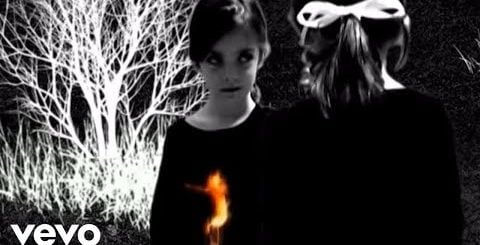
First It Giveth by Queens of the Stone Age Lyrics Meaning – The Paradox of Pleasure & Pain
Lyrics
I can’t tell
You’re so cruel, more than me
It is true (that’s right)
Loyal to only you, up your sleeve
I want some (come on, take it)
Of all of you (it’s yours)
Trickin’ me
First it giveth, then it taketh away
First it giveth, then it taketh away
First it giveth, then it taketh away
First it giveth, then it taketh away
I would beg and I would plead
I would shake
On a hook, dangling, wide awake
I’m so young
And beautiful (that’s right, I’m slick)
I’m no fool
Time goes by, tables turn
All I know
First it giveth, then it taketh away
First it giveth, then it taketh away
First it giveth, then it taketh away
First it giveth, then it taketh away
First it giveth, then it taketh away
First it giveth, then it taketh away
Away, away
In the realm of hard rock, few acts have managed to blend relentless riffs with lyrical depth quite like Queens of the Stone Age (QOTSA). One of their most compelling pieces, ‘First It Giveth,’ off their critically acclaimed album ‘Songs for the Deaf,’ wields a spiritual mantra reminiscent of ancient wisdom, flipped on its head to embody a modern existential quandary. It’s a song that wraps its hooks in your brain not only with its grinding guitars but with its conceptual scope as well.
Laced with lead singer Josh Homme’s coarse yet articulate vocals, ‘First It Giveth’ creates a hypnotic duality between pleasure and its inevitable counterpart, pain. The raw power of the music perfectly conveys a cycle of dependence, longing, and the harsh truths of existence. Through these lyrics, QOTSA delve into the precarious balance between what life offers and commands in return.
A High-Octane Riff on Biblical Proportions
From the title alone, QOTSA invoke a scriptural echo, a twisted reflection of the fickle nature of fate or perhaps a deity as envisioned in the Old Testament. ‘First it giveth, then it taketh away’ could be an allusion to the biblical figure of Job, whose story is one of the ultimate testings through the receiving and subsequent losing of blessings. It’s a profoundly human sentiment, acknowledging that heartache often follows hot on the heels of ecstasy.
The repetition of the mantra throughout the song reinforces the inevitability of this cycle, like a head-banging sermon preaching the inevitability of life’s fluctuations. In turn, the relentless drumming and slashing guitars could be seen as the rhythm of life itself, unpredictable and demanding full participation.
Intertwining Codependency and Vulnerability
The opening lines of the song, ‘I’m in you, now you’re in me,’ lays down a framework of interdependence and perhaps symbiosis that illustrates a key tenet of human relations. There’s a potent mix of intimacy and vulnerability that Homme’s voice captures – the blending of selves that can feel both empowering and annihilating.
Yet, as he reflects on cruelty and fairness in this exchange – ‘You’re so cruel, more than me / It is true’ – there arises the suggestion that not all is equal in the giving and receiving between two entities, whether in love or life’s broader canvas.
The Seductive Lure of Innocence and Experience
When Homme describes himself as ‘so young / And beautiful,’ there’s a lurking arrogance which then gets softened by the self-aware ‘I’m no fool.’ It captures a moment of youthful invincibility tinged with the wisdom of one who anticipates the fall. This confidence, youthful or not, is a costume worn precariously over a knowing vulnerability.
Inherent in the lines ‘Time goes by, tables turn’ is a whisper of maturity. It’s recognition that our grip on what we have – our very sense of self – is slippery and temporary. Time indeed marches on, indifferent to our pleas.
Unpacking the Hidden Meaning: An Endless Quest for Equilibrium
The song could be read as an exploration of the human condition’s deep-rooted desire for balance between the joy of indulgence and the lessons learned through suffering. While the ‘giveth’ represents fleeting gifts, the ‘taketh away’ serves as an existential price, the cost of admission to the ride of life.
There’s a hidden layer of questioning the acts of holding on and letting go, and throughout the song, Homme’s calls to be given something and then his tacit understanding that it will be taken away, ring as a meditation on the impermanence of all things.
The Cry of Human Longing in Memorable Lines
‘I would beg and I would plead / I would shake’ is a stark declaration of human longing, the innate drive to retain the pleasure once it’s felt. The image of being ‘On a hook, dangling, wide awake’ is potent, illustrating the position of helplessness we often find ourselves in, aware of our desires but caught in the reality of unyielding change.
The core emotion of these lines resonates with listeners, as they evoke universal struggles and reflect the hard-earned truisms engrained in our collective psyche. It’s a reminder that while we all reach for the stars, the earth beneath our feet is ever shifting.