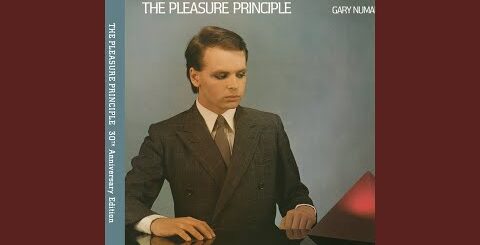
Cars by Gary Numan Lyrics Meaning – Unveiling the Deep-Seated Emotions Behind the Synth-Pop Classic
Lyrics
I feel safest of all
I can lock all my doors
It’s the only way to live in cars
Here in my car
I can only receive
I can listen to you
It keeps me stable for days in cars
Here in my car
Where the image breaks down
Will you visit me please
If I open my door in cars?
Here in my car
I know I’ve started to think
About leaving tonight
Although nothing seems right in cars
Tucked within the hypnotic synth beats and the aquiline vocals of Gary Numan’s 1979 hit ‘Cars,’ lies a tapestry of complex emotions and societal commentary. Upon its release, it surged through the charts not just as a catchy tune, but as an anthem that resonated with the guarded individualism burgeoning in the late 20th century.
Numan’s masterpiece encapsulates more than the sum of its parts, serving as a herald to the growing disconnect in an ever-industrialized world. Its repetitive, machine-like rhythm coupled with its introspective lyrics invites listeners to delve deep into its digital heartbeat and discover the nuanced expectations and fears of its generation.
A Robotic Armor for the Human Psyche
At the core of ‘Cars,’ there is an evident sense of security sought within the metallic embrace of a vehicle. The lyrics ‘Here in my car, I feel safest of all, I can lock all my doors’ speaks volumes about the cocoon of comfort technology offers. It mirrors the growing human inclination to find solace in the inanimate, as technology burgeons around us, creating a barrier between us and the rawness of reality.
Numan’s car symbolizes a fortress, a space controlled and isolated, away from the chaos of the outside world. Its repetitive affirmation suggests an obsessive quest for privacy and control in a society marching towards an ever-connected reality, plagued by surveillance and diminishing personal space.
The Catch-22 of Modern Connection
‘I can only receive, I can listen to you,’ Numan croons, addressing the one-way dynamic crafted by modern communication. There’s a paradox alive in these lines, reflecting our modern conundrum: the desperate need for connection and the simultaneous fear of it. The act of ‘receiving’ is passive, guarded—a listener shielded from the vulnerability of a real connection, perhaps an early prediction of our current relationships with social media and technology.
In the confines of his metaphorical car, Numan illustrates the modern human: attuned to the voices of others yet detached, surrounded by a society that glorifies the outward show of interaction without the depth of actual engagement.
A Veiled Plea for Authenticity
In a striking moment of vulnerability, the lyrics pose the question, ‘Will you visit me please, If I open my door in cars?’ This line is a break from the fortress mentality, hinting at the human element that remains—an innate desire for true companionship.
The imagery of a door opening is poignant; it represents the guarded nature of personal exposure and the risk it entails. Numan dares the listener to engage with him beyond the safety of his synthetic soundscape, suggesting that despite the allure of isolated safety, there is a haunting loneliness that comes with it.
An Ode to the Night-Time Escape
‘I know I’ve started to think, About leaving tonight, Although nothing seems right in cars,’ reveals a contemplative restlessness, a desire to break free from the confines of four-wheeled security. It’s evocative of the way one might lie awake at 2 a.m., considering an escape from the monotony or troubles of life.
These lines can be seen as an ode to the night-time drive, a common trope in popular culture symbolizing a journey — whether toward something new or away from something old. But what makes this escape unique in Numan’s vision is the ambivalence, the uncertainty of whether there truly is a refuge to be found beyond the ‘safety’ thus far relied upon.
A Cipher for the Industrial Soul
Finally, ‘Cars’ serves as a reflection of the Industrial soul, one that has been shaped and perhaps deformed by the rhythms and demands of mechanized life. Numan’s electronic beats mimic the mechanical processes that have infiltrated daily existence, turning routines into automated actions, emotions into programmed responses.
Despite its apparent coldness, the song possesses a strange warmth, an invitation to understand the desperation of modernity and the lengths to which individuals go to preserve their inner worlds amidst the noise. It’s this fine balance between machine precision and raw human sentiment that makes ‘Cars’ a brilliantly complex piece, holding its own in the annals of music history.