La vie en rose – Unraveling the Anthem of Love Through Time
- Music Video
- Lyrics
- Song Meaning
- Through Rose-Tinted Glasses: The Euphoria of Love’s First Blush
- Echoes of Heartache in a Love-Laden Chorus
- Romance in Repetition: Unveiling the Song’s Hidden Meaning
- A Kaleidoscope of Emotion: The Most Memorable Lines
- A Legacy Etched in Rose: The Song’s Undying Resonance
Lyrics
Un rire qui se perd sur sa bouche
Voilà le portrait sans retouche
De la femme a laquelle j’appartiens
Quand elle me prend dans ses bras
Elle me parle tout bas
Je vois la vie en rose
Elle me dit des mots d’amour
De mots de tous les jours
Et ça me fait quelque chose
Elle est entré dans mon cœur
Une part de bonheur
Dont je connais la cause
C’est elle pour moi
Moi pour elle dans la vie
Elle me l’a dit, l’a juré pour la vie
Et dès que je l’aperçois
Alors, je sens en moi
Mon cœur qui bat
Quand il me prend dans ses bras
Il me parle tout bas
Je vois la vie en rose
Il me dit des mots d’amour
De mots de tous les jours
Et ça me fait quelque chose
Elle est entré dans mon cœur
Une part de bonheur
Dont je connais la cause
C’est elle pour moi
Moi pour elle dans la vie
Elle me l’a dit, l’a juré pour la vie
Et dès que je l’aperçois
Alors, je sens en moi
Mon cœur qui bat
La, la, la, la, la, la, la
La, la, la, la, la, la
La, la, la, la
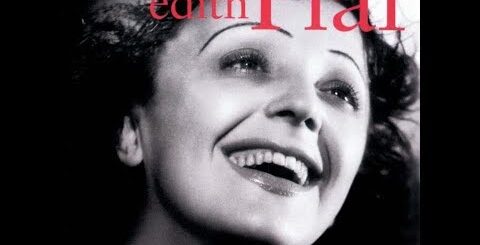
La vie en rose—the phrase itself conjures a world tinted with optimism and love, shaded with the softest blush of rosé. At the heart of this evocative sentiment is Édith Piaf’s timeless classic, a song that epitomizes not just a mood, but an entire outlook on life. It’s a musical embrace that has wrapped listeners in warmth since 1946, a melody that speaks of a love so profound, it alters one’s perception of reality.
The song, both haunting and uplifting, is an aural tapestry woven from the simplest of joys and the deepest of affections. Its iconic melody and lyrics have become synonymous with the idea of romantic bliss. But to fully appreciate the genius behind ‘La vie en rose,’ one must delve into its lyrical tapestry, understanding how Piaf’s own tumultuous life story is subtly interlaced with the song’s deceptively simple verses.
Through Rose-Tinted Glasses: The Euphoria of Love’s First Blush
The main theme of ‘La vie en rose’ is the intoxicating effect of true love. Piaf captures the experience of seeing one’s existence transformed through affection. ‘Des yeux qui font baisser les miens, un rire qui se perd sur sa bouche’—the song’s opening lines descriptively encapsulate that bashful, initial exchange, the magnetic pull of attraction that renders all else inconsequential.
With ‘Je vois la vie en rose,’ Piaf isn’t just describing a rosy hue cast upon her life; she’s espousing a philosophy where love filters out the grayscale of everyday existence, leaving only beauty and positivity. It’s a euphoric state, a lens of optimism that lovers throughout history have sought after, and listeners long to experience again and again through Piaf’s voice.
Echoes of Heartache in a Love-Laden Chorus
While ‘La vie en rose’ shimmers with love, Piaf’s life was no stranger to heartache, lending the song an undercurrent of vulnerability. Born into poverty and beset with tragedy from a young age, Piaf’s own experiences with love were fraught with loss and sorrow.
It is precisely this bittersweet nuance that infuses the song with authenticity. Listeners can feel the weight of Piaf’s past in the earnestness of the song’s delivery. It’s not merely an anthem to love’s highs, but also a subtle acknowledgment of its fragility and the courage it takes to surrender oneself to another.
Romance in Repetition: Unveiling the Song’s Hidden Meaning
There’s a hypnotic quality to the repetition in ‘La vie en rose,’ with lines like ‘Elle me dit des mots d’amour, de mots de tous les jours’ and ‘C’est elle pour moi, moi pour elle dans la vie.’ This litany is more than a poetic device; it’s a reflection of love’s persistence, the day in, day out commitment that forges unbreakable bonds.
Repetition also symbolizes the song’s universality and timelessness. Piaf doesn’t speak of grandiose gestures but of everyday words of love—’mots de tous les jours’—making it relatable to all who have loved. The sentiments expressed are not bound to any era; they are as relevant now as they were in Piaf’s time, something that has contributed to the song’s enduring popularity.
A Kaleidoscope of Emotion: The Most Memorable Lines
Though the entire song stands as a monument to love, certain lines resonate with a power that transcends language and culture. ‘Quand elle me prend dans ses bras / Je vois la vie en rose’ is perhaps the most famous, capturing the tenderness and transformative nature of an embrace, the feeling of home found in another’s arms.
Then there are the conclusive words, the song’s heartbeat that repeats the joyous ‘La, la, la, la, la, la, la.’ Through this melody sans words, Piaf communicates what words cannot—the sheer, inexpressible joy of love, a feeling that fills the chest until it spills out in song, as natural and necessary as breath.
A Legacy Etched in Rose: The Song’s Undying Resonance
Piaf’s legacy, firmly rooted in ‘La vie en rose,’ is a testament to the song’s transcendent draw. Covered by countless artists across generations and genres, it remains a staple in the collective consciousness, an emblem of French chanson, and a beacon for romantics worldwide.
The song’s longevity is proof of its emotional resonance, its ability to tap into the universal human experience of love and its associated joys and vulnerabilities. ‘La vie en rose’ is not just a French classic; it’s a human classic, as vital and variegated as love itself. And as Piaf’s voice continues to enchant new generations, its colors remain as vivid and affecting as ever—a rose that never wilts.