Song Against Sex by Neutral Milk Hotel Lyrics Meaning – Unpacking the Complexities of Disillusionment
Lyrics
Of a dead and hanging man
Who was kissing foreign fishes
That flew right out from this hands
And when I put my arms around him
I felt the blushing blood run through my cheeks
And an eeriness surrounded when his tongue began to speak
And he said…Oh boy you are so pretty
Enough to wrap tight in rice-paper string.
And when I finally kissed him the whole world began to ring
Lost like a bell that’s tipping over
With two cracks along both sides
And I knew the world was over so I took a look outside
And watched the fires that were reaching
Up to the weather vane and the tops of trees
And the waiting scene and the Sunday dream
They’re all waiting here for me
Deli markets with their flower stands
And pretty girls and the burning men
Hanging out on the hooks next to the window displays
And I took out my tongue twice removed from my face
Across a bridge and across the mountains
Threw a nickel in a fountain
To save my soul from all these troubled times
And all the drugs that I don’t have the guts to take
To soothe my mind so I’m always sober
Always aching, always heading towards
Mass suicide, occult figurines
And wasted gas-station attendants
Attending to their jobs
And a nice drive in the country
Finds a nice cliff to drop off
Oh when this life just gets so grating
All the grittiness of life
But don’t take those pills your boyfriend gave you
You’re too wonderful to die
And the last one tore a picture
From the pornographic page
When all the pleasure points attacking
All the looks of love were staged
And it’s a lie that you’ve been given
That just hurts you every day
So why should i lay here naked
When it’s just too far away
From anything we could call loving
Any love worth living for
So I’ll sleep out in the gutter
You can sleep here on the floor
And when I wake up in the morning
I won’t forget to lock the door
Because with a match that’s mean and some gasoline
You won’t see me anymore
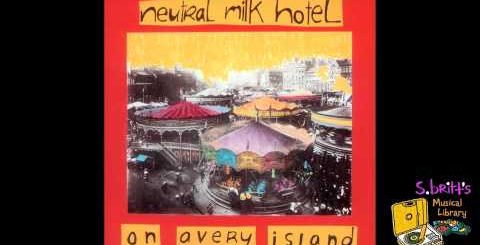
Neutral Milk Hotel, a band cloaked in enigmatic sonic textures and profound lyrical storytelling, carved out a unique place in the hearts of indie music enthusiasts. ‘Song Against Sex,’ a track from their debut album ‘On Avery Island,’ beckons listeners into a labyrinth of emotional turmoil and existential contemplation.
With Jeff Mangum at the helm, this inceptive juggernaut challenges our perceptions of intimacy, mortality, and the societal constructs that leave us languishing in confusion and despair. The song manages to be brazen yet vulnerable, raw in its poetic dissection of life’s grittier side. Let’s dive into the depths of this haunting composition and explore the layers that lend it such enduring resonance.
An Anthem of Anguish: Beyond the Surface
The surreal opening verse sets a tone of dreamlike despondency. Imagery of death mingled with a strange sexual encounter evokes a bizarre and unsettling synaesthesia. Is this intimacy or agony, pleasure or pain? The lines blur, and Mangum’s delicate voice threads through these opposites, exposing the visceral response they incite—a feeling akin to witnessing something simultaneously beautiful and horrific.
Encountering ‘the waiting scene and the Sunday dream’ highlights the banality and expectancy that suffocate the narrator. There’s an anticipation of something meaningful amidst the apocalyptic—fires reaching for the heavens—but is it deliverance or is it more despair? This juxtaposition captures the song’s raw nerve: the constant search for salvation within a crumbling reality.
The Ineffable Lure of Escape: ‘Across a bridge and across the mountains’
Throughout the song, the urge to flee from an insufferable existence manifests in the physical— traversing bridges and mountains. It’s a Sisyphean flight from pain, tossing coins for luck, or perhaps out of tradition, signifying a semblance of hope—a hope immediately negated by the recognition of earthly binds and a mind left unsoothed by the absence of drugs.
The stark choice between numbing substances and sober reality creates a stark duality. On one hand, there is the self-awareness of avoiding the drug-fueled escapism that’s tempting yet destructive. On the other, it’s the sober clarity that makes life’s granularity unbearable. It’s a dilemma that echoes hollowly with ‘mass suicide’ and ‘wasted gas-station attendants’—a creation of existential bleakness.
The Binding Chorus: ‘But don’t take those pills your boyfriend gave you’
Between verses that paint a landscape of despair, the chorus is a heartfelt plea—a narrative strand clutched by someone who sees a glimmer of worth in another. The direct address ‘you’re too wonderful to die’ acts as an anchor to the human, amidst a thematic sea of dejection and disconnection. There’s a dichotomy of simultaneous caring and detachment, hinting at a resigned love battling the impulse to self-destroy.
The recurring idea of not succumbing to artificially induced numbness becomes a motif for survival, even if just barely. It’s a rejection of capitulation to a world that promotes a facade of pleasure—be it through substances or manipulated erotic imagery. Mangum’s earnest warning resonates with genuineness in the climate of inauthentic contentment being marketed by society.
Dismantling the Facade: ‘All the looks of love were staged’
A critique on transactional relationships, superficial allure, and the veneer that masquerades as intimacy is savagely uprooted. Mangum’s vocalization of the lie ‘that you’ve been given’ reveals an awakening. It’s an indictment of the empty promises delivered by the glossy pages of magazines or the simulated connections we often mistake for something genuine.
This understanding of something ‘just too far away from anything we could call loving’ is the crux of the existential lament. It’s an acknowledgment that the search for authentic connection is fraught with deception and disappointment. Rather than participating in this farce, the narrator chooses alienation, which while stark, remains a form of self-preservation.
The Harrowing Finale: Engulfed by Disillusion
The last verse is a prescient conclusion to the spiral. Exposing the potential for self-destruction and the irreversible act of erasure when overwhelmed by a false reality is a powerful image. It reflects a surrender to the futility of struggling in a contrived world that can’t be escaped except through extinguishing one’s existence.
Ending the song with ‘You won’t see me anymore’ embodies a finality—a poignant exit from the facade and a relief from the pervasive anguish. Whether this is a physical disappearance or a metaphorical detachment from societal expectations remains ambiguous. It’s a chilling reminder that sometimes, the weight of the counterfeit can lead to the most drastic of choices.