No More Runnin by Animal Collective Lyrics Meaning – Exploring the Depths of Serenity in Sound
Lyrics
Says my mind
All this movement
Has just proved
Your kisses are too fine
Hold the honey that I see
Friends I once had
Turn their thoughts away from me
No more running
I’ve got to be
On back porches
With a torch
Of a fire fly lit tree
It’s what I hoped for
It’s what I hoped for
No more running
No more running
I lock my bones and
Trip my feet
I told them
Ill find a place to be
You stink like candy
In your teeth
When you
Leave your face with me
No more running
Says my mind
All this movement
Has just proved
Your kisses are too fine
It’s what I hoped for
It’s what I hoped for
No more running [Repeat: x4]
In the cavalcade of eclectic soundscapes that define Animal Collective, ‘No More Runnin’ emerges as an introspective hymn, a tranquil dip into the psyche of contentment and acceptance. It’s a delicate whisper in an album often bombarded with vivacious cacophony, a moment of clear-eyed reflection amidst the swirl.
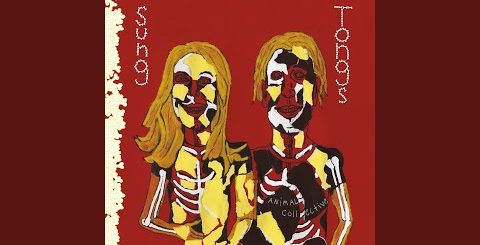
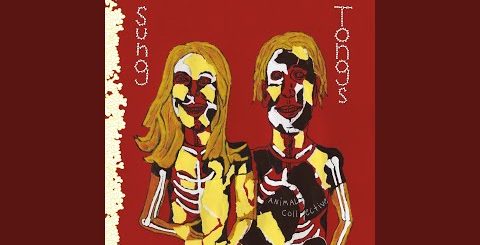
From their critically-acclaimed 2009 album ‘Merriweather Post Pavilion,’ ‘No More Runnin’ induces a meditative lull, pulling us into a half-dreamt realm tinged with both sweetness and melancholy. It is in this serene piece we are offered a chance to decode not only the music but also the silence that echoes within.
A Dive Into a Still Pond: The Call to Stillness
As the haunting vocals of ‘No More Runnin’ flow over us, we are brought face to face with an imperative halt: ‘No more running, says my mind.’ This is the embrace of stillness after a tireless chase, a sober resolution to the fevered darting of life. It’s the end of a pursuit, perhaps one of love, purpose, or even escape.
The stillness that the song speaks of is not stagnant; it is the stillness of clarity, the serene repose that one finds not in indolence but in equilibrium. The ‘movement’ of before not only propelled but also masked—a revelation that in their hyperactivity, the undervalued kisses are ‘too fine.’
Illuminating the Firefly-lit Back Porches of the Soul
There’s a quaint domesticity in the imagery ‘On back porches / With a torch / Of a firefly lit tree.’ It speaks to a longing for simplicity, a return to roots, and perhaps an escape from the complexities that often entangle us. It represents a grounding, an intimate connection with nature and with oneself.
Yet, these lines also conjure a sense of community lost, a nostalgia for times spent among friends ‘I once had,’ who have now turned away. It’s a lament lightly touched upon but felt deeply, a yearning for reconnection, not just with others but with a self that was more present, more alive in those shared moments.
Candy-Sweet Seduction: The Power of Sensory Language
In ‘You stink like candy / In your teeth,’ Animal Collective utilizes sensory imagery to an intoxicating effect. Such a line arrests us with its odd juxtaposition of ‘stink’ with ‘candy,’ encapsulating the peculiar sweetness that can sometimes overwhelm or overpower.
The song courses with these layers of sensory experiences, using taste as a metaphor for desire, memory, and even guilt. It’s a line that clings to the listener, both for its unique construction and for the evocative emotions it conjures.
Embracing the Horizon: The Hidden Meaning of Contentment
Beneath the surface of ‘No More Runnin’ lies a rich tapestry of contentment’s elusive essence. It isn’t a loud proclamation of triumph; rather, it’s the whisper of gentle surrender to what is, an exhale after holding one’s breath for too long.
The repetition of ‘It’s what I hoped for’ could read as an affirmation, a mantra-like internalization of the peace that comes with relinquishing the chase. In the oft-overlooked quietness of ‘No More Runnin,’ we find a profound pronouncement: that the surrender to stasis does not mean defeat but rather the discovery of a new way to be.
The Echoes That Resonate: Decoding Memorable Lines
Animal Collective’s poignant refrain, ‘No more running,’ echoes as a core mantra throughout the song—a chorus not just to themselves but to the listener. The repetition breathes life into the rich internal struggle presented, imbuing it with a sense of personal narrative and universality.
Nuanced production elements and hypnotic loops intone these words until they seem to oscillate between certainty and hope, between a declaration made and a truth realized. Every repeat of ‘No more running’ becomes more adamant, more rooted in the realization that there lies beauty and necessity in embracing every moment as a place ‘to be.’