My Way Home by Kanye West Lyrics Meaning – Unraveling the Journey of Discontent to Inner Peace
Lyrics
They say home is where the hate is, my dome is where fate is
I stroll where souls get lost like Vegas
Seen through the eyes of rebel glasses
Pray to God that my arms reach the masses
The young smoke grass in grassless jungles
Rubber band together in cashless bundles
We wear strugglin’ chains, divided only hustle remains
Makin’ sense of it we hustle for change
Revolution ain’t a game it’s another name, for life fightin’
Someone to stay in they corner like Mike Tyson
Hypes fightin’ for hits to heighten they hell
Don’t he know he could only get as high as he fell?
Show money becomes bail, relationships become jail
Children are unheld
I wish love was for sale, “Behold the Pale, Horse”
Got me trapped like R. Kell’, I bail and it
“Might not be such a bad idea if I never, never went home again
I’m on my way home
I left three days ago, but no one seems to know I’m gone
Home is where the hatred is, home is filled with pain and it
Might not be such a bad idea if I never, never went home again”
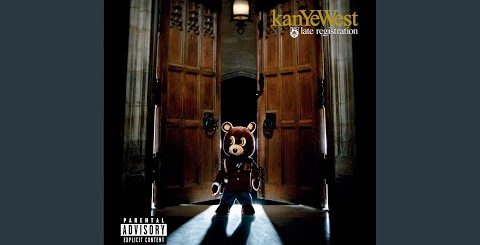
Kanye West’s ‘My Way Home’ is more than just a track on his acclaimed sophomore album ‘Late Registration’; it’s a powerful, short burst of introspective poetry punctuated by a soulful sample from Gil Scott-Heron’s ‘Home is Where the Hatred Is.’ The song, which lacks a chorus and runs for just over a minute, is a profound exploration of inner tumult and the concept of ‘home’ beyond its physical manifestation.
West takes us through layers of personal and social consciousness in a manner that’s as raw as it is elegant, interweaving his observations with the broader African American experience. In doing so, he raises questions about the societal constructs that we are both bound to and constantly trying to escape from. Here, we delve into the rich layers of meaning behind his lyrics, transcending the beats to uncover the heart of Kanye’s message.
Home Is Not Always Where The Heart Is
The opening line, ‘They say home is where the hate is,’ serves as a paradoxical reappropriation of the old adage ‘home is where the heart is.’ By juxtaposing ‘hate’ with ‘home,’ Kanye draws attention to the struggle between the desire for belonging and the often-painful reality of one’s environment. The traditional notion of home is displaced, giving way to a sense of alienation and the relentless pursuit of personal destiny, as encapsulated in ‘my dome is where fate is.’
This line does more than redefine home; it beckons to the mindscape as the true dwelling place for fate. In this interpretation, Kanye proposes that home is not a sanctuary, but a battlefield of ideas, ideologies, and internal conflict.
Vivid Imagery and Stark Reality
Kanye crafts a vivid picture of urban disillusionment with ‘I stroll where souls get lost like Vegas.’ The juxtaposition of strolling, which implies a leisurely pace, with the idea of souls getting lost conjures a sense of ease amidst chaos. His world is one where numbness to the harsh realities of life is a survival strategy, and where a walk can mean witnessing the loss and confusion rampant in his community.
By observing the world through ‘rebel glasses,’ Kanye aligns himself with those who question and defy the status quo. His desire ‘that my arms reach the masses’ is an acknowledgment of his platform and an aspiration to influence and inspire change, evoking the love-hate relationship with fame and responsibility that he frequently revisits in his work.
The Cry for Revolution and Its Snares
‘Revolution ain’t a game it’s another name, for life fightin” highlights the gritty realism that Kanye brings to discussions of change and struggle. His view of revolution is devoid of romanticism; it is equated to the fight for life itself—a daily endeavor for survival rather than a distant idealistic goal.
Kanye also lays bare the dangers that this struggle can pose, as seen in ‘Don’t he know he could only get as high as he fell?’ This line serves as a cautionary reminder that recklessly reaching for success can lead to equally great downfalls. The societal traps that fame and desperation set, such as ‘show money becomes bail, relationships become jail,’ reflect Kanye’s criticism of a system designed to ensnare rather than empower.
Navigating The Urban Jungle
The imagery of a ‘grassless jungle’ provides a stark backdrop to the lives of the youth, who seems to find escape in narcotics. ‘Rubber band together in cashless bundles,’ suggests a unity forged by desperation and lack of resources, rather than choice. This line offers a glimpse into the ingenuity borne of necessity amongst those struggling on the peripheries of the capitalist dream.
In this unyielding landscape, wearing ‘strugglin’ chains’ illustrates the physical and metaphorical burdens that weigh heavily on the shoulders of Kanye and his contemporaries. These chains are symbolic of the economic and social obstacles that define and confine their hustle.
The Metaphorical ‘Home’ and The Road to Redemption
Towards the end of ‘My Way Home,’ Kanye introduces the idea of never going home again as a ‘not…bad idea.’ This notion of perpetual wandering is as much an existential quandary as it is a physical one. For Kanye, home represents a place of turmoil and disillusionment, while the journey itself becomes a possible path to catharsis and peace.
In the repeated line, ‘I’m on my way home,’ there’s a suggestion that home might not be a physical place, but a metaphorical journey towards self-realization and acceptance. It’s an acknowledgment that the ‘home’ of our comfort zones can often be the breeding ground for the very pain we wish to escape, and thus, the journey away from what is familiar is itself a quest for true solace.