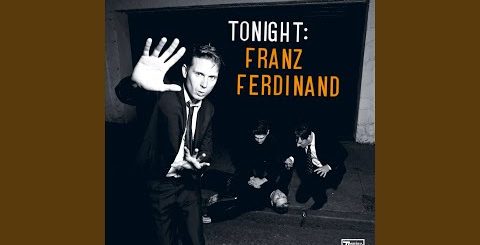
Live Alone by Franz Ferdinand Lyrics Meaning – Unveiling The Anthem of Solitude and Love’s Paradox
Lyrics
Because the greatest love
Is always ruined by the bickering
The argument of living
So I want to live alone
I could be happy on my own
Live the rest of my life
With the vaguest of feeling
Wherever you are
Whoever is there
You know that I’ll be here
Wishing I could be there
So I’m going to live alone
I’m not saying that out love is the greatest
But I’m in love with you
Want to stay in love with you
So I’m going to live alone
Yeah I’ll be happy on my own
Live the rest of my life
With the vaguest of feeling
Wherever you are
Whoever is there
You know that I’ll be here
Wishing I could be there
In NYC when
I get in a taxi
I say “man” to the driver so
He’ll think
“Man!
I can imagine
Having a drink with that guy”
“He’s alright”
Wherever you are
Whoever is there
You know that I’ll be here
Wishing I could be there
The tug-of-war between intimacy and independence is a timeless theme explored in music, but few songs capture its essence with the candid pragmatism of Franz Ferdinand’s ‘Live Alone’. This track, a delicately woven tapestry of indie-rock sentimentality, ushers us into the chamber of a heart that finds sanctuary in solitude as much as it yearns for connection, laying bare a fundamental human conundrum.
At first listen, ‘Live Alone’ may masquerade as another moody, introspective indie anthem, yet delve beneath its melodic surface and you’re met with an astonishingly profound meditation on love’s complexities. It’s a lyrical dance – a step forward in self-contentment, a step back in longing, choreographed by the ache of what could be and the solace of what is.
Solitude vs. Intimacy: The Core Paradox
Franz Ferdinand pitches us into the psychological battlefield where love’s warm embrace wrestles with the cool, unfettered horizon of living alone. The song’s protagonist professes a desire to be unaccompanied, this refrain serving as a shield – to live alone is to avoid ‘the bickering, the argument of living’. Here, the singer navigates the listener through love’s greatest dichotomy: the need for togetherness against the allure of self-sovereignty.
By choosing solitude, the artist suggests an escape from the erosion of love’s peak, favoring preservation over potential decay – a declaration of both independence and a devoted effort to remain in love. This dichotomy isn’t just a personal struggle but a universal enigma, grabbing hold of anyone who’s tasted both the sweetness and the sour within affection’s clutches.
Confronting the Vaguest of Feelings
As the song shifts into the chorus, ‘Live the rest of my life, With the vaguest of feelings’, it flows into an acceptance of emotional ambiguity. The ‘vaguest of feelings’ represents a deliberately ambiguous future, implying that peace may be found in not seizing, but relinquishing control over the known quantities of emotion and relationship dynamics.
This isn’t resignation; it’s a nuanced embrace of the unknown. This line captures the essence of living in the moment, an acknowledgment that plans for love and life can be as transient as feelings themselves. The song champions an existence where one doesn’t cling to highs or wallow in lows but simply exists within a spectrum of emotions, undefined and fluid.
A Love That Transcends Presence
The longing to be ‘wherever you are’ implicates that geographical distance does nothing to sever the cords of affection. These lyrics underscore an emotional paradox where the heart remains tethered to another, even as physical life is navigated in solitude. It’s a message that resonates with anyone who’s ever had to choose self-growth over the comfort of companionship.
Franz Ferdinand artfully reveals that true connection isn’t shackled by presence alone. The protagonist’s commitment to love – despite vowing to ‘live alone’ – speaks of a mature, if not painful, understanding that sometimes love is best served by distance, a concept as heartbreaking as it is beautiful.
The Hidden Meaning: Isolation as a Love Language
On a deeper foray into ‘Live Alone,’ a revelation emerges: isolation becomes its own love language. By declaring the intent to live apart, the song’s narrator posits self-imposed isolation as a means to keep the flame of love burning bright, untouched by the messiness that cohabitation can bring.
Decoding these sentiments reveals a conspiracy with one’s own heart – protecting the purity of love by stepping away. It’s an unorthodox romance anthem, one that acknowledges the spoils and spoiling within love, turning to a life of solitude not out of rejection, but as the ultimate form of affectionate preservation.
Alone But Not Lonely: The Song’s Memorable Lines
The ingenious lyrical spin found in ‘I’m not saying that our love is the greatest, But I’m in love with you’ strikes at the often over-idealized notions of love. By foregoing grandiose declarations, Franz Ferdinand delivers a dose of authenticity; it’s a down-to-earth admission that while their love may not defy the ages, it’s real, raw and worth cherishing in its own right.
Wrapping up this tension is the fleeting encounter with the taxi driver in NYC, a vignette that serves as a metaphor for the many one-off connections that dot a solitary life – interactions filled with potential yet left unexplored. In these lines lies the essence of the track: an ode to the singular human experience, to the moments we live fully while ‘wishing I could be there.’