Roses For The Dead by Funeral for a Friend Lyrics Meaning – Unraveling the Emotion and Catharsis in an Anthemic Elegy
- Music Video
- Lyrics
-
Song Meaning
- The Crescendo of Regret: How ‘Roses For The Dead’ Articulates Unsaid Apologies
- Washed Away Innocence: The Darker Undertones of Playground Metaphors
- Dissecting the Chorus: A Dialogue of Blame and Betrayal
- ‘Tragedies and Timepieces: The Hidden Meaning Behind the Mourning
- Memorable Lines Engraved in Eternity: ‘I never listened to a word you never said’
Lyrics
For the black eyes and bleeding lips.
When it’s hard to forget
How many lies we’ve told.
Or how old we’d go,
Before I said goodbye.
So let’s scrape our knees on the playground.
It’s not your fault,
You feel okay.
It’s too late in the day.
It’s not your fault,
You feel betrayed.
You can’t come out to play.
I never listened to a word you never said.
I never listened to a word you never said.
Wasting the hours now,
We’re all suckers for tragedies.
And start this over again,
And you bring us to our knees.
As sunrise comes,
And the story will sell,
There’ll be a hundred papers,
So we’ll follow you up.
It’s not your fault,
You feel okay.
It’s too late in the day.
It’s not your fault,
You feel betrayed.
You can’t come out to play.
I never listened to a word you never said.
I never listened to a word you never said.
So raise your hands up high,
And let this rain pour on.
So raise your hands up high,
And wash us away.
Like innocence and childbirth,
You look just like your mother
And you look just like your father.
Forgive him our father,
Your son is smiling,
So lay roses around you.
Profound and evocative, ‘Roses for the Dead’ by Funeral for a Friend doesn’t just resonate; it burrows deep into the core of shared human experience. This isn’t just a song, it’s an expedition through the emotional turbulence of loss, regret, and the inexorable passage of time, packaged in the band’s signature post-hardcore sound.
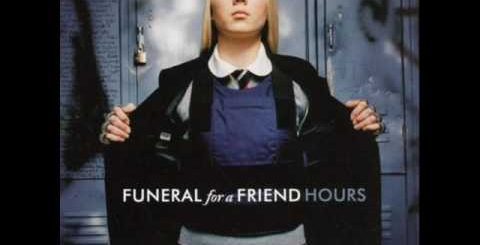
The Welsh group has a knack for fusing the intensity of punk rock with melodic eloquence, and this track from their sophomore album, ‘Hours,’ is no exception. It’s a poignant lament that weaves a narrative touching on grief, nostalgia, and the hard-won acceptance of the things we cannot change.
The Crescendo of Regret: How ‘Roses For The Dead’ Articulates Unsaid Apologies
In an age where digital communication is ubiquitous, the notion of ‘unsaid words’ carries a heavy weight. Funeral for a Friend encapsulates this sentiment brilliantly. The opening lines ‘Just to say we’re sorry, For the black eyes and bleeding lips,’ immediately immerse the listener in a narrative brimming with remorse over unexpressed apologies.
The reckoning with spoken lies and unvoiced farewells in the song’s early moments creates a crescendo of regret. It is more than just a narrative set to melody; it taps into a universal truth about human relationships and the sorrow that accompanies the things we leave unsaid.
Washed Away Innocence: The Darker Undertones of Playground Metaphors
‘So let’s scrape our knees on the playground’ is more than a simple throwback to childhood whimsy. In the greater context of the song, it reveals a dual theme of nostalgia and pain. It’s a graphic image, placing innocence and experience side by side and exploring the juxtaposition of youth’s reckless abandon with the harsher realities that bruise us over time.
This contrast is the heart of ‘Roses for the Dead’—it’s sharp yet somber, a reminder of the simpler times and the loss of the sheltered life we leave behind as we grow and encounter life’s unforgiving truths.
Dissecting the Chorus: A Dialogue of Blame and Betrayal
The repeated chorus lines, ‘It’s not your fault, You feel okay. It’s too late in the day. It’s not your fault, You feel betrayed. You can’t come out to play,’ serve as a mantra of self-pardon. They suggest an internal dialogue seeking to relieve a burden of guilt, acknowledging that sometimes, things fall apart despite our best intentions.
This constant refrain has the power to become an anthem for anyone struggling with the idea that they could have been a better friend, partner, or person. It offers a haunting poignancy with its contradictions—affirmation and accusation lying together in a bittersweet melody.
‘Tragedies and Timepieces: The Hidden Meaning Behind the Mourning
Funeral for a Friend master the art of infusing deeper meaning within their lyrics, often hiding it behind a veil of more straightforward storytelling. ‘Wasting the hours now, We’re all suckers for tragedies’ eloquently encapsulates how humans are drawn to their own suffering and the drama it creates. The song seems to connect with our propensity to dwell on our personal tragedies, almost luxuriating in the elevated states of emotion they provoke.
The ‘hundred papers’ and the funeral imagery of roses suggest the public spectacle of grief, further exploring how private heartache often becomes a consumable narrative. It calls into question the sincerity of collective mourning and the authenticity of emotions on display.
Memorable Lines Engraved in Eternity: ‘I never listened to a word you never said’
Perhaps the most haunting line of the entire piece, ‘I never listened to a word you never said,’ strikes like a chord of dissonance in the listener’s conscience. This oxymoron speaks volumes about the nature of interpersonal communication—where the essence of our deepest connections is often communicated without words, and the most profound regrets come from what was never expressed.
The stark simplicity of this lyric, juxtaposed with the complexity of its implications, amplifies the song’s emotional resonance, etching it into the consciousness of anyone who has ever grappled with the shadows of unsaid farewells.