The Golden Age by Beck Lyrics Meaning – Unpacking the Introspective Journey of Self-Discovery
- Music Video
- Lyrics
-
Song Meaning
- Driving Through Desolation: The Search for Solace in a Barren World
- The Sisyphean Struggle: Barely Getting By and the Challenge of Futility
- Illuminating the Hidden Meaning: A Subtle Brush with Optimism
- Memorable Lines: Poetic Echoes of a Moonlit Solitude
- The Lyrical Odyssey: Beck’s Universal Voyage of the Soul
Lyrics
Let the golden age begin
Let the window down
Feel the moonlight on your skin
Let the desert wind
Cool your aching head
Let the weight of the world
Drift away instead
Oh, oh
These day I barely get by
I don’t even try
It’s a treacherous road
With a desolated view
There’s distant lights
But here they’re far and few
And the sun don’t shine
Even when its day
You gotta drive all night
Just to feel like you’re okay
Oh, oh
These days I barely get by
I don’t even try
I don’t even try
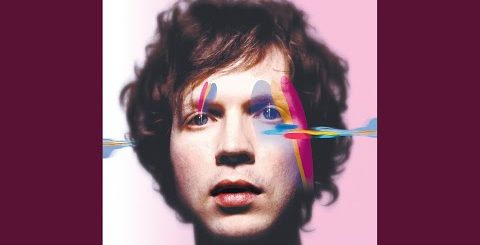
Encapsulated within the stirring lyrics of Beck’s ‘The Golden Age’ lies a profound exploration of ennui and the quest for meaning amidst a landscape of existential disillusionment. The song, a standout track from his 2002 album ‘Sea Change,’ tiptoes the fine line between melancholic reflection and a subtle hint of optimism, casting a hypnotic spell over the listener with its serene melody and introspective lyrics.
Widely revered for his eclectic musical style and existential songwriting, Beck delivers a sonic experience that invites listeners to delve deep into their own psyche, not just to understand the song, but to understand themselves. ‘The Golden Age’ is more than just a ballad; it’s a mirror Beck holds up to the soul, reflecting the complexities of the human condition.
Driving Through Desolation: The Search for Solace in a Barren World
The song opens with an invitation to ‘let the golden age begin,’ prompting a scene that juxtaposes the warmth of a golden age against the desolate backdrop through which the narrator drives. Beck’s invocation is rife with symbolism: the car’s wheel, the moonlit skin, and the desert wind resonate as tokens of transformation, symbols of a journey that offer relief from the ‘weight of the world.’
Yet the environment through which the journey takes place is stark, ‘a treacherous road with a desolated view,’ describing a seemingly futile traverse across an empty landscape. The ‘distant lights’ beckoning in the distance are few, setting the tone for a path filled with solitude and introspection, where the destination is as elusive as the ‘sun [that] don’t shine even when it’s day.’
The Sisyphean Struggle: Barely Getting By and the Challenge of Futility
The repeated refrain, ‘These days I barely get by, I don’t even try,’ paints a picture of defeated resignation. It intimates an existential weariness, a sense of toiling without purpose in a Sisyphean loop. Beck captures the essence of a struggle where the effort to heal or overcome feels pointless; the protagonist seems to be on the verge of giving up, trapped in an emotional stasis.
This sense of futility is underpinned by the notion that pushing forward no longer holds promise. The protagonist appears to be experiencing a personal dark age, where attempts at progress or happiness prove as evasive as the ‘golden age’ is nostalgic. The lyrics embody a universal human fear: the feeling that you are stuck in a period of life from which escape seems impossible, or worse, unimportant.
Illuminating the Hidden Meaning: A Subtle Brush with Optimism
Despite the prevailing melancholy, ‘The Golden Age’ contains a discrete undercurrent of hope. It lies in the details—the suggestion to ‘let the window down,’ allowing the external world to penetrate the internal; the prevailing ‘cool’ of the desert wind soothing ‘your aching head.’ These are the small gestures toward self-care and mindfulness that hint at resilience buried within the resignation.
The ‘golden age’ itself, while initially appearing as a distant and unattainable ideal, could also be interpreted as an internal state to be realized—a sense of peace and clarity that comes from acceptance. Beck doesn’t just lay out the hardships of life, he also gently encourages a quietude that could potentially lead to the acceptance and solace we seek in the throes of existential angst.
Memorable Lines: Poetic Echoes of a Moonlit Solitude
‘Feel the moonlight on your skin’ is one of the song’s most evocative lines, harnessing the moon’s timeless poetic allure as a symbol of serenity and change. The moonlight is a balm, a natural agent that can touch and cool the heated complexities of our deepest turmoils. This line encapsulates the song’s essence: seeking calm in the throes of chaos, solace in solitude.
Beck juxtaposes light and darkness throughout his lyrics as motifs for the internal battle being waged. This line, therefore, stands as a beacon in the song—a moment of potential clarity and beauty in the midst of a ‘treacherous road’ and a sun that refuses to reveal itself.
The Lyrical Odyssey: Beck’s Universal Voyage of the Soul
‘The Golden Age’ serves as a narrative road map for a philosophical quest that resonates with anyone who has ever felt the pangs of despondency. Beck employs his lyrics as a vessel, taking listeners on an internal odyssey that is both deeply personal and universally relatable.
Listeners find in the song’s weary tones and poignant lyrics a reflection of their own struggles against life’s often inscrutable challenges. With ‘The Golden Age,’ Beck crafts a masterful meditation on the relentless search for meaning, the inherent loneliness of existence, and the faint whispers of hope that propel us forward through the darkest of nights.