Brother by Alice in Chains Lyrics Meaning – Unraveling the Emotional Weave of Family and Distance
Lyrics
Not afraid to paint my sky
With some who say I’ve lost my mind
Brother try and hope to find
You were always so far away
I know that pain
So don’t you run away like you used to do
Roses in a vase of white
Bloodied by the thorns beside the leaves
That fall because my hand is pulling them hard as I can
You were always so far away
I know that pain
And I won’t run away like I used to do
Pictures in a box at home
Yellowing and green with mold
So I can barely see your face
Wonder how that color taste
You were always so far away
I know the way
So don’t you run away like you used to do
Like you used to do
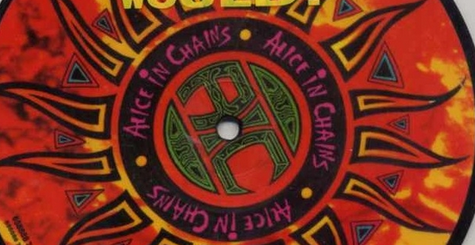
In the pantheon of grunge music, Alice in Chains holds a revered place. Their 1992 acoustic EP ‘Sap’ harbored a track saturated with poignant lyricism and haunting melodies – ‘Brother.’ While the literal interpretation might lean towards the heartfelt struggles involving siblings, a deeper introspection suggests a universal theme of estrangement, and the pain of emotional distance within any close relationship.
Penned by the band’s guitarist, Jerry Cantrell, ‘Brother’ is often thought to be an ode to his own estranged brother, but it’s laced with layers that transcend the personal. Cantrell’s allegorical storytelling and Layne Staley’s vocal delivery forge a vulnerability that beckons listeners to reflect on their own experiences of separation and the longing to reconnect with one’s past, understanding that sometimes the heaviest chains are not made of steel, but of memories and emotions.
The Tesseract of Loss: More than Sibling Sorrow
While the title ‘Brother’ points towards familial ties, the song isn’t merely a narrative on sibling estrangement. It speaks to the heart of anyone who has felt distance grow where intimacy once blossomed – be it friends, lovers, or family. This connection to broad human experience is quintessential Alice in Chains: drawing from specific wells of despondency to sketch a map of universal emotional topography.
Cantrell’s lyrical proficiency lies in his ability to paint his sky not just with the blues of melancholy but with the sprawling palette of human emotion. It’s this narrative relatability that invites listeners to commune with their deepest aches – the aches of memories fading like tarnished photographs, of frayed bonds, and the desperation to preserve what once was.
A Vase of White, Bloodied by Thorns: The Hidden Meaning
Among the song’s most vivid images is the stark tableau of roses in a pure white vase, marred by the violence of bloodied thorns and falling leaves. This metaphor speaks to the coexistence of beauty and pain in relationships, of how the most endearing connections can also harbor the most profound wounds, an idea that resonates with astonishing clarity within the Gothic tendencies of grunge.
This dichotomy is the visceral heart of the track – the destructive hand extracting the leaves is the same one that reaches out in search of a bond. It’s a bold-faced acknowledgment that sometimes we hurt, and are hurt by, the people we care for most. ‘Brother’ doesn’t shy away from this truth; instead, it embraces the thorns with the roses, recognizing the completeness of this duality.
Mold on Memories: The Persistent Struggle with Time
In a haunting reflection, Cantrell speaks of pictures boxed away, defiled by the passage of time – the mold and yellowing. The vividness with which we recall the faces of those we’ve loved fades over time, as does the tangible potency of memories. There’s a bitter resignation to be found in the acceptance of this relentless change; the song whispers the hard truth that nothing stays static.
Yet, that struggle against time’s decay is evidenced in Cantrell’s yearning to ‘barely see your face’ and to hazard a ‘taste’ of the past. It’s a clarion call to acknowledge the transience of life, to seize the moment and bridge gaps before they become too wide, for time moves indiscriminately, casting shadows on our most treasured connections.
Refusing to Run: A Declaration of Change
The refrain, ‘And I won’t run away like I used to do,’ is a moment of revolution within the song’s narrative. It’s a vow of transformed behavior, a pledge to face the pain of the past and the ambiguity of the present head-on. As much as ‘Brother’ is an elegy to separation, it is also, crucially, an assertion of agency and the possibility of reconciliation.
In this line, there is a latent power, a riposte to the inertia of avoidance. Cantrell is not just subverting his past approach to emotional trial but also calling out to the eponymous ‘brother’ to join him in this newfound stoicism. It’s both deeply personal and a universal appeal for strength in the face of adversity, to face up to the skeletons we’d rather not address.
The Ephemeral Echoes of the Most Memorable Lines
The ethos of ‘Brother’ reverberates in its most poignant lines. In Cantrell’s resolve where he sings, ‘Not afraid to paint my sky,’ there is a stoic resilience, a commitment to ownership of one’s life canvas, no matter how gray the days may turn. The embrace of pain, understanding its role in the rich tapestry of human experience, is the thread that runs through the song.
And as Staley’s voice carries the sentiment of ‘You were always so far away / I know that pain,’ it nestles into the soul of the listener. It’s an iridescent thread that weaves itself through the shared fabric of isolation and longing – a call across the void that finds an aching resonance in the heart of everyone who has ever yearned for a return, or even just a glimpse, of yesteryear’s warmth.