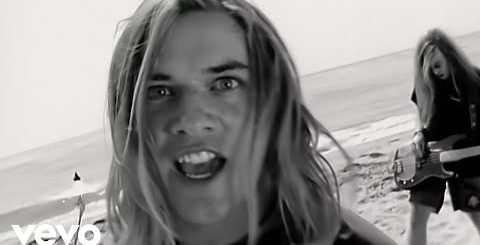
Cats in the Cradle by Ugly Kid Joe Lyrics Meaning – The Inescapable Echoes of Parenthood
Lyrics
Came to the world in the usually way
But there were planes to catch and bills to pay.
He learned to walk while I was away.
He was talkin’ ‘fore I knew it.
And as he grew he said,
“I’m gonna be like you, Dad.
You know I’m gonna be like you.”
And the cat’s in the cradle and the silver spoon,
Little boy blue and the man on the moon.
“When you comin’ home ?”
“Son, I don’t know when.
We’ll get together then.
You know we’ll have a good time then.”
Well, my son turned ten just the other day.
He said , “Thanks for the ball, Dad. Come on, let’s play.
Could you teach me to throw ?” I said, “Not today.
I got a lot to do.” He said, “That’s okay.”
And he walked away and he smiled and he said,
“You know,
I’m gonna be like him, yeah.
You know I’m gonna be like him.”
And the cat’s in the cradle and the silver spoon,
Little boy blue and the man on the moon.
“When you comin’ home ?”
“Son, I don’t know when.
We’ll get together then.
You know we’ll have a good time then.”
Well, he came from college just the other day,
So much like a man I just had to say,
“I’m proud of you. Could you sit for a while ?”
He shook his head and he said with a smile,
“What I’d really like, Dad, is to borrow the car keys.
See you later. Can I have them please ?”
And the cat’s in the cradle and the silver spoon,
Little boy blue and the man on the moon.
“When you comin’ home ?”
“Son, I don’t know when.
We’ll get together then.
You know we’ll have a good time then.”
I’ve long since retired, my son’s moved away.
I called him up just the other day.
“I’d like to see you, if you don’t mind.”
He said, “I’d love to, Dad, if I could find the time.
You see my new job’s a hassle and the kids have the flu,
But it’s sure nice talkin’ to you, Dad.
It’s been sure nice talkin’ to you.”
And as I hung up the phone it occurred to me,
He’d grown up just like me.
My boy was just like me.
(Yeah, yeah, yeah)
And the cat’s in the cradle and the silver spoon,
Little boy blue and the man on the moon.
“When you comin’ home ?”
“Son, I don’t know when.
We’ll get together then.
You know we’ll have a good time then.”
Au revoir, sweet innocence, and hello, poignant reality—Ugly Kid Joe’s rendition of ‘Cat’s in the Cradle’ hits with the force of a sledgehammer, bringing forth a cascade of emotions that both haunts and enlightens. The band’s gravelly tones and raw energy inject a new life into a story of paternal absenteeism and the cyclical nature of life, which was first popularized by Harry Chapin’s 1974 original.
In their own raspy reimagining, Ugly Kid Joe held a mirror to the Generation X ethos—balancing rebellion with reflection, angst with understanding. Examining the song’s verses is like peering through the looking glass into the often-unspoken trials of fatherhood and the silent vows made by sons to be just like their dads—an aspiration looming as both a sweet intention and a dire warning.
Like Father, Like Son – The Hereditary Heartache
The hypnotic chorus, ‘And the cat’s in the cradle and the silver spoon’, that anchors this soul-stirring melody is not just a collection of words; it is the chorus of life’s relentless march. It alludes to a folkloric fixture—the distant father, the eager child, and the toys and tales that fill the void. As the song progresses, Ugly Kid Joe paints a portrait of a growing distance, one that comes from the best of intentions gone awry, only to reveal a generational curse.
When the protagonist’s son pledges to emulate his father, it’s a bittersweet promise wrapped in admiration but bound by future regret. The lyrics capture a timeless and universal story: the vows of youthful aspirations quickly become overshadowed by the very patterns we once sought to escape. With Ugly Kid Joe’s gritty delivery, the sense of impending sorrow is palpable in each verse.
The Prodigal Ball – A Missed Catch and Its Consequences
In a moment that breaches every father’s armor, ‘Thanks for the ball, Dad. Come on, let’s play’, echoes as a heartbreaking symbol of missed opportunities. Ugly Kid Joe doesn’t just sing the lines; they infuse them with a sense of urgency and regret. The refusal to take a break from life’s incessant demands is a defining moment, one that solidifies the imperceptible and increasing gap between father and son.
What’s powerful about Ugly Kid Joe’s take is the simplicity and reality of the moment—a father’s everyday decision becoming a fulcrum upon which the relationship subtly tilts. The band conveys that life’s relentless pace often comes at the expense of the moments that truly matter, sometimes remembered too late, sometimes never at all.
The Borrowed Keys – Jangling Symbols of Independence
The casual request for car keys from the son who came from college offers up a stark symbol—a son’s autonomy and a father’s relinquished control. It is often in these mundane exchanges that Ugly Kid Joe exposes the deep emotional undercurrents of budding independence and a parent’s realization that their child no longer orbits their world as closely as before.
The band delivers this verse with a slight tension—an acknowledgment of pride tinged with the melancholy of loss. The symbolism within the exchange of keys represents not only a son’s freedom but also a father’s realization that he is no longer the axis on which his son’s life spins.
The Bleak Reverie of a Retired Life
Ugly Kid Joe, through their articulation of retirement and empty nesting, sketches a poignant vignette of life’s inevitable progression. The conversation between the aging father and his now-distant son serves as a raw, emotional denouement to the tale, as the son parrots the same excuses once uttered by his own father—illustrated in the refrain, ‘But it’s sure nice talkin’ to you, Dad. It’s been sure nice talkin’ to you.’
The role reversal is complete, and with it comes the haunting clarity of the generational echoes. The seemingly harmless choices of the past ripple forward, shaping the future in their wake. Ugly Kid Joe captures the essence of this moment with a sobering realism that resonates deeply with their audience.
The Unspoken Truths Hidden Within a Classic Refrain
The iconic status of the song, powerfully reimagined by Ugly Kid Joe, lies within its ability to communicate profound truths without preaching. The lyrics serve as a mosaic of moments that, piece by piece, construct the bittersweet saga of a father and son, distilling the essence of missed connection into a rock anthem that transcends time.
Heightened by grunge overtones, the song’s haunting refrain, ‘When you comin’ home?’ gains a new gravity. It doesn’t just ask a question but reflects the yearning for the return to a time and place where the relationship could be salvaged—a theme that resonates, regardless of generation, through the raw and powerful delivery that Ugly Kid Joe so masterfully provides.