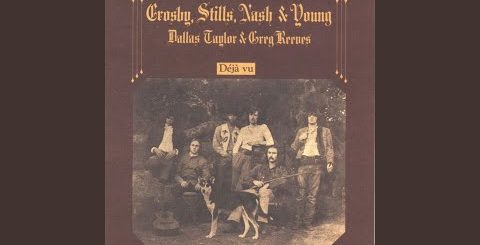
Ohio by Crosby, Stills, Nash & Young Lyrics Meaning – Unveiling the Echoes of Protest and Sorrow in a Classic Anthem
Lyrics
We’re finally on our own.
This summer I hear the drummin’.
Four dead in Ohio.
Gotta get down to it.
Soldiers are gunning us down.
Should have been done long ago.
What if you knew her and
Found her dead on the ground?
How can you run when you know?
Na, na, na, na, na, na, na, na.
Na, na, na, na, na, na, na, na.
Na, na, na, na, na, na, na, na.
Na, na, na, na, na, na, na, na.
Gotta get down to it.
Soldiers are cutting us down.
Should have been done long ago.
What if you knew her and
Found her dead on the ground?
How can you run when you know?
Tin soldiers and Nixon’s comin’.
We’re finally on our own.
This summer I hear the drummin’.
Four dead in Ohio.
Four dead in Ohio.
Four dead in Ohio.
Four dead in Ohio.
Four dead in Ohio.
Four dead in Ohio.
Four dead in Ohio.
Four dead in Ohio.
Four dead in Ohio.
In the wake of the tragic events at Kent State University on May 4, 1970, the landscape of American protest music was forever changed by the haunting strains of ‘Ohio’ by Crosby, Stills, Nash & Young. This visceral anthem did more than just reflect the mood of a nation; it became the aural embodiment of the anti-war sentiment and a rallying cry for an entire generation.
More than a simple retelling of events, ‘Ohio’ captures the raw emotion and political turmoil of its time. It distills the complexity of civil unrest, government accountability, and personal sorrow into a few potent verses and an unforgettable chorus. The song endures half a century later, owing not only to its historical significance but also to its artful study of collective grief and the power of music as a tool for change.
The Thunderous Beat of a Nationwide Heartbreak
From the ominous opening riff, ‘Ohio’ immediately sets a tone of urgency and disruption. The song’s arrangement, with each resonant drum hit and impassioned vocal, recreates the tension that was palpable across college campuses and city streets. Crosby, Stills, Nash & Young channeled the nation’s anguish over an unthinkable tragedy into a sonic experience that transcends time and still echoes in the collective memory of American protest.
The unflinching confrontation of political violence in the song imbued it with a gripping realism. It avoided the vague platitudes often found in protest songs of the era, opting instead for anxious specificity. The palpable distress can be felt as each repetition of ‘Four dead in Ohio’ serves as a stark reminder of the lives cut short and the incurable scar left on the American consciousness.
A Lyric Deep-Dive: The Molten Core of ‘Ohio’
At the core of ‘Ohio’ lies a simple, rhetorical question: ‘What if you knew her and found her dead on the ground?’ This one line plunges listeners into an ocean of empathy, forcing them to confront the human cost of political conflict—a cost often sanitized in the reporting of the times. The song doesn’t just invite listeners to sympathize; it compels them to internalize the loss as if it were their own.
Furthermore, the chorus ‘Tin soldiers and Nixon’s coming’ captures in seven words the sentiment of betrayal and fear that characterized the era. The term ‘tin soldiers’ dehumanizes the National Guardsmen, reducing them to mindless toys at the command of a government that seemed increasingly detached. This line lays bare the dichotomy between the young American citizens exercising their democratic right to protest and the mechanistic response of those sworn to protect them.
The Hidden Meaning: Echoes of a Society at War with Itself
While the surface narrative of ‘Ohio’ is explicitly tied to the Kent State shootings, the song reverberates with broader implications about the state of a divided nation. It interrogates the very idea of ‘us’ and ‘them,’ challenging the notion that there can be such a binary in a country purportedly united. The conflict wasn’t simply between protestors and the government; it was between competing visions of what America should represent.
The repeated lines that conclude the song serve as a haunting mantra, a reflection on the cyclical nature of violence and dissent. As the phrase ‘Four dead in Ohio’ is repeated, it evaporates from a newscast into a chant, a mnemonic device reminding each listener of the cost of apathy and the importance of political engagement and dissent.
Memorable Lines That Cut Through Silence
‘We’re finally on our own’ is more than a declaration of autonomy; it’s an acknowledgment of abandonment. With the tacit support of the government removed, the youth realized that their vision for a peaceful future was theirs to forge alone. This line delineates a catastrophic severance of trust between generations and governmental institutions—a divide that would shape the political landscape for decades.
Equally impactful are the simple, mournful chants of ‘Na, na, na’ following each verse. These wordless melodies carry the grief too dense for words, the kind of universal mourning language that unites listeners in shared sorrow. They are the sighs of resignation, the sounds of youthful idealism being met with the harshness of reality.
The Legacy of ‘Ohio’ and its Reverberations in Modern Times
‘Ohio’ did more than capture a moment; it became an important chapter in the songbook of America’s conscience. The resonance of the song is not tethered to the era of its birth. Instead, it continues to find relevance in the ebb and flow of the nation’s sociopolitical waves. As new generations encounter its message, it is recontextualized, serving as a touchstone for understanding the complex tapestry of American protest.
The song’s enduring nature speaks to its craftsmanship, its ability to find humanity within political discourse, and the raw authenticity of its creators’ emotions. It remains a masterclass in musical activism, a blueprint for artists seeking not only to comment on their world but to change it. Through the lens of a single, tragic event, ‘Ohio’ enlightens, educates, and inspires listeners to engage with their history and shape their future.