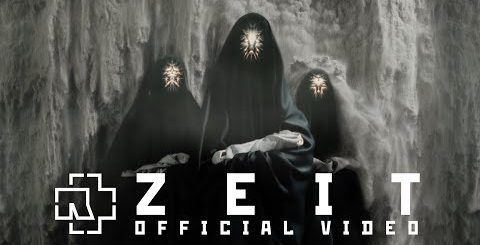
ZEIG DICH by Rammstein Lyrics Meaning – Unveiling the Profound Critique Hidden in Harmonic Fury
Lyrics
Murisuri, extraspection
Exmustamus, cruchifixus
Lumine, extraspection
Exmustamus, cruchifixus
Murisuri, extraspection, extraspection
Verlangen verfluchen
Verdammen, Versuchung
Verdammnis versprechen
Verüben sie Verbrechen
Verheißung verkünden
Vergebung aller Sünden
Verbreiten und vermehren
Im Namen des Herren
Zeig dich!
Zeig dich!
Verstecken verzichten
Verbrennen und vernichten
Verhütung verboten
Verstreuen sie Gebote
Verfolgung verkünden
Vergebung der Sünden
Verbreiten, sich vermehren
Im Namen des Herren
Zeig dich!
Zeig dich!
Zeig dich! Versteck dich nicht
Zeig dich! Wir verlieren das Licht
Zeig dich! Kein Engel in der Not
Kein Gott zeigt sich, der Himmel färbt sich rot
Verfehlung verfolgen
Verführung vergelten
Vergnügen verpönt
Verlogen und verwöhnt
Aus Versehen sich
An Kindern vergehen
Verbreiten und vermehren
Im Namen des Herren
Zeig dich!
Zeig dich! Versteck dich nicht
Zeig dich! Wir verlieren das Licht
Zeig dich! Kein Engel in der Not
Und kein Gott zeigt sich, der Himmel färbt sich rot
Exmustamus, cruchifixus
Murisuri, extraspection
Exmustamus, murisuri
Extraspection, extraspection
Zeig dich!
Rammstein has long been recognized for their capacity to stir up controversy through their powerful blend of theatrical performance and heavy-hitting music. ‘ZEIG DICH,’ a track from their eponymous 2019 album, Rammstein, continues this legacy by weaving poignant social commentary with an anthemic sound that bulldozes the eardrums while yanking at the moral compass of anyone who dares to listen closely. The Latin-infused opening chant serves as a harbinger, plunging the listener into deeper introspection beyond the visceral impact of their thunderous riffs.
To understand ‘ZEIG DICH’ is to peel back the layers of Rammstein’s complex artistry. The song launches an assault on the bastions of hypocrisy, cloaked in religious garb and masquerading as sanctity. It’s a battle cry against abuses of power, where sacred institutions become the playgrounds for the profane – a theme Rammstein articulates with punishing precision. The following sections decipher the iconoclastic walls of sound, unearthing the message buried in the bedrock of one of the most enigmatic bands of our era.
The Chorus Unchained: A Demand for Transparency
In the beating heart of ‘ZEIG DICH,’ the chorus calls for visibility (‘Zeig dich!’ or ‘Show yourself!’), insisting on accountability where there has been none. This pivotal moment in the song isn’t merely a request; it is an imperative for the concealment to cease, for the light to expose the shadows lurking within the hollow halls of institutional power. Rammstein doesn’t merely want the truth; they demand it with an urgency that mirrors our collective yearnings for transparency in a world shrouded too often in secrecy.
Part battle anthem, part revelation, the chorus transcends simply being a catchy hook—it becomes the linchpin of the band’s broader societal indictment. The seismic stomp of the drums marches lockstep with this call to arms, resonating beyond the soundscape into a resonant declaration against obfuscation and deceit.
An Allegory of Sin and Sanctimony
At face value, ‘ZEIG DICH’ takes aim at the dichotomy of sin and holiness, but a closer read reveals it as a cunning allegory for the discrepancies between what is preached and what is practiced. The litany of ‘Ver-‘ prefixed words—a linguistic feature from their native German that implies negativity or opposition—crafts a tapestry that condemns the corruption, hypocrisy, and exploitation often found festering beneath virtuous veneers.
The repeated phrases, starting with ‘Exmustamus, cruchifixus,’ are akin to an incantation, hinting at the intersection of spirituality and subjugation. As Rammstein plays with ecclesiastical imagery, they co-opt the traditionally sacrosanct to spotlight the sacrilege committed in its guise.
A Condemnation of Clerical Transgressions
Perhaps the most jolting lines in ‘ZEIG DICH’ address the church’s darkest scandals directly: ‘Aus Versehen sich / An Kindern vergehen.’ The stark reference to clergy abuse is no veiled metaphor; it stands as an unflinching acknowledgment of atrocity. Rammstein has a history of not turning away from the bleak or taboo, and in this instance, they shine an unforgiving spotlight on the vilest violations of trust and innocence.
It’s a guttural cry against injustice, reminding us that while ecclesiastical institutions claim to propagate morality, they too can house monsters in their midst. In unearthing these horrors, Rammstein refuses to let society look away, to forget, or to forgive too hastily.
Searching for Divinity in the Rubble of Revelation
‘Zeig dich! Kein Engel in der Not / Und kein Gott zeigt sich, der Himmel färbt sich rot.’ Here lies one of the song’s most memorable lines, loaded with a desolation that cuts to the quick. This is no mere questioning of faith but an exposé of the vacuum where divine intervention should be. When atrocities occur, where is the salvation, the deliverance? The band calls out the heavens themselves, painting a vivid tableau of skies awash with crimson—a color deeply associated with both sacrificial blood and the flames of hell.
Rammstein’s message is not merely one of religious disillusionment; it’s a broader philosophical musing on human desperation in the face of systemic failure. When the structures we rely upon crumble, we are left searching the heavens for a sign, any sign, that might never come.
The Hidden Meaning Behind the Latin Chants
With ‘Exmustamus, cruchifixus,’ Rammstein delves into a language steeped in religious tradition—Latin. The chanting creates an eerie dissonance, a chant that could be just as easily emanating from within the walls of a monastery as it would a Rammstein concert. Through this, the band conjures the historical weight of religion’s intersection with power, while subverting it to criticize those very foundations.
Listeners might find themselves perplexed by the Latin phrases, as they don’t directly translate into coherent meaning, suggesting perhaps that the power of these institutions is sustained by obscurity and the incomprehensibility of their doctrines to laypeople. In the murmur of these chants, Rammstein embeds a skepticism towards the ostensibly sacred, underlining the song’s central theme: the dark side of divinity and the call for its revelation.