Don, Aman by Slint Lyrics Meaning – Unraveling the Solitude in Sound
Lyrics
It felt good to be alone.
He wished he was drunk,
Thought about something he said,
And how stupid it had sounded
He knew he should forget about it
and decided to piss, but he couldn’t…
(A plane passed silently overhead, the streetlights, and the buds on the trees and the night, were still.)
It finally came, he took a deep breath.
It made him feel strong, and determined,
To go back inside.
The light.
Their backs.
The conversation.
The couples, romancing, so natural.
His friends stare,
With eyes, like the heads of nails.
The others.
Glances.
With amusement,
With evasion,
With contempt.
So distant,
With malice,
For being a sty
In their engagement,
Like swimming underwater in the darkness,
Like walking through an empty house,
Speaking to an imaginary audience,
being watched from outside, by no-one
(A song without a key)
He could not dance to anything.
Don left,
And drove,
And howled,
And laughed,
At himself.
He felt he knew what that was.
Don woke up,
And looked at the night before.
He knew what he had to do.
He was responsible.
In the mirror,
He saw his friend.
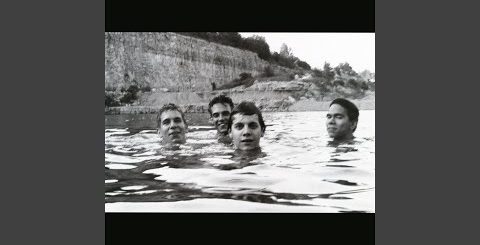
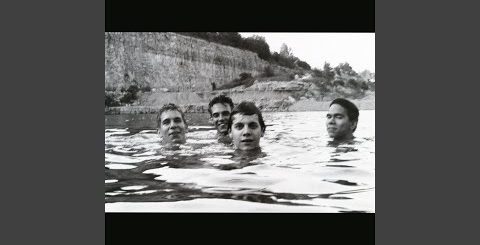
Slint’s ‘Don, Aman,’ a track draped in the nocturnal fabric of their critically acclaimed album ‘Spiderland,’ is more than a mere mélange of enigmatic vocals and haunting instrumentals; it is a vessel sailing through the chop of isolation, self-realization, and the ebbs and flows of social dysharmony.
The song’s narrative arc plumbs the depths of an ordinary struggle against loneliness and inner turmoil, encapsulated within the tale of its protagonist, Don. He steps outside, battles internal demons, and faces the alienation wrought by a society where he feels an outsider, hinting at a poetic exploration of the human condition that resonates on a universal frequency.
The Nocturnal Backdrop: Setting the Stage for Don’s Odyssey
Slint’s choice to set ‘Don, Aman’ in the shroud of night is far from coincidental. Darkness becomes the canvas upon which Don’s story is painted, a time when revelation strikes hardest. The calm and solitude empower him, facilitating a rare moment for contemplation that is all too often crushed under the weight of day-to-day banality.
It’s here, against a backdrop of an ordinary world—streetlights, overhead planes—that Don’s extraordinary internal struggle plays center stage. The dichotomy of the still, lifeless objects around him and his turbulent, unsettled emotions crafts a stark contrast that echoes throughout the song.
Staggering Solitude: The Solace and Sorrow of Being Alone
Aloneness is a theme that weaves itself in and out of the tapestry of ‘Don, Aman.’ Far beyond the simple act of wishing for inebriation to blunt reality, Don’s solitude is a prism—sometimes refracting strength and decisive resolve, at others a vector for his self-deprecating thoughts.
In solitude, we often find a truth untainted by the gaze of others. For Don, the clarity that comes with being alone is double-edged. It serves both as a revealing light and as a shadow that accentuates his inner darkness.
The Subtle Symphony of Social Dissonance
The interactions—or lack thereof—between Don and his fellow revelers speak in volumes about the dissonance that can exist even within a crowded room. Slint exquisitely captures the essence of alienation amidst communion, a keen observation of how one can be a stranger in the midst of familiarity.
As the couples engage naturally, Don is the sty in their contentment, showcasing that his battle is not only internal but external. The song deftly illustrates the grand theater of social rituals, and how for some like Don, participating feels akin to dancing without hearing the music.
Deciphering the Enigma: The Song’s Hidden Context
Don’s struggle appears rooted in the everyday, but ‘Don, Aman’—like a song without a key—eludes precise interpretation. The lyrics, visceral and surreal in equal measure, encourage listeners to look beneath the superficial and ask: what does it mean to truly fit in?
The narrative doesn’t culminate in resolution, but instead pivots on moments of realization and rebellion. When Don howls and laughs, it is triumph and resignation intertwined—a profound statement on the human experience of consciousness and self-awareness.
Memorable Lines That Echo in the Mind’s Corridors
The cryptic closure of the journey—’In the mirror, / He saw his friend.’—offers a glimmer of reconciliation. The mirror reflects not the judgment of others but the self that must be acknowledged and embraced. It is a powerful realization that the companion we ultimately need is often the one we already possess within.
Don’s reflection that ‘He knew what he had to do’ and ‘He was responsible’ morph the song from a narrative to a philosophical meditation on agency. It is a melodic totem for the listener, a reminder that amidst the night’s quiet whispers, we find the echoing truths of our own stories.