Stereo by Pavement Lyrics Meaning – Deciphering Sonic Nostalgia and Cultural Commentary
Lyrics
The infrastructure rots
And the owners hate the jocks
With their agents and their dates
If the signatures are checked
You’ll just have to wait
And we’re counting up the instants that we save
Tired nation so depraved
From the cheap seats see us
Wave to the camera
It took a giant ramrod
To raze the demon settlement
But high-ho silver, ride
High-ho silver, ride
Take another ride to see me home
Listen to me
I’m on the stereo stereo
Oh my baby baby baby baby babe
Gave me malaria hysteria
What about the voice of Geddy Lee
How did it get so high?
I wonder if he speaks like an ordinary guy?
(I know him and he does)
And you’re my fact-checkin’ cuz
(Aww)
Well focus on the quasar in the mist
The Kaiser has a cyst
And I’m a blank want list
The qualms you have and if they stick
They will drown you in a crick
In the neck of a woods
That was populated by
Tired nation on the fly
Everybody knows advice
That was given out for free
Lots of details to discern
Lots of details
But high-ho silver ride
High-ho silver ride
Takes another ride to make me
Oh, get off the air
I’m on the stereo stereo
Oh my baby baby baby baby baby babe
Gave me malaria hysteria
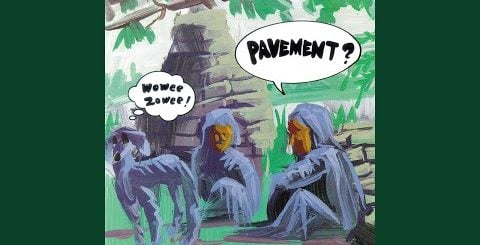
Among the pantheon of ’90s alternative rock, Pavement stands tall with their lo-fi brilliance and enigmatic lyrics. The 1997 hit ‘Stereo’ remains a testament to their unique ability to meld soundbite culture with nuanced social critique. The song, with its seemingly disjointed narrative and layered instrumentals, continues to captivate listeners more than two decades after its release.
Dissecting ‘Stereo’ is no small task. Beyond the catchiness of its riff and the quirkiness of its verses, the track holds a mirror up to the era’s shifting dynamics—consumerism, entertainment, and celebrity. It prompts a deeper look into the fabric of our societal tapestry, challenging norms with each chord progression and every cryptic line.
The Enigma of Modernity Wrapped in Melodic Distortion
‘Pigs, they tend to wiggle when they walk; The infrastructure rots.’ These opening lines immediately throw us into a commentary on decay—both literal and metaphorical. Pavement is notorious for its allegoric lyricism, and ‘Stereo’ kicks off with a vision of societal decay, spotlighting greed and superficiality that seem to eclipse the skills and passions of true artisans—the ‘jocks.’
The song traverses through this modern landscape, a seemingly impromptu stream of consciousness that’s carefully crafted to reflect the band’s perspective on the world’s authenticity—or more pointedly, the lack thereof. This is the genius of Pavement; each phrase could be a paper in itself, pondering the depths of contemporary human experience.
Rush’s Vocal Frontman and the Myth of the Ordinary
One of the song’s most memorable inquiries, ‘What about the voice of Geddy Lee / How did it get so high? / I wonder if he speaks like an ordinary guy?’ is a prime example of Pavement’s offbeat storytelling. Here, Geddy Lee (Rush’s lead singer) becomes a symbol for the unusual and extraordinary masquerading as mundane. It forces listeners to question authenticity and notoriety in the music industry and fame’s effect on perception.
The mention of Lee also disaggregates the art from the artist, inviting listeners to contemplate whether those we idolize in the public realm cross over into the ordinary in any aspect of their lives. With casual braggadocious humor, the band strips down the glorification of celebrities, presenting them as simple elements in the stereophonic mix of modern society.
The Hidden Meaning: Societal Stagnation and Media Critique
‘From the cheap seats see us / Wave to the camera / It took a giant ramrod / To raze the demon settlement.’ Pavement maneuvers here between nuances of public scrutiny and aggressive urban development. The ‘cheap seats’ evoke a sense of the overlooked, ordinary people caught in the gaze of an unflinching media, while ‘demon settlement’ reflects the detrimental effects of unchecked capitalism.
This section of the song tackles the idea that our society often requires forceful upheaval—’a giant ramrod’—to challenge entrenched systems. Dispensing with political correctness, Pavement uses this imagery to invoke the turmoil required to confront and cast off societal demons, be they urban decay, social stratification, or celebrity worship.
Navigating the Layers: Love, Disease, and Discontent
The repeated mantra, ‘I’m on the stereo stereo / Oh my baby baby baby baby babe / Gave me malaria hysteria,’ blurs the line between earnest confession and sardonic metaphor. The song flirts with the theme of infectious and maddening love, but also alludes to an epidemic of hysteria—perhaps pointing to the madness induced by the tumultuous cultural climate or the media’s feverish broadcast of information.
By coupling a term as severe as ‘malaria’ with ‘hysteria,’ the song makes a poignant comment on the exaggerated nature of cultural consumption, where everything is ingrained with hyperbolic importance. The juxtaposition of these themes creates a surreal tapestry reflective of the ’90s music landscape, dominated by frenetic energy and converging influences.
A Reflection on Legacy: The Eternal After-Hum
‘Lots of details to discern / Lots of details’—these closing thoughts encapsulate ‘Stereo,’ challenging listeners to uncover layers of meaning beneath the track’s surface. In a sense, Pavement leaves us with aural footprints, an invitation to perpetually analyze the threads woven into this complex ballad of distortion.
Songs like ‘Stereo’ resist definitive interpretations. They evolve with the listener, adapting their meaning with time and context. Pavement’s genius lies in igniting thought without prescribing conclusions, and ‘Stereo’ continues to echo as both a marker of ’90s culture and a living, breathing dialogue with the present.