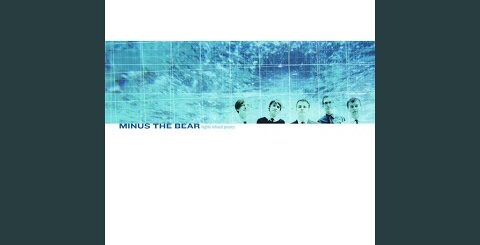
Knights by Minus the Bear Lyrics Meaning – Delving Into the Lyrical Labyrinth
Lyrics
A little light today
but tomorrow, oh tomorrow
I owe you, don’t I?
I know it ain’t the money girl
There never was money
[Chorus]
It’s usually so typical
A piece of you for a piece of me
Its hard-coded
A piece of you for a piece of me
And it’s alright
Let’s call it good
A little more
Let’s make this even
[Chorus x2]
Is it really a sin
if we both come out even?
Come out even
“Knights”, a track by the enigmatic and genre-transcending Minus the Bear, is one that beats with the pulse of a cryptic heart and unfurls like the edges of a shadowy, introspective dream. As listeners embark on an aural journey, they grapple with the poetry woven intricately by the band—a tapestry of sound and allegory that defies the simplicity of a cursory listen.
Digging deeper into the fabric of this alternative rock anthem, there’s a nuanced exploration of personal debts, relational equivalences, and the existential marketplace where human emotions are traded like commodities. To understand the soul of ‘Knights’, one must embrace the subtleties and complexities laid bare by its philosophical queries, cloaked in the seductive dress of musical expertise.
The Burden of Emotional Debt: Interpreting the Layers
The very opening, ‘I owe you, don’t I?’, isn’t just a question, but a tentative admission of a debt that extends beyond the tangibility of finance. It’s the recognition of an existential owing—one that weighs heavily on the speaker’s consciousness. As these words repeat, echoing through the corridors of the song, the light today and the foreboding tomorrow symbolize the inconsistency of emotional presence, a subtle nod to the debts we accrue through interactions and relationships.
This debt isn’t one to be settled by mere currency, as they confirm, ‘I know it ain’t the money girl / There never was money,’ which instead shifts the focus to a more profound and perhaps unquantifiable indebtedness. It may allude to the emotional, or even spiritual, debt acquired through shared experiences, intimacies, or simply the myriad ways we impact each other’s lives. A statement on our inability to balance the books when it comes to the human experience.
A Symphony of Quotable Prose: Memorable Phrases Decoded
The chorus of ‘Knights’ serves as a magnetic pole within the tune, attracting the essence of the verse’s sentiment and crystallizing it into memorable lines, ‘It’s usually so typical / A piece of you for a piece of me / It’s hard-coded.’ Here, the song touches on a universal truth about the reciprocity expected in relationships and individuals’ instinctive tit-for-tat nature. It’s a commentary on a perhaps unspoken, yet universally understood, transactional view of human connections.
Furthermore, declaring this exchange as ‘hard-coded’ suggests inevitability. Like a piece of a soul or a moment in time, it cannot be retained without giving something in return. ‘Let’s make this even’ encapsulates a yearning for a resolution to this inherent imbalance, a desperate call to settle scores in a game where the rules are written into our very being.
Harmonizing The Ledger: The Quest for Equal Exchange
Proceeding from the acknowledgment of imbalance, Minus the Bear’s ‘Knights’ probes the listener to consider the equitable stance in human dealings. ‘And it’s alright / Let’s call it good / A little more / Let’s make this even’ thus becomes a mantra of making peace with the lopsided scales of emotional interaction. Perhaps it acknowledges that what we owe each other may never truly be resolved, but that there is peace in attempting fairness.
The repetition in the structure of the song mirrors life’s own cycles of give and take, highlighting the often repeated trials we engage in to balance what is owed and what is owned in an emotional sense. This part of the song suggests a certain resignation or acceptance coupled with a hopeful endeavor towards negotiation and balance—it’s an endless pursuit that might not yield results but is nevertheless noble in its aim.
The Ethical Enigma: Sin and Equality’s Dance
As the song culminates, Minus the Bear confronts the moralistic undertones head-on with, ‘Is it really a sin / If we both come out even?’. This rhetorical inquiry casts a philosophical stone into the waters of morality, asking whether the pursuit of balance itself bears an element of wrongdoing. Is the very essence of reciprocity, when done to establish equality, an affront to a more altruistic form of human interaction?
Here, the songwriters are potentially critiquing the self-serving elements of human nature that often lurk within the guise of fairness. Simultaneously, they explore the notion that genuine equity seldom exists without personal gain also coming into play. The line effortlessly encapsulates the conflict between the ideologies of self-benefit and selflessness when we negotiate the terms of our relationships.
Uncovering the Subliminal: The Song’s Hidden Message
‘Knights’ is rife with metaphorical reverberations that suggest an undercurrent of skepticism towards the genuine possibility of achieving a state of equality in any form. The song deftly plays with the concept of equilibrium in human interactions as a kind of alchemical myth—something sought after but ultimately unattainable.
In this light, ‘Knights’ isn’t merely a song, but a philosophical manifesto set against the backdrop of rhythmic consonance and dissonance. It’s a revelation that urges us to look beyond what is traded between souls, to search for an inner peace that perhaps does not rely on societal score-keeping. It’s a musing on the relentless endeavor for ultimate balance, a fable wound around a melody that dares us to consider that perhaps some debts are meant to remain, arousing a poignant inner conversation long after the final chord fades.