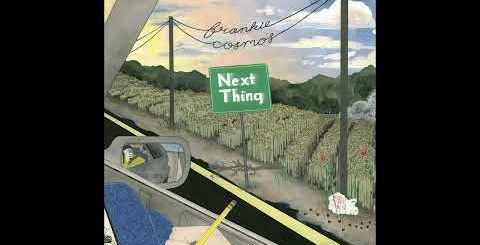
Sappho by Frankie Cosmos Lyrics Meaning – A Nostalgic Melancholy Wrapped in Indie Pop
Lyrics
And I look up in
And is that even your house
Is that Sappho you’re reading
Is it cool and I don’t care
Can you feel me in the air
Under the crack in the door
Can you tell I have no floor
And I’m shivering just thinking
Where have you been
All these minutes
I am too stressed out to
Do the thing that they won’t do
Why should I fight back
I’m just not like that
And I’m sorry if
I have been a real bad friend
Your face too close to mine
To hear you talk
So I look up into your window
On the street where I am standing
Is that even your house
Is that your landing
And I want to know what you’re reading
Is it cool and I don’t care
Can you feel me in the air
Under the crack in the door
Can you tell I have no floor
I’m not grounded
Nothing
When Greta Kline, better known by her stage name Frankie Cosmos, plucks at her guitar strings and murmurs into the microphone, her songs take on a form of diary-like intimacy that few artists can claim to hold. ‘Sappho,’ a track from her enchanting repertoire, follows this introspective blueprint, weaving through themes of yearning, identity, and existential reflection. Through delicate melodies and aching lyrics, Cosmos transforms the personal into the universal.
But beneath the indie-pop surface lies a layer of emotional resonance and coded lyricism that prompts a deeper dive. ‘Sappho’ is not just another lovesick ballad; it is a poignant exploration of desire, distance, and the disconnection one feels from themselves and the object of their affection. With Cosmos’s lyrical prowess at the helm, we explore the intricate tapestry of this haunting tune, unwinding its subtle threads to discover what truly lies at its core.
A Window into Longing: The Spectator’s Narrative
The song begins with a narrator outside, looking at a window of a house they’re not sure belongs to the object of their affection. This distance is not just physical; it’s emblematic of emotional barriers and a sense of uncertainty. The act of looking in but not participating is a poignant metaphor for unrequited love or a relationship that is on the brink, where the closeness has given way to a chasm of doubt.
Is that ‘Sappho you’re reading?’ she asks, invoking the ancient Greek poet known for her expressions of love and desire. Cosmos wields this reference not just as an allusion to the lyrical complexity of yearning, but also as a nod to the poet’s historical ambiguity, mirroring the narrator’s own uncertainty about their standing in the subject’s life.
The Dichotomy of Apathy and Yearning
‘Is it cool and I don’t care / Can you feel me in the air’ reflects a striking interplay of indifference and intense longing. This duality encapsulates the narrator’s struggle to seem nonchalant while internally craving recognition and emotional reciprocation. Indifference is the mask worn to protect oneself from the pain of unmet needs, yet this façade merely hovers in the ‘air,’ thin and insubstantial.
The internal battle between maintaining a facade and the aching need to connect is a theme Cosmos expertly toys with throughout her music. By capturing this dichotomy, she paints a portrait of the modern human condition: constantly balancing our external presentation with our internal landscapes of desire and vulnerability.
No Floor Below: The Song’s Hidden Meaning
The repeated line ‘Can you tell I have no floor’ ventures into the song’s hidden depths—an intimate revelation of the narrator’s feeling of ungroundedness. It’s a metaphor for an existential uncertainty that permeates through life’s fissures; a disconcerting awareness that one’s foundation might be non-existent, leading to a state of perpetual emotional freefall.
This motif of lacking a ‘floor’ underlies the entirety of the song, giving the listener a palpable sense of the narrator’s struggle to find stable footing, not just in their relationships, but within themselves. The floor is a metaphor for stability, security, and perhaps belief — without it, there is an overwhelming sense of disconnection.
The Silent Battle Within: Fighting Back vs. Surrender
‘Why should I fight back / I’m just not like that’ captures a moment of resignation within the chaos of the narrator’s emotions. There is a profound weariness in fighting against the current of how things are, particularly when one feels that the essence of their being is not inclined towards struggle or agression. Cosmos crafts her characters with rich layers, and here we see the underbelly of what it means to accept vs. what it means to resist.
The introspective bravery in acknowledging personal limits becomes a form of quiet resistance, a theme many of Cosmos’s listeners find solacing. In the age of battling for one’s space, the song subtly reminds us that sometimes, the greatest act of resistance is choosing how we engage with the world, honoring our authentic selves in the process.
Memorable Lines: The Close Proximity of Disconnection
Perhaps one of the most memorable lines, ‘Your face too close to mine / To hear you talk,’ beautifully encapsulates the song’s theme of disconnection. This oxymoron of closeness breeding disconnection strikes at the heart of relational dynamics where physical proximity does not equate to emotional intimacy.
With this line, Cosmos shines a light on the paradox that often exists within our closest relationships – that one can feel the most isolated when they are inches away from another. It underscores the song’s overarching sentiment: a yearning to bridge the distances that cannot be measured by space alone, but through the pounding pulse of the human heart.