The Sprawl by Sonic Youth Lyrics Meaning – Unraveling the Suburban American Dreamscape
- Music Video
- Lyrics
-
Song Meaning
- The Devil Wears Discount: Dissecting the Consumerist Overtones
- The Cadence of Conformity: Analysis of Repetitive Lyrics
- Raw Nostalgia: A Grittier Take on the American Dream
- The Hidden Meaning: Diving Into Sonic Youth’s Expose on Hellish Suburbia
- Memorable Lines and Candy Coatings: Deconstructing Sonic Appeal
Lyrics
I’ve gone native
I wanted to know the exact dimension of hell
Does this sound simple?
Fuck you, are you for sale?
Does ‘fuck you’ sound simple enough?
This was the only part that turned me on
But he was candy all over
Come on down to the store
You can buy some more, and more, and more, and more
Come on down to the store
You can buy some more, and more, and more, and more
Come on down to the store
You can buy some more, and more, and more, and more
Come on down to the store
You can buy some more, and more, and more, and more
I grew up in a shotgun row
Sliding down the hill
Out front were the big machines
Steel and rusty now, I guess
Out back was the river
And that big sign down the road
That’s where it all started
Come on down to the store
You can buy some more, and more, and more, and more
Come on down to the store
You can buy some more, and more, and more, and more
Come on down to the store
You can buy some more, and more, and more, and more
You can buy some more, more, more, more
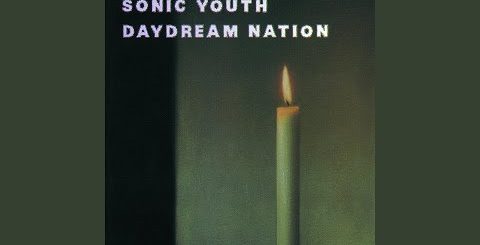
Diving into Sonic Youth’s ‘The Sprawl,’ we peel back layers of suburban malaise and consumerist critique. This song, both dissonant and melodic, emanates from their seminal album ‘Daydream Nation’, commanding attention not just for its sonic innovations but for its penetrating lyrics as well.
‘The Sprawl’ taps into a raw, visceral experience, reflecting the band’s vision of an America ensnared by its own ideals. It’s a journey through landscapes both physical and psychological, where the geography of American life becomes metaphoric of deeper societal unrest.
The Devil Wears Discount: Dissecting the Consumerist Overtones
With its opening lines, ‘The Sprawl’ immediately levers us into a dialogue on appearance and assimilation. The cheap nylon slips represent a masquerade, a facade of fitting into the expected social norms. Yet there’s an inherent sarcasm when the narrator ‘goes native’, suggesting an almost anthropological study of suburban life from an outsider’s perspective.
This mimicry of the mainstream, coupled with the haunting repetition of ‘Come on down to the store,’ becomes a mantra for overconsumption. The store—relentless in its promise of more—embodies the ceaseless hunger of consumer culture within the reach of a suburban sprawl.
The Cadence of Conformity: Analysis of Repetitive Lyrics
‘Come on down to the store, you can buy some more, and more, and more, and more.’ This line, repeated like a commercial jingle, underscores the hypnotic allure of consumerism. The endless loop of acquisition, parroted back to listeners, mirrors the monotonous patterns of suburban life fixed around commerce and material gain.
Sonic Youth masterfully uses repetition not just as a lyrical tool but also as a sonic one, reinforcing the message through relentless rhythm and droning guitars that mimic the grinding gears of capitalism.
Raw Nostalgia: A Grittier Take on the American Dream
‘I grew up in a shotgun row, sliding down the hill,’ directs the perspective to a past personal narrative. The imagery Sonic Youth conjures is saturated with industrial decay; the big machines and the steel have become obsolete. It reflects a loss of innocence and a recognition that progress has left behind a rusted past.
The river and that ‘big sign down the road’ evoke the symbols of movement and opportunity, now just landmarks on a worn-out map. The song’s setting materializes as a place once brimming with promise, now stalling in the twilight of the American Dream.
The Hidden Meaning: Diving Into Sonic Youth’s Expose on Hellish Suburbia
There’s a potent undercurrent of existential dread in the questioning, ‘I wanted to know the exact dimension of hell.’ It taps into the mundanity and despair that can accompany the suburban dream, turning it on its head to query whether it might actually be a form of hell.
‘Does this sound simple? Fuck you, are you for sale?’ These lines carry a confrontational tone that rejects simplicity in favor of complexity, resistance rather than complacency. It challenges both the sell-out culture and the listener, provoking introspection about the price of capitulation to societal norms.
Memorable Lines and Candy Coatings: Deconstructing Sonic Appeal
The conclusion of the first stanza, with its mention of ‘candy all over,’ brings a stark contrast to the caustic tone preceding it. This sensory image of sweetness overpowers, suggesting both the allure and hindering qualities of desire—candy as the tempting surface hiding the unsavory beneath.
It’s these evocative images, paired with Sonic Youth’s experimental sound, that carve moments of abrasive beauty into the listener’s consciousness. The memorable lines serve as thematic pillars, holding up a structure teeming with commentary and critiques, veiled in poetic ambiguity.