Die by the Drop by The Dead Weather Lyrics Meaning – Unraveling the Haunting Echoes of Existence
Lyrics
A little grave we can fill together,
I got myself a problem,
That I’ve been lookin’ to sell,
Some people die just a little
Sometimes you die by the drop
Some people die in the middle
I live just fine on the top
I’m gonna take you for worse or better
I’m gonna make you for worse or better
I’m gonna take you for worse or better
To my little grave
I never said we was equal
I never wished to be saved
If I’m a problem then preacher
Let’s dig a little grave
I’m gonna take you for worse or better
I’m gonna make you for worse or better
I’m gonna take you for worse or better
To my little grave
Let’s dig a hole in the sand, brother
Starve off the land for worse or better
Get right down to the bottom
If one goes I’ll do the other
Some people die just a little
Sometimes you die by the drop
Some people die in the middle
I live just fine on the top
I’m gonna take you for worse or better
I’m gonna make you for worse or better
I’m gonna take you for worse or better
To my little grave
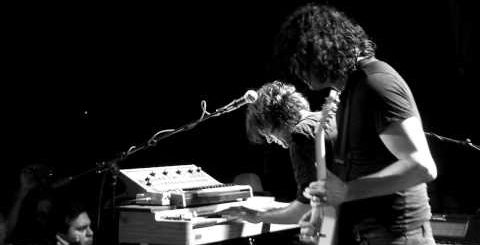
In the realm of rock music, The Dead Weather emerges as a thunderstorm of raw, unfiltered emotion. The supergroup, spun from the warped minds of Jack White, Alison Mosshart, Dean Fertita, and Jack Lawrence, forges their message not through banal platitudes, but through the grim poetry of the human condition. ‘Die by the Drop’ is a consummate exhibition of this—a song that snakes through the psyche with a rhythm as insistent as the message it bears.
Beyond the visceral guitar licks and Mosshart’s hypnotic vocals, ‘Die by the Drop’ is a quasi-philosophical treatise cloaked in rock bravado. The song’s throbbing pulse is a conduit for an exploration of life’s terminal nature, the fickle ebb of existence, and the personal sovereignty in choosing one’s fate. Let’s strip back the layers of this enigmatic anthem and delve into its cryptic heart.
A Gravely Invitation: Dissecting the Dire Opening Lines
The call to ‘dig a hole in the sand, brother’ is both a literal and allegorical provocation, beckoning us to consider the graves we willingly excavate in our lives: the risks we take, the sacrifices we make. It implies a shared toil, a conscription to reckon with the weight of our decisions—a partnership in the facing of life’s most ominous uncertainties.
Mosshart’s voice carries a cadence rich with the intrigue of a mystery not fully unveiled. The act of filling this grave ‘together’ speaks to the human desire for connection in the face of adversity. Yet, the mention of ‘a problem that I’ve been lookin’ to sell’ swings the pendulum back toward self-concern, hinting at a desperation to offload personal demons on this commiserative journey.
The Lingering Specter of Death: Verses That Vibes with Vulnerability
‘Some people die just a little, sometimes you die by the drop,’ sings Mosshart, distilling a profound truth about existence. Life chips away at us in increments, each moment a potential drop leading to an imperceptible demise. The ‘middle’ where ‘some people die’ is the mediocrity most fear, while ‘living just fine on the top’ represents a superior state of being or perhaps, acceptance.
This acceptance carries the macabre inkling that, in our journey towards the end, embracing downfall in its slow, successive tincture might allow us to savor existence that much more. It throws the spotlight on the fine line between survival and truly living, underscoring the irony that only in acknowledging death can we begin to define what it means to live.
Forging Ties with the Inevitable: The Chorus’ Binding Promise
The recurrent promise to take, make, and bring ‘for worse or better’ to the ‘little grave’ is a haunting oath that knells like church bells through the chorus. It’s a vow echoing the inescapable contract with mortality, an agreement that, once forged, shadows every act, every relationship, every breath until we meet our diminutive demise.
There’s a nuance to Mosshart’s repetition that gleans a self-assertive defiance. It is not merely about surrendering to the finale. It’s an active shaping of one’s destiny—a raw declaration that even in the dance with death, we can lead with the steps of our choosing, be they clumsy or graceful.
Veiled Rebellion: The Song’s Hidden Meaning
Peering into the verses of ‘Die by the Drop,’ one can’t help but sense the residue of existential rebellion. The rejection of equality, the spurning of salvation—it’s a testament to the autonomy of the self in an age where existentialism and nihilism often go hand in hand.
If life is devoid of inherent meaning, if survival is a slow dance to an endpoint, then perhaps the song is less about mortality and more a war cry for personal agency. It is a declaration that we carve our crypts not out of despair, but from the power to shape our journey, irrespective of its finality.
Echoes That Resonate: The Song’s Most Memorable Lines
The recurring phrase ‘I’m gonna take you for worse or better’ becomes a mantra that seizes the soul with its pounding rhythm. It’s the line that sticks, the sentiment that lingers long after the song ends—because it embodies the ultimate act of possession, of willingness to embrace all aspects of life—and death.
It can be interpreted as both a love declaration and a war statement, a gripping collision of devotion and doom. Mosshart’s voice, equal parts seductive and sinister, lures us into a bond with the inevitable, making peace with the downfall as part of the grand tapestry of being.