The Devil’s Orchard by Opeth Lyrics Meaning – An Esoteric Journey Through Metaphor and Melancholy
Lyrics
The grip of winter unkind
Devil will follow
Be cast out and sworn to the dark
Take the road where devil’s speak
God is dead, God is dead
Throw out the darkness
Inside you, telling you now
Senses corrupted
Controlling a poisonous will
Take the road where devil’s speak
God is dead, God is dead
In the corner of my eye
Demon fades from the hole
Led the blind
Searched to find
A pathway to the sun
Saw the signs
Intertwined
Forgave me all my sins
Why, why
Oh, stigmats revealing our vices
And oh, oh, stigmats revealing our vices
God is dead, God is dead
At the crossroads of progressive rock and narrative poetry stands Opeth’s haunting track, ‘The Devil’s Orchard’. This song is not merely a collection of chords and melodies, but an intricate tapestry woven with the threads of existential musings and a chilling reflection on the darker aspects of human nature.
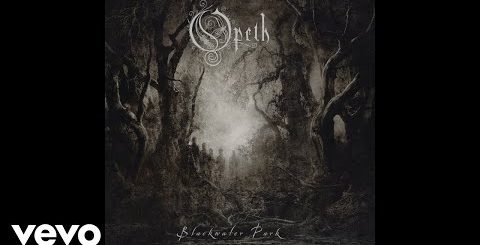
Nestled within the band’s tenth studio album, ‘Heritage’, this musical piece stands as a testament to Opeth’s ability to craft songs that are as complex in thematic substance as they are in their auditory prowess. The layers of meaning are dense, rich with introspection and an almost prophetic social commentary.
Unearthing the Spiritual Wasteland
Opeth, known for their deep lyrical content, reaches into the soil of the psyche in ‘The Devil’s Orchard’. The imagery of winter’s grip signifies a spiritual barrenness, a declaration that the devil will follow. It’s this very dominance of the infernal, the idea that evil is always at our heels, that casts light on our journey through the darkness of human existence.
But what makes these lyrics so fascinating is the acceptance woven within. There’s a notion of being ‘cast out’, a voluntary exile into the shadows where growth and self-realization occurs. It’s in this desolation that we are forced to confront the wilderness within us, to throw out the darkness — a metaphor both potent and timeless.
The Barren Paths of Dogma
‘God is dead,’ a message delivered with blunt force in ‘The Devil’s Orchard’, may ring with Nietzschean echo, but it’s more than philosophical name-dropping. The repetition of this phrase serves as a grim meditation on the collapse of moral absolutism. It orbits the death of rigid structures that once dictated right from wrong, leaving humanity to wander aimlessly in an orchard planted by the devil himself — an orchard of confusion, freedom, and daunting responsibility.
In this light, the song calls into question what guides us when our traditional signposts have fallen. Do we follow the voice inside, corrupt and poisoned by the senses, as the lyrics suggest? Or is there a pathway to something higher, a sense of the divine that persists beyond the declarations of dogma’s demise?
The Seductive Whispers of the Dark
There’s a hypnotic quality to the lines ‘Take the road where devil’s speak’, implying that the path of temptation is not only inevitable but almost logical in its appeal. It is the acceptance that within us lies an attraction to the forbidden, the taboo — and that our senses, once providing survival and pleasure, now betray us with their corruption.
This seduction by our own inner voices provides a sobering commentary on the duality of human nature. It’s a haunting melody that Opeth uses to illustrate that sometimes the greatest challenge we face is recognizing and resisting our own darker instincts.
The Significance of Sight: Perception as Redemption
A particularly evocative image in ‘The Devil’s Orchard’ is that of the corner of one’s eye, where demons fade from view. It’s a poignant metaphor for the peripheral existence of our vices — present, observable, yet easily ignored. Here, perception becomes a savior, the act of truly seeing bringing about the exorcism of personal demons.
It’s through this lyrical narrative that Opeth subtly suggests an awakening. The blind lead, searched to find ‘A pathway to the sun’, speaks to the relentless human quest for enlightenment and the redemption that comes through self-awareness and the acknowledgment of one’s sins.
Deconstructing The Devil’s Verses: A Tapestry of Sin and Stigmata
Perhaps it’s the closing lines of ‘The Devil’s Orchard’ that resonate most powerfully. The reference to stigmata calls forth images of sacrifice, of bearing the marks of one’s transgressions. It’s a powerful allegory for the scars that each personal vice leaves upon us, visible only to those who bear them.
These memorable lines, ‘Oh, stigmata revealing our vices’, encapsulate the song’s hidden meaning and serve as a thematic cornerstone. They suggest a form of inherent confession and the presence of an indelible human frailty. The song thus transcends to become a mirror for the listener, reflecting back the universal battle with inner demons and the quest for identity beyond the dogmatic orchard fashioned by the devil.