Godhead’s Lament by Opeth Lyrics Meaning – Unraveling the Depth in Melancholic Verses
Lyrics
Staining the soil, midst of stillness
Beloved fraternity to an end
Red eyes probe the scene
All the same
Stilted for the beholder
Depravity from the core
Handcarved death in stoneladen aisles
I hide the scars from my past
Yet they sense my (mute) dirge
This is when it all falls apart
White hands grasping for straws
Sly smile, poisoned glare behind
Undisguised manmade nova
Mute cry, don´t dare to tread
Searing beams tracking you down
Adoring what never has been
Some will bring with them all they have seen
Searching my way to perplexion
The gleam of her eyes
In that moment she knew
Thought I could not leave this place
On this imminent day
As I´ve reached the final dawn
To what´s gone astray
What would they care if I did stay
No-one would know
What would they care if I did stay
No-one should know
Still brooding, soothing clam
That rigid, twisted face
Blank godhead, tear my name
Lost virtue, frantic lust
Searching my way to perplexion
In crumbling faith I saw her
Bearing her pain in the wilderness
The gleam of her eyes
In that moment she knew
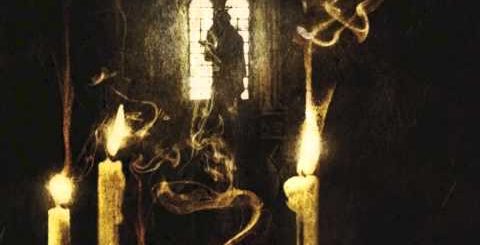
Often, we come across a piece of music that transcends the mundane and thrusts us into an abyss of introspection. Opeth’s ‘Godhead’s Lament’ is one such odyssey, an arcane spell woven in progressive death metal dynamism. As haunting as it is beautiful, the opus from their 1999 album ‘Still Life’ offers layers of meaning wrapped in a shroud of deceptively aggressive instrumentals.
Peeling back these layers requires a nuanced understanding not just of the genre, but of the poetic tapestry that lead vocalist and songwriter Mikael Åkerfeldt so expertly crafts. The song, a mosaic of anguish and reflection, speaks of existential woes and the despair inherent in the human condition. But what lies beneath the surface of this gargantuan track? Let’s embark on a lyrical dissection to find out.
The Haunting of Marauder: A Prologue of Desolation
The song opens with an image of betrayal and destruction—’Marauder / Staining the soil, midst of stillness / Beloved fraternity to an end’. These lines portray a figure, possibly symbolic of disrupting forces within us, or an external entity that brings chaos into a peaceful existence. The marauder stands as an embodiment of all that is anarchic, leaving behind a trail of taint and severed connections.
In the eerie calm that follows devastation, there’s a poignant acknowledgment of the universal experience of loss. With each verse building on this foundation, Opeth leads us down the corridors of a majestic but dilapidated mansion of the human psyche, where every stone is laden with the weight of untold stories.
Crafting Death, Baring Souls: The Artistry of Decay
Åkerfeldt manifests the beauty in ruin through ‘Handcarved death in stoneladen aisles’. The pain of the mortal coil is likened to a sculpture, meticulously chiseled, as if death itself is an art to be both feared and revered. The listener is compelled to consider the morbid elegance in endings, the nuanced grace in every somber note.
The scars of the past, usually hidden away, become conspicuous despite efforts to conceal them. They speak of a dirge—a funeral lament that though mute, reverberates through the silent halls of the soul. The descent into this private catacomb is a journey into the depths of despair, where everything fractures.
Behind a Sly Smile: The Hypocrisy in Lurking Shadows
Opeth uses stark imagery to cast light on deception with ‘Sly smile, poisoned glare behind / Undisguised manmade nova’. A sense of betrayal, the duplicity of a confidant, is suggested—a common theme in the human drama, yet portrayed with a freshness that chills the spine.
The dread of being the hunted, of knowing there’s no place safe from the deceitful glare of an enemy, is palpable in Åkerfeldt’s lyrical craft. It’s a potent reminder that not all threats are overt; some of the most damaging can come from within trusted circles, masked by the warmth of a smile.
A Beam of Light in the Wilderness: The Song’s Hidden Meaning
Mysterious are the lines ‘In crumbling faith I saw her / Bearing her pain in the wilderness’. In this wilderness—perhaps a metaphor for a desolate point in life—faith falters but also transforms. It is in the realization of suffering, possibly empathizing with another’s pain, that some deeper understanding is gleaned.
The song suggests a turning point, a moment of clarity amid the storms of life represented by ‘the gleam of her eyes’. There’s a revelation, a shared human experience that connects isolated souls. This mirror into another’s tribulation could signify a moment of profound transformation and connections that transcend the physical realm.
Forsaken Virtue, Lost in the Godhead’s Cry: Memorable Lines
In the climactic verse, ‘Blank godhead, tear my name / Lost virtue, frantic lust’, there seems to be a recognition of the void left by unkept promises and aspirations torn asunder. The godhead, once a bastion of hope, is now obscure, enigmatic, urging a confrontation with inner turmoil.
Åkerfeldt weaves a potent tapestry where admiration and passion collide with disillusionment. These lines capture the essence of ‘Godhead’s Lament’: a soul-searching quest to make sense of the fractal nature of our being and the capricious whims of fate, ultimately asking whether our struggles and secrets are indeed worth the cosmic augury.