I Zimbra by Talking Heads: Unraveling the Abstract Invocation
Lyrics
Lauli lonni cadori gadjam
A bim beri glassala glandride
E glassala tuffu I zimbra
Bim blassa glassala zimbra
Bim blassa glassala zimbra bim
A bim beri glassala grandrid
E glassala tuffu I zimbra
Gadji beri bimba glandridi
Lauli lonni cadora gadjam
A bim beri glassasa glandrid
E glassala tuffu I zimbra
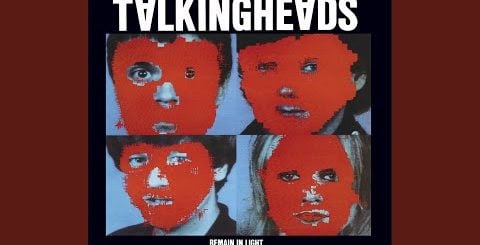
In the annals of rock music, Talking Heads occupy a place that oscillates between the cerebral and the bouyant, often blending the two with masterful fluidity. ‘I Zimbra’ from their 1979 album ‘Fear of Music’ is a thrilling exposition of this dance between intellect and groove. With its percussive rhythms and nonsensical lyrics, the song is both a puzzle and an invitation to move.
Taking a closer look at ‘I Zimbra’ reveals layers that extend well beyond the apparent jumble of syllables. At first glance, one might dismiss the lyrics as gibberish, yet upon further examination, it becomes clear that Talking Heads were reaching for something older, deeper, and intrinsically rhythmic—melding continental philosophy with African beats.
Beyond Words: The Beat as Language
The hypnotic cadences of ‘I Zimbra’ betray its true essence: more than words, it is rhythm that speaks volumes in this song. Anchored by a frenetic African-inspired beat, the track transcends the need for comprehensive lyrics, positioning itself firmly within the realm of feeling and emotion rather than exposition.
This embrace of rhythm as a universal language is characteristic of Talking Heads’ boundary-pushing ethos. It asserts that communication need not be hampered by linguistic barriers—indeed, the corporeal reaction to the song’s beat is immediate and requires no translation.
A Proto-Lyric Tapestry: Unearthing Dada Roots
The seemingly nonsensical lyrics draw inspiration from Dadaist Hugo Ball’s poem ‘Gadji beri bimba,’ originally performed in 1916 during a cacophonous routine at the Cabaret Voltaire. The Dada movement, characterized by its scorn for convention and love for the absurd, resonates through ‘I Zimbra’ as a historical thread connecting avant-garde art across decades.
Talking Heads’ adaptation of these proto-lyrics is not simply a replication of Dada—it is a transformative process that adapts Dadaist nonsensicality to the contemporary soundscape of post-punk energy.
The Percussive Prophecy: A Hidden Meaning in Chaos
One might argue that the core of ‘I Zimbra’ lies within its celebration of chaos—which is itself a profound statement. The song entices the listener to find meaning, not in the words, but in the experience of the music itself.
A philosophical undercurrent hints at the idea that beneath the apparent randomness of life, a primal beat drives us all. The song can be seen as an ode to this anthropological constant, a tribute to the ritualistic drumming that has united cultures since time immemorial.
The Anatomy of an Unforgettable Groove: Production and Sound
Key to ‘I Zimbra’s’ infectious rhythm is Brian Eno’s production, which layers tribal beats, creating an enveloping atmosphere that transports the listener. Eno’s ability to create soundscapes that are as complex as they are accessible lends the track its timeless and otherworldly appeal.
The approach to rhythm is equally innovative, with the band employing a variety of non-traditional instruments, such as the Balinese gamelan, to contribute to the song’s distinctive sound. The collaboration of these elements culminates in a piece that is eternally modern, never ceasing to amaze and energize its audience.
Clinging to the Memorable: The Lyrical Hooks of ‘I Zimbra’
Despite—or perhaps because of—its abstract nature, ‘I Zimbra’ manages to latch onto the mind with its catchy phonetics. Lines like ‘Gadji beri bimba clandridi’ exude a chant-like quality that is hard to shake, becoming an earworm in the truest sense.
There’s an instinctive appeal to such verbal play that Talking Heads knows to exploit to full effect. This emphasis on sound over sense, on the visceral physicality of the words rather than their semantic value, creates a lyrical hook that is at once impactful and elusive, compelling listeners to return again and again in an attempt to decode—or simply enjoy—the mystery.