Godeatgod by Marilyn Manson Lyrics Meaning – Unpacking the Provocative Confrontation with Divinity
Lyrics
And hold yourself?
Dear God, can you climb off that tree
Meat in the shape of a ‘T’?
Dear God, the paper says
You were the King in the black limousine
Dear John and all the King’s men
Can’t put your head together again
Before the bullets
Before the flies
Before authorities
Take out my eyes
The only smiling are you dolls that I made
But you are plastic
So are your brains
Dear God, the sky is as blue
As a gunshot wound
Dear God, if you were alive
You know we’d kill you
Before the bullets
Before the flies
Before authorities
Take out my eyes
The only smiling are you dolls that I made
But you are plastic
So are your brains
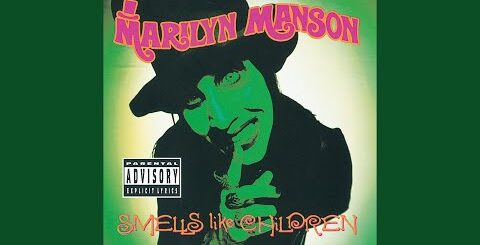
Marilyn Manson has never shied away from controversy, and his track ‘Godeatgod’ opens the album ‘Holy Wood’ with a jarring meditation on faith, celebrity, and the veneration of symbols. The song is a deliberate provocation, a challenge to the listener’s understanding of God and the sacrosanct, dressed in the sinister trappings of Manson’s industrial rock sound.
The title itself, a fusion of God and the act of consumption, sets the stage for a lyrical exploration that goes beyond simple blasphemy. Instead, ‘Godeatgod’ seems to inquire about the cycle of consuming and being consumed that defines both religion and fame in the postmodern world. It’s a moody, intricate piece, steeped in metaphor and ripe for deconstruction.
A Tumultuous Prayer: Interrogating the Divine
The song opens with an apostrophe to God, questioning the divine with a series of stark, violent images. These initial lines lay the groundwork for a critique that is as much an introspection as it is an outward challenge. Manson’s ‘Dear God,’ repeated like a mantra, becomes a grim parody of religious supplications.
The metaphor of God tearing ‘knuckles down’ and climbing ‘off that tree, Meat in the shape of a ‘T’,’ plays on the symbol of the crucifix while tying it to a scene of carnage. Here, Manson seems to reflect on the intersection of violence and worship, implying that the veneration of religious symbols often accompanies or even requires a form of destruction.
Ani-Iconism: The King in the Black Limousine
Manson’s lyrical landscape is littered with icons twisted into grotesque shapes – from the reference to ‘the King in the black limousine’ to the shattered image of ‘Dear John and all the King’s men’ unable to ‘put your head together again.’ The imagery evokes a bleak view of authority figures and the ruin that comes from their fall.
In this world, the king, the symbol of power and grace, is reduced to a mere figurehead in death, his regal transport now his hearse. This Stanza stands as a dark mirror, distorting the familiar nursery rhyme of Humpty Dumpty and blending it with the assassination of a political figure – perhaps a nod to the commodification of tragedy and the fracturing of societal norms.
Dystopian Dolls: The Smile of the Inauthentic
The song finds a recurring note in the reference to dolls, proxy figures that embody fake innocence and hollow joy. The contrast between their eternal smile and the hidden malaise that underlines the song is palpable, reflecting a society of appearances, where authenticity is lost to the twin gods of plastic and superficiality.
Manson’s imagery here strikes a chord with the disaffected, those who see beyond the polished veneer of societal norms. The ‘you dolls that I made’ are simultaneously creations and bastions of the front that the speaker has cultivated – an armor of artificiality to protect against an ever-intrusive world.
The Sky as Blue as Violence: A Hidden Meaning
One of the most compelling stanzas in ‘Godeatgod’ is the juxtaposition of the sky’s color with a ‘gunshot wound.’ It’s a masterful stroke, equating the boundless and the beautiful with sudden, violent rupture. Manson juxtaposes the notion of infinite calm with the finality of aggression, leading the audience down a path of starkly contrasting imagery.
This line begs the interpretation that even in the most serene scenarios, the potential for chaos and destruction looms. In this view, the divine is not a guardian against violence, but an absent figure, indifferent to the bloodshed below.
The Chilling Confession: ‘You Know We’d Kill You’
Perhaps the song’s most chilling lines come with the hypothetical assertion: ‘Dear God, if you were alive, You know we’d kill you.’ Here, Manson brings the rebellion against God to its climax, suggesting that the inherent human compulsion toward deicide is as predictable as it is tragic.
The ‘you’ addressed in this confession implicates not just the divine figure, but also any who dare reach an untouchable status, whether they be religious icons or celebrity idols. It is a statement on the destructive impulses of mankind, directed toward those placed on society’s highest pedestals.