Bloodstone by Judas Priest Lyrics Meaning – Deciphering the Cry for Authenticity in a Deceptive World
Lyrics
It’s sending me out of my mind
I’ve seen reason
Change to treason
It’s losing its sense of all kind
How much longer will it take for the world to see
We should learn to live and simply let it be
Bloodstone
Bloodstone
Bloodstone
Bloodstone
In the night time
Wake in fright
I’m so scared of the game that’s being played
Start to wonder what’s going under
And how many deals have been made
How much longer will it take for the world to see
We should learn to live and simply let it be
Bloodstone
Bloodstone
Bloodstone
Bloodstone
Bloodstone
Bloodstone
Bloodstone
Bloodstone
Bloodstone
Bloodstone
Bloodstone
Bloodstone
Bloodstone (I can’t, I can’t take it)
Bloodstone (you got me living)
Bloodstone (I don’t want that)
Bloodstone
In the shadowy grooves of heavy metal, Judas Priest’s ‘Bloodstone’ pulses with an urgency and paranoia that’s hard to shake. This song isn’t just a track; it’s a canvas, daubed with the colors of human emotion, societal discontent, and a desperate pining for a genuine existence in a world that’s often anything but.
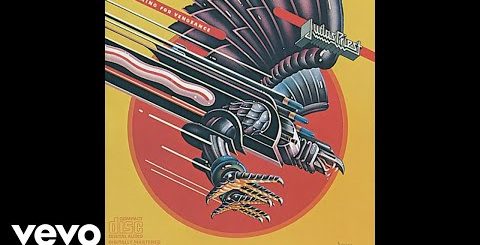
From the album ‘Screaming for Vengeance,’ released in 1982, ‘Bloodstone’ resonates with an audience witnessing an era swirling with change and challenge, making this piece a powerful time capsule and an anthem for the uneasy. Let’s delve into the sinewy complexity of its lyrics and uncover the true essence of what Judas Priest was bleeding onto the page.
The Siren’s Call of Desperation in Metal Form
As the song opens with ‘I’ve been trying, there’s no denying,’ we’re immediately thrown into the tide of an individual’s struggle against an invisible force. It’s as if the very act of trying is a Sisyphean task, one that leaves the protagonist spiraling into madness.
The transformation of reason into treason is a potent metaphor for betrayal not just by colleagues or comrades, but by the very principles that are supposed to govern society. The sense that the world’s moral compass is spinning out of control is palpable, creating a chilling backdrop to the song’s anthemic chorus.
A Chorus Drenched in Mysticism: The Power of ‘Bloodstone’
The repetition of the word ‘bloodstone’ isn’t mere poetic obsession; it’s a deliberate focal point. The bloodstone, a gem allegedly imbued with healing properties and protective qualities, becomes a symbol for the salvation the narrator seeks from a world that’s bleeding him dry.
The invocation of this stone in a fervent, almost chant-like manner suggests a ritualistic plea for something pure and untainted. In a world fraught with deception, the bloodstone represents the untouched and the holy, a last bastion of hope amidst a backdrop of darkness.
The Nightmarish Soundscape of Paranoia
‘In the night time / Wake in fright’—these lines convey a haunting vulnerability that strikes in the dead of night, the time when our fears are most acute. This is the witching hour for the mind, where nightmares seep into reality and the games of deceit become too much to bear.
Judas Priest captures that anxiety vividly, piling on the layers of edgy riffs and rhythms that mimic the palpitations of a heart caught in the throes of terror. The auditory landscape is crafted to mirror the song’s message, dragging the listener into the swirling vortex of the narrator’s dread.
Unearthing the Hidden Meaning: A Call to Conscious Awakening
Digging deeper into the fertile soil of ‘Bloodstone’s’ lyrics, we uncover a hidden plea: ‘How much longer will it take for the world to see / We should learn to live and simply let it be.’ This line is the nucleic core of the song’s DNA, a call to action for society to awaken to the dangers of overcomplication and power games.
It’s an appeal to return to simplicity and authenticity, to cast aside the machinations that keep humans divided and enslaved to the artifice. Through this lens, ‘Bloodstone’ becomes an existential anthem, urging listeners to break free from the chains of illusion and embrace a more genuine, if not unyielding, way of life.
Memorable Lines That Cut Deep into the Zeitgeist
One cannot discuss ‘Bloodstone’ without nodding to the lines that capture the essence of its era and beyond: ‘Start to wonder what’s going under / And how many deals have been made.’ It’s a commentary on the pervasive secrecy and backroom dealings that characterize not only the political climate of the early ’80s but resonate with today’s listeners as well.
These words highlight the disease of distrust and the yearning for transparency, provoking a reflection on the systems that govern and sometimes manipulate our lives. The lines stick because they embody the unsettled feeling that the threads of control are held by unseen hands, tugging the world in unseen directions.