Obviously 5 Believers by Bob Dylan Lyrics Meaning – Unraveling the Mystique of a Bluesy Enigma
Lyrics
Early in the mornin’
I’m callin’ you to
I’m callin’ you to
Please come home
Yes, I guess I could make it without you
If I just didn’t feel so all alone
Don’t let me down
Don’t let me down
I won’t let you down
I won’t let you down
No I won’t
You know I can if you can, honey
But, honey, please don’t
I got my black dog barkin’
Black dog barkin’
Yes it is now
Yes it is
Outside my yard
Yes, I could tell you what he means
If I just didn’t have to try so hard
Your mama’s workin’
Your mama’s moanin’
She’s cryin’ you know
She’s tryin’ you know
You better go now
Well, I’d tell you what she wants
But I just don’t know how
Fifteen jugglers
Fifteen jugglers
Five believers
Five believers
All dressed like men
Tell yo’ mama not to worry because, yes
They’re just my friends
Early in the mornin’
Early in the mornin’
I’m callin’ you to
I’m callin’ you to
Please come home
Yes, I could make it without you, honey
If I just did not feel so all alone
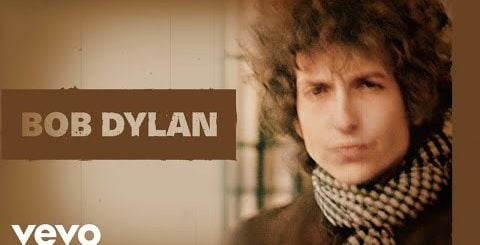
Within the rich tapestry of Bob Dylan’s discography, ‘Obviously 5 Believers,’ a track off the revered ‘Blonde on Blonde’ album, emerges as an often-overlooked gem. The song carries a bluesy sway that is characteristic of Dylan’s foray into the amalgamation of rock, blues, and folk during the transformative ’60s. Known for his cryptic lyricism and his ability to weave complex narratives, Dylan presents listeners with what seems to be a simple call-and-response blues pattern that belies a deeper resonance.
To explore the heart of ‘Obviously 5 Believers,’ one must venture beyond the surface of its seemingly straightforward lament of longing and delve into its rich symbolism, its interplay of solitude and companionship, and the mystical number at its core. This is not merely a song; it is a sonic representation of a songwriter’s odyssey through the human condition.
The Dawn of Longing: Desperately Seeking Solace
Opening with the words ‘Early in the mornin’,’ Dylan immediately sets the stage for a narrative filled with yearning. There is an urgency within these sparse lyrics, an insistent beckoning—a plea for company in the lonely hours. The repetition of phases mimics the cyclical nature of time, emphasizing the endless wait and insatiable desire for connection. Dylan’s plea to ‘Please come home’ is not just to an absent partner but potentially to a part of himself that feels incomplete, suggesting that there may be an underlying pursuit for self-reconciliation.
This section cleverly plays on the emotional duality presented within the text, weaving together a sense of independence (‘Yes, I guess I could make it without you’) and an undeniable dependence (‘I just didn’t feel so all alone’). Dylan’s confession opens a window into the universal struggle between the need for autonomy and the inherent human craving for companionship.
Canine Cries in the Night: The Black Dog Decoded
As Dylan introduces the image of a ‘black dog barkin’,’ listeners find themselves confronting a prevalent metaphor that has historically symbolized depression and the darker facets of the psyche. The inclusion of this creature and its unsettling presence implies a struggle with internal demons and provides an undercurrent of gloom to the song’s overt musings on isolation.
The narrative complication arises when Dylan claims understanding (‘Yes, I could tell you what he means’), yet follows with an expression of difficulty in communication (‘If I just didn’t have to try so hard’). This juxtaposition implies a boundary between knowing one’s internal strife and having the capacity to articulate it, highlighting the often inexpressible nature of personal turmoil.
A Mother’s Woe: Symbols of Domestic Disquiet
Introducing the character of a ‘mama’ who is ‘workin” and ‘moanin’,’ Dylan paints a portrait of domestic strife that aligns with themes of hardship and emotional labor. She is ‘cryin” and ‘tryin’,’ words that resonate with the effort of toiling under unseen burdens. The listener is left to consider whether these lines literally depict a maternal figure or if, allegorically, they speak to a greater maternal essence—one that nurtures and endures through the ubiquitous trials of life.
Dylan’s insistence that the listener ‘better go now’ coupled with his admittance of not knowing how to express her desires crisply illustrates a conflict of understanding and empathy. This component of the song functions as a reminder of the disconnect which often occurs between personal struggle and the ability of others to comprehend or alleviate that pain.
Arcane Numbers and Their Players: The Secret of the ‘Five Believers’
The verse ‘Fifteen jugglers, Five believers, All dressed like men’ extends into the realm of the cryptic. Jugglers can symbolize those who artfully manipulate life’s uncertainties, while the ‘Five believers’ suggest an enigmatic group, or perhaps principles, that remain unwavering amid the spectacle. Dylan uses numerical distinction here, inviting numerous interpretations: a biblical reference, a nod to secret societies, or even a deeper dive into the subconscious significance of the number five.
These figures, ‘All dressed like men,’ implies a masquerade of sorts, a blending in with the mundane, while possibly housing secrets far beyond the layperson’s grasp. It’s through this line that listeners find themselves at the zenith of the song’s riddle, questioning who or what these believers stand for and what underlying truths they represent in Dylan’s lyrical universe.
In the Loop: The Resounding Echo of Memorable Lines
Dylan has a penchant for crafting phrases that linger with his audience, and in ‘Obviously 5 Believers,’ the recurrent phrase ‘Early in the mornin’,’ along with the simple structure of the endurance-laden chorus ‘Don’t let me down, I won’t let you down,’ solidify the song’s haunting persistence in the minds of listeners.
These lines evoke the cyclical nature of the song’s themes and the mundanity of the everyday against which its deeper questions beat. It’s through the music and these murmured refrains that Dylan ensures the song’s continual rebirth in the consciousness of those who hear it, inviting a perpetually unfolding exploration of its meaning.