QYURRYUS by The Voidz Lyrics Meaning – Decrypting the Sonic Enigma That’s Challenging Pop Norms
Lyrics
Hot dress
Undressing this hot mess
Gettin’ off, the west side
All day on a roof on the west side
Hot track
Hot dress
Undressing this hot mess
Gettin’ off, the west side
All day on a roof on the west side
The public is confused
Prison Jazz virtue
He knows the truth
If he thinks it through
Minor but major, I was gonna say
That’s not your problem, at least not today
Hot track
Hot dress
Undressing this hot mess
Gettin’ off, the west side
All day on a roof on the west side
Hot track
Hot dress
Undressing this hot mess
Gettin’ off, the west side
All day on a roof on the west side
I lost what’s mine
Little Habibi
I lost what’s mine
Trusting systems of the law
I lost what’s mine
Somebody (help)
I lost what’s mine
Odd creatures, walking tall
I lost what’s mine
I did the London Eye
I lost what’s mine
Like anyone I know
I lost what’s mine
Guess it was never mine
I lost what’s mine
Get me back and I’m a child
I lost what’s mine
I want my mama and my eyes
I lost what’s mine
Oh
I lost what’s mine
My side
I lost what’s mine
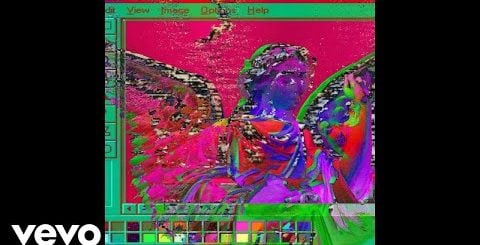
In a world where music often blends into a homogenous soundscape, The Voidz stand out with their refusal to adhere to the norm. ‘QYURRYUS,’ a track from the band’s thought-provoking album ‘Virtue,’ is no exception. The song’s title itself, a playful distortion of ‘curious,’ sets the tone for an auditory experience that pushes boundaries and ignites curiosity.
Breaking down the lyrical layers of ‘QYURRYUS’ reveals a complex tapestry of meaning that’s as intriguing as the song’s unconventional title. In a cacophony of genre-defying sounds, The Voidz challenge listeners to look beneath the surface and engage with the music on a deeper level. But what exactly is hiding within these eclectic verses?
An Odyssey into Sound: Embracing the Eclectic
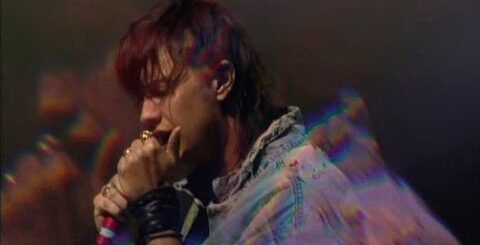
The Voidz, led by Julian Casablancas, are known for their affinity to experiment with genres and create music that defies conventional classification. ‘QYURRYUS’ begins with a distinct Middle Eastern-influenced melody that vibrates through the senses, setting a stage that is both alien and intimately familiar.
As the track progresses, it incorporates electronic and hip-hop elements, blending them with rock and avant-garde influences. The result is a sonic feast that challenges listeners to step out of their musical comfort zones. This willingness to embrace eclectic sounds represents a deeper thematic exploration of cultural amalgamation and the disruption of the status quo.
A Satire on Society: Decoding ‘Prison Jazz virtue’
The cryptic phrase ‘Prison Jazz virtue’ may well be The Voidz’s commentary on the confined state of contemporary music and society. ‘Jazz,’ once a genre characterized by improvisation and freedom, is juxtaposed with ‘prison,’ suggesting that even the most liberated forms are now entrapped within the commercial industry’s prison walls.
Simultaneously, the term ‘virtue’ could be read as ironic, questioning whether true virtue exists within the music industry’s homogenized and commoditized landscape. The Voidz aren’t just creating a song; they’re creating a statement that beckons listeners to question the structures that bind them.
The Mantra of Loss: Peeling Back Layers of Vulnerability
Repetition is used to powerful effect as the phrase ‘I lost what’s mine’ echoes throughout the later part of the song. This refrain becomes a mantra, symbolizing loss and detachment from the self. The various items listed as ‘lost’ represent different pieces of identity and innocence eroded by the harsh realities of a modern, systemic world.
By integrating phrases like ‘I want my mama and my eyes,’ the lyricism verges into a primal longing for comfort and a restoration of vision – perhaps in a metaphorical sense, meaning the ability to see the world unfiltered by societal constructs. This recurring sense of loss invites empathy and introspection from the listener.
Unveiling the Hidden Meaning: Autonomy and Alienation
One could argue that ‘QYURRYUS’ is an existential outcry, with ‘I lost what’s mine’ serving as a commentary on how individuals are stripped of their autonomy through the impersonal mechanics of legal systems and societal pressures. The ‘odd creatures, walking tall’ could be a portrayal of those who have adapted, perhaps even thrived, within these artificial constructs, losing sight of what is authentic.
There’s an enduring tension between the wish to return to one’s essence (‘Get me back and I’m a child’) and the recognition that what was considered ‘mine’ may never have truly been personal property (‘Guess it was never mine’). In this ambiguity lies a complex discussion on identity and belonging within a constructed society.
Memorable Lines: Identifying with ‘Little Habibi’
Within the midst of the song’s heartrending proclamations stands the line ‘Little Habibi.’ This term of endearment, often used in Arabic to address a loved one, seems out of place in the chaos. Yet here, it becomes a touchstone of tenderness and humanity, revealing the fundamental connection that resists being completely lost amid the ‘hot mess’ of existence.
In interfusing such intimacy with the fever-pitched digital distortion, The Voidz capitalize on contrast and demonstrate their dexterity at combining the personal with the universal. This line, so simple yet loaded with emotion, encapsulates the core message of ‘QYURRYUS’ – the search for connection in a dissonant world.