Down the Highway by Bob Dylan Lyrics Meaning – Unraveling the Ballad of a Wandering Soul
Lyrics
With my suitcase in my hand
Yes, I’m walkin’ down the highway
With my suitcase in my hand
Lord, I really miss my baby
She’s in some far-off land
Well, your streets are gettin’ empty
Lord, your highway’s gettin’ filled
And your streets are gettin’ empty
And your highway’s gettin’ filled
Well, the way I love that woman
I swear it’s bound to get me killed
Well, I been gamblin’ so long
Lord, I ain’t got much more to lose
Yes, I been gamblin’ so long
Lord, I ain’t got much more to lose
Right now I’m havin’ trouble
Please don’t take away my highway shoes
Well, I’m bound to get lucky, baby
Or I’m bound to die tryin’
Yes, I’m a-bound to get lucky, baby
Lord, Lord I’m a-bound to die tryin’
Well, meet me in the middle of the ocean
And we’ll leave this ol’ highway behind
Well, the ocean took my baby
My baby stole my heart from me
Yes, the ocean took my baby
My baby took my heart from me
She packed it all up in a suitcase
Lord, she took it away to Italy, Italy
So, I’m a-walkin’ down your highway
Just as far as my poor eyes can see
Yes, I’m a-walkin’ down your highway
Just as far as my eyes can see
From the Golden Gate Bridge
All the way to the Statue of Liberty
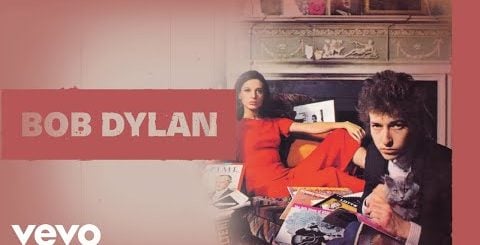
Bob Dylan’s ‘Down the Highway’ off his seminal 1963 album ‘The Freewheelin’ Bob Dylan’ encapsulates the essence of a troubadour’s lonesome journey. On the surface, it’s a simple blues song, but beneath its wandering chord progressions lies a complex narrative rich with emotion, longing, and the timeless theme of travel as a metaphor for life’s trials and tribulations.
At a time when the open road was a symbol of freedom and discovery, Dylan mastered the art of painting vivid imagery with his words, transforming the act of moving from place to place into a spiritual pilgrimage. Let’s delve into the song’s poetic depths and unearth the profound meanings laced within its verses.
The Odyssey of the Lonesome Traveler
From its opening line, ‘Down the Highway’ immediately situates the listener alongside Dylan’s wandering protagonist, suitcase in hand, as a symbol of transient life. The highway becomes more than just asphalt; it turns into a path of self-discovery, of chasing dreams and the agony of separation. Dylan’s voice, laced with a mix of determination and sorrow, carries the weight of the pursuit of something—or someone—just beyond reach.
This odyssey is not a joyous adventure but a necessary journey. It is the relentless search for an elusive peace of mind, a theme that resonates deeply with anyone who has ever experienced the isolation that often accompanies personal quests. The suitcase isn’t just luggage; it’s a vessel for the burdens and memories that travelers accumulate.
A Desperate Lament for Love Lost
Dylan’s dexterity in weaving the universal with the personal is evident as he transitions from geographic rambling to emote the pangs of lost love. ‘Lord, I really miss my baby, She’s in some far-off land.’ With these lines, Dylan bridges the literal distance of the highways with the metaphorical chasm felt between parted lovers. The heart of the song lies in this juxtaposition of physical and emotional landscapes.
It’s a mournful acknowledgment that sometimes life’s greatest journeys are imposed by circumstance, not choice. The song’s repetitive, meditative progression mirrors the continual churn of steps on a long road, and of thoughts in a distressed heart. To Dylan, the highway is both escape and prison, bound inexorably to the memory of the beloved.
The Gambler’s Last Stand
There is also an element of fatalism in the lyrics, as seen in the verse, ‘Well, I been gamblin’ so long, Lord, I ain’t got much more to lose.’ It’s an admission of the weariness that comes from constant risk-taking, the vulnerability behind the façade of the carefree drifter.
‘Please don’t take away my highway shoes,’ Dylan pleads, crystallizing the duality of the gambler’s existence: the dread of losing the only lifestyle he knows versus the hard-worn resignation that the next bet might be his last.
The Harbinger of a Tumultuous Era
As much as ‘Down the Highway’ is an introspective ballad, it also subtly captures the zeitgeist of the early ’60s, a prelude to the societal shifts America was about to face. ‘Well, your streets are gettin’ empty, Lord, your highway’s gettin’ filled,’ Dylan sings, hinting at the burgeoning counterculture movement, the rise of the youth’s voice, and the urban-to-rural migration indicative of the era’s restlessness and search for authenticity.
‘Down the Highway’ becomes a vessel for the collective consciousness, Dylan as its conduit, delivering a message that the answer to inner turmoil could be found by journeying down one’s highway, whatever it might represent.
Decoding the Hidden Symbols in a Journey’s End
‘Well, meet me in the middle of the ocean, And we’ll leave this ol’ highway behind,’ Dylan resolves, offering a moment of catharsis in the closing verses. It’s a poetic reckoning that true freedom might not be found on the road, but in the midst of the undefined, away from the constraints of land and expectation.
The ocean, with its vast, boundless nature, contrasts sharply against the finite, directional highway. The final lines propose a resolution to the heartache, to the existential wandering—it’s a call to abandon structure and leap into the expansive unknown. Dylan isn’t just pointing to the end of a literal journey, but the dawn of a new way of being, where the heart, not the road, dictates the direction.