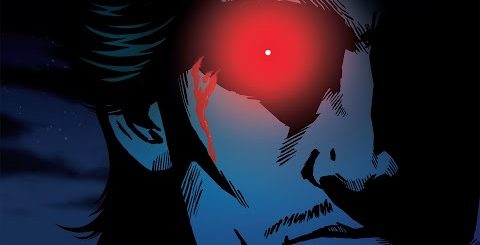
Pacific Coast Highway by Kavinsky Lyrics Meaning – Navigating the Supernatural Thrills of the Night
Lyrics
Well, things are about to get a whole lot stranger.
This mysterious driver tricks cops into thinking he’s about to pull over, then all hell breaks loose.
His moves are still baffling to the police as he swerves all over the road, driving like a man possessed.
In just a moment he’s going to make a turn into the twilight zone. Watch.
But in the blink of an eye the driver comes into view again.
He’s wheeling from the cops for a loop, he gets back on the straightaway, showing off a seemingly supernatural speed…
For a moment it appears as if the driver and his car have disappeared into thin air.
The officers watching this get only a quick glimpse of the man behind the wheel.
It’s the last look they’ll get.
This time, he tries to outrun the police rather than just vanish.
A fence at the end means no way out… or does it?
Even watching it again, cops are unable to make sense of it…
All they see is the an intact fence and nothing more than the taillights of what the Garden City P.D. have come to call: The Ghost Car.
In the velvet tapestry of the night, where the surreal meets the streets, ‘Pacific Coast Highway’ by Kavinsky emerges as an anthem for the nocturnal odyssey. The track stands as a paradox, painting a picture of the mundane yet mystical escapades of a spectral vehicle and its enigmatic driver. As it booms through the speakers, every beat drops like the heart pulse of the night, inviting us to look deeper into its core.
While at first glance, ‘Pacific Coast Highway’ appears to be a high-octane narrative of a supernatural chase, beneath its surface rumbles a complex tale of freedom, rebellion, and the perennial human pursuit to outrun the constructs that bind us. The lyrics—a sparse and hauntingly poetic dialogue—serve as a breadcrumb trail into the unknown, coaxing us to peel back the layers of the mysterious escapade.
A Highway Haunting: Dissecting the Ghost Car Phenomenon
The Ghost Car, a recurring motif in ‘Pacific Coast Highway’, isn’t merely a specter on wheels—it’s a metaphor for the elusive essence of our deeper selves. Through the song’s verses, we navigate the boundless stretches of an internal landscape, as Kavinsky suggests a pursuit that is existential, not just physical. The car vanishing from sight isn’t an act of evasion; it’s a manifestation of our innate desire to transcend.
The very law-enforcement authority that seeks to pin down the Ghost Car reflects the societal constraints that fight to ground our soaring spirits. When the fence presents no limitation, what we witness is more than an impossible stunt—it is the symbolic shattering of the barriers that contain us, a moment of profound metamorphosis that defies rational explanation.
Twilight Zone Tactics: The Escape into Eternity
Kavinsky’s driver doesn’t just turn into the twilight zone; he becomes one with it. The twilight zone is emblematic of the threshold between what’s known and the myriad possibilities of what lies beyond. As the lyrics hint at a cross into the otherworldly, we’re prodded to consider that there are realms of existence and consciousness yet to be explored, dimensions where conventional rules fade away.
The ‘strange things’ that occur at night—an echo of Rod Serling’s timeless introduction—are not just the peculiarities of dusk to dawn. They’re glimpses into the vastness of human potential, into the areas of the psyche that remain untamed and unfathomed. Kavinsky is thus an auditory necromancer, reviving the mysteriousness of the preternatural through his beats and words.
Under the Cover of Darkness: The Hidden Meaning behind the Mystery
At the intersection where music and mythology collide, ‘Pacific Coast Highway’ whispers its hidden meaning. It’s the siren song for the rebels at heart, those who recognize that the mightiest chase is the one towards self-discovery and reinvention. The song embodies a fundamental motif: the quest for something greater, beyond physical existence, outside the jurisdiction of the mapped and known.
The unknown driver of the Ghost Car transcends his physical vessel to chase the horizon of immortality, making each listener reconsider the chase they’re on. Kavinsky’s song becomes much more than a turbocharged escapade—it offers a mythic sense of continuity, conjuring the immemorial allure of mythology and the sensation of being part of a timeless tale.
Driving a Man Possessed: Metaphors in Motion
When the lyrics speak of a ‘man possessed’, we’re nudged to ask: What possesses us? The song isn’t merely a narrative of possession in the traditional sense, but perhaps a deeper possession by the fervor to chase our dreams, our aspirations, the very essence of our life force that demands expression and yearns to be chased.
Kavinsky’s narrative goes beyond the literal to invite dialogue on the intrinsic human condition—the possessed drive within us all to break free from metaphysical confines. This is a driver who is not driving a car as much as he is driving his destiny, and we’re riding shotgun, watching the pursuit of someone—or something—that guides us.
Ephemeral Echos and Memorable Lines: A Last Look They’ll Get
The anecdote of the police officers’ fleeting ‘quick glimpse of the man behind the wheel’ taps into our fascination with the ephemeral, with the transient truth that some things in life are there for an instant—spectacular and then gone. Kavinsky, with an economy of words, captures a still frame amidst the blur of existence, a freeze-frame that lingers longer than the event itself.
This ghostly driver is every person who has ever sought to outrun the tangibility of reality in pursuit of a dream, a stark reminder that sometimes all we’re left with is the afterimage of brilliance, the tail light fading into the horizon. These memorable lines serve as a clarion call to experience life full-throttle, for in the end it’s the moments of mysterious wonder that leave the deepest impressions.