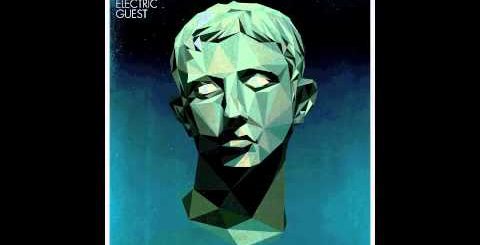
Troubleman by Electric Guest Lyrics Meaning – Unraveling the Depth of Melancholic Transformation
Lyrics
Girl of the bohemian kind.
In the cold, bright dawn,
We watched her grow.
Wisdom began,
Season when the river was high.
On the gray stone long,
I walked alone.
Me and my heart,
Following the shadow she made.
Like a dull sky day,
I chased the sun.
Back at the start,
I was still in love with the way.
It’s a long way,
From what’s become.
She’s got it bad for me,
She’s got it bad for me,
The only game she played,
Now, turn the other way.
She’s got it bad for me,
She’s got it bad for me,
The only game she played, she played.
Newly grown up,
Folded up the color he wore.
See the all new girl,
Rehearsed and well.
Filling my cup,
Playing at the edge of the shore.
See the way she moves,
I broke the spell.
She’s got it bad for me,
She’s got it bad for me,
The only game she played,
Now, turn the other way.
She’s got it bad for me,
She’s got it bad for me,
The only game she played, she played.
Oh, no.
Try to fix it for you, break it then it’s gone.
Oh, no.
I go home, I go home.
She’s got it bad for me,
She’s got it bad for me,
The only game she played,
Now, turn the other way.
She’s got it bad for me,
She’s got it bad for me,
The only game she played, she played.
Troubleman,
You wished it all away.
Gun in hand,
You found a path today.
And I know, nothing about.
Troubleman,
Your faith was long ago.
Foreign land,
The sea was made of stone.
And I know, nothing about.
He’s gotten bad for me,
He’s gotten bad for me,
The only game he played,
Now, turn the other way.
He’s gotten bad for me,
He’s gotten bad for me,
The only game he played, he played.
Troubleman,
We used to shake a bed.
Ship unmanned,
The rain was just ahead.
And I know, nothing about.
What troubleman,
Is just the empty name.
Oh, no.
Try to fix it for you, break it then it’s gone.
Oh, no.
You go home, we go home.
As the opening chords of Electric Guest’s ‘Troubleman’ reverberate, listeners are immediately transported beyond the realm of surface-level melody into the profound depths of human experience. Melancholic and subtly haunting, ‘Troubleman’ is a mosaic of lyrical introspection—each verse a piece reflecting themes of growth, change, and the bittersweet nature of evolving relationships.
The song, cloaked in the indie pop sensibilities characteristic of Electric Guest, uses its lush tonal palette to paint a vivid narrative. The rich visual imagery and narrative style suggest not just a mere story, but a journey charting the passage of innocence to experience, of naivety to knowing. Its lyrics, while leaving room for interpretation, carry the weight of poignancy and a touch of existential resignation that beckons the thoughtful listener to dig deeper.
Bohemian Beginnings and Rivers of Wisdom
In the song’s early verses, we encounter the motif of the bohemian woman—a symbol of youthful idealism and unbridled creativity. It’s a time-stamped chapter of innocence, with the cold, bright dawn serving as the backdrop for this formative stage. The reference to the high river could suggest the peak of existential enthusiasm, a moment where life’s possibilities extend as wide as the river’s reach.
Yet, a solitary walk on gray stones introduces a more introspective tone, implying that with wisdom comes a certain solitude—one that isolates the enlightened from the uninitiated. As we follow the ‘shadow she made,’ it becomes apparent that the pursuit for truth is often a solitary journey—an internal struggle between holding on to what was and embracing what has become.
A Chorus of Yearning: The Anguish in Attachment
The recurring chorus of ‘She’s got it bad for me’ refracts the complexity of emotional entanglements. It speaks to the one-sided nature of longing, suggesting a relationship fraught with an imbalance of passion and a desire that may not be reciprocated. It is a laser-focused declaration, almost obsessive in its repetition, which hammers home the all-consuming nature of this deep-seated yearning.
Through the phrase ‘The only game she played,’ the song alludes to the games of love, where emotions are gambled and sometimes left unreturned. This repeated refrain is a mantra that encapsulates the pain of yearning, revealing the thin line between devotion and desperation, love and fixation.
Shifting Identities and the Broken Spell
The transformation of the ‘all new girl’ represents a metamorphosis from the bohemian ideal to someone who is ‘rehearsed and well.’ The folding away of color is distinct imagery that describes the process of maturing and the loss that comes with it. As bright, saturated youth makes way for the muted tones of adulthood, there is an acknowledgment that something deeply authentic may be lost in the transition.
The broken spell could reflect the protagonist’s disenchantment, as they awaken from the allure of the past to confront the present reality. The narrator’s own growth is mirrored in the act of breaking away from this enchantment—the dawning understanding that holding onto a static, idealized past is a romantic’s folly.
The Enigmatic Troubleman: A Hidden Meaning Revealed
The figure of the ‘Troubleman’ serves as the song’s cryptic cornerstone—a moniker loaded with nuance and ambiguity. Is the Troubleman an alter ego, a cautionary character, or perhaps a symbol of the narrator himself? The implications of ‘wishing it all away’ and the ‘gun in hand’ suggest an estrangement from the ease of youth, an acknowledgment of life’s inevitable conflicts and the ways we arm ourselves against them.
There is a contained resignation towards the ‘faith was long ago’ and a ‘foreign land’ of hardened sensibilities. The song thus unravels the hidden internal battle the Troubleman wages—the fight to reconcile his current self, that has ‘gotten bad’ for him, with the remnants of an almost unreachable past.
Lyrical Haunts: Memorable Lines in ‘Troubleman’
‘Gun in hand, You found a path today. And I know, nothing about.’ These words carve out a sense of stark realization—the acknowledgment of a journey fraught with challenge and the individual’s capacity to navigate it, even when the rest of the world has little understanding. These lines stand as a testament to the song’s overarching theme: that everyone has their path to walk, fraught with struggles uniquely their own.
‘What troubleman, Is just the empty name,’ perhaps the most evocative line of the song, throws open the doors to introspection. It suggests that the ‘troubleman’ is more than just a character; it’s a complex, layered identity that each of us might assume when faced with life’s unrelenting turmoil. It is a poetic invitation to recognize our own inner ‘troubleman’—the part of us that endures, evolves, and ultimately, survives.