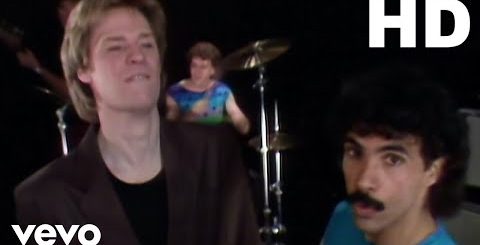
She’s Gone by Daryl Hall and John Oates Lyrics Meaning – The Heartbreaking Odyssey of Losing Love and Finding Oneself
Lyrics
Everybody’s trying to tell me what’s right for me
My daddy tried to bore me with a sermon
But it’s plain to see that they can’t comfort me
Sorry Charlie for the imposition
I think I’ve got it, got the strength to carry on
I need a drink and a quick decision
Now it’s up to me, ooh what will be
[Chorus]
She’s Gone Oh I, Oh I’d
Better learn how to face it
She’s Gone Oh I, Oh I’d
Pay the devil to replace her
She’s Gone – what went wrong
Up in the morning look in the mirror
I’m worn as her tooth brush hanging in the stand
My face ain’t looking any younger
Now I can see love’s taken her toll on me
She’s Gone
Think I’ll spend eternity in the city
Let the carbon and monoxide choke my thoughts away
And pretty bodies help dissolve the memories
But they can never be what she was to me
She’s Gone
With the silky voices of Daryl Hall and John Oates threading through the tender fibers of the soul ballad ‘She’s Gone,’ we’re immersed in a tale deeper than a simple farewell to a lover. This 1973 hit, steeped with raw emotion and intricate lyricism, transcends its era to speak a timeless truth on the human condition following heartbreak and self-discovery.
Beyond its smooth melody and charismatic delivery, ‘She’s Gone’ unfurls layers of meaning worthy of reflection. The song not just charts the aftermath of lost love but allows us a glimpse into the resilience of the spirit that, even in its darkest hours, decides to prevail.
Decoding the Despair: The Soulful Lament of Abandonment
On the surface, ‘She’s Gone’ is a lamentation of love lost, yet between the lines, it speaks to the grueling process of facing one’s reflection post-departure. It’s more than a man missing the woman who left; it’s a confrontation with the self that remains. Like a toothbrush – a relic of domesticity and intimacy – the mirror reveals the wear of time and sorrow, unmasking vulnerability.
The poetics are stark, detailing that disheveled look in the mirror the morning after. There’s no escape from the palpable silence left by a partner’s absence. It’s this universal feeling of desolation and the merciless forward march of time that Hall and Oates capture so movingly in the realm of a four-minute pop song.
The Quest For a Cure-all: Escapism in a Bottle and Beyond
In their quest to quell the sting of solitude, many turn to ephemeral comforts. The track’s protagonist is no exception, craving a drink and a quick fix – both literally and figuratively. It’s in this yearning for intoxication that the lyrics expose a well-known yet often unspoken truth; that sometimes the path to finding ourselves winds through seeking to forget.
The gallows humor in hoping the ‘carbon and monoxide’ of the city’s exhalations might erase the past is both a surrender to self-destruction and a dark acknowledgment of the lengths one would go to dull the heart’s ache. Yet even as the protagonist seeks refuge in faceless crowds and fleeting indulgences, they recognize the futility in these distractions.
The Hidden Symphonies of Survival: Self-Affirmation Amid Loss
She’s Gone’ goes beyond the classic breakup tune; it’s a symphony of self-affirmation. When the protagonist asserts ‘Now it’s up to me,’ it’s a declaration of independence, an unwilling yet necessary embrace of solitude. The act of moving forward, of realizing life’s continuity despite rupture, is a potent affirmation of one’s resilience.
The radical act of continuing life, ‘Now it’s up to me,’ grows from a whisper to a war cry as the depth of these words sink in. They paint not just survival but a claim of self-reliance, an existential grappling with agency that emerges from the trenches of heartache. In the landscape of loss, self-empowerment often sprouts quietly but fervently.
Melancholic Melodies and Memorable Lines
Hall and Oates are masters at transforming melancholy into memorable melodies, with lines that linger long after the last note fades. ‘She’s Gone’ encapsulates this enchantment, etching words into the collective memory: ‘She’s Gone Oh I, Oh I’d pay the devil to replace her.’ It’s a poetic yet desolate expression of the irreplaceability of true love and the lengths one would go for restoration.
Each verse is a poetic thread intricately woven into the tapestry of the song, with the refrain ‘She’s Gone – what went wrong’ echoing not just the absence of the beloved but also the unresolved questions and self-doubt that often accompany heartbreak. It’s these earworms of lamentation that sink hooks into the hearts of listeners, uniting their personal narratives of loss with the song’s poignant storytelling.
Echoing in the Halls of Time: The Legacy of ‘She’s Gone’
Songs like ‘She’s Gone’ stand the test of time not just for their rhythmic hooks or euphonic harmonies, but for their capacity to resonate with the human experience. Hall and Oates spun a narrative that endures not only as a hallmark of their musical genius but as a relatable journey through the spectrum of emotional recuperation.
Capturing the zeitgeist of its release era while simultaneously laying bare timeless emotional truths ensures that ‘She’s Gone’ remains as relevant today as ever. It’s a legacy that confirms music’s supreme power to narrate, heal, and connect us – one heartbreak and one healing note at a time.