Invisible by Ronnie James Dio Lyrics Meaning – Unveiling the Lifelong Quest for Meaning and Identity
Lyrics
‘Cause it never, never, never has for me
In the palace of the virgin lies the chalice of the soul
And it’s likely you might find the answer there
She had thirteen years of teenage tears
Never a helping hand
She had fourteen more of rain before
She saw the sight of land
She was a photograph just ripped in half
A smile inside a frown
And then the light, the answer right
Inside her coming down
She said,
“I can go away
I can leave here
I can be invisible
I go away”
He was just eighteen and in between
A lady and a man
His daddy’s girl in mama’s world
That was when he ran
You know the word confused has been abused
But that’s just what he was
And then the spark inside the dark
The answer came because
He said,
“You can go away
You can leave here
You can be, be, be, be….
Invisible”
Well I grew up quick and I felt the kick
Of life upon a stage
So I bought the book and then I took a fast look
At just the very last page
It was a single word that I’d just heard
From the two that came before
The only way to really stay
Is to walk right out the door
So I’ll go away
I’m going to leave here
I can be invisible
Go away again
I can go away
When I leave here
I can be invisible
I said
When I go away
Lord you know it’s right to leave here
So I just become invisible
I’m going away
Disappear before your eyes
You’ll never touch me
You’ll never feel me
You’ll never see me again
Because I’ve just become unseen
When I’m a photograph that’s been torn in half
We’re only eighteen and we’re in between
We need a helping hand to the holy land
To be invisible
To go away
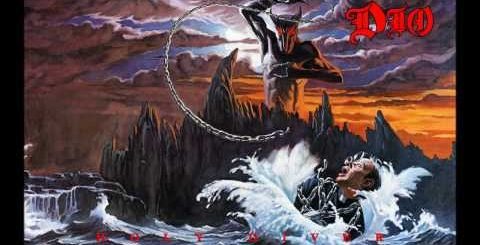
Ronnie James Dio’s ‘Invisible’ is more than just a track from the 1983 album ‘Holy Diver’; it is a profound contemplation on the human desire to escape, to redefine oneself, and to confront the truths that haunt our life’s journey. Eloquently woven into the heavy fabric of rock, Dio delivers a piercing examination of the struggles inherent in the search for identity and the elusive nature of life’s purpose.
Peering into the magic mirror of Dio’s lyrical prowess, ‘Invisible’ reveals itself as a rich tapestry of narrative depth, emotional intensity, and existential angst. It’s a quest cloaked in the shrouds of invisibility, where characters seek liberation from the chains of their reality, and in turn, beckon listener’s own introspection—a journey no doubt worth exploring.
Between the Lines: The Powerful Lure of Invisibility
Invisible is not just a mere state of being unseen; it’s a powerful metaphor for the feeling of insignificance and the desire to escape. Dio’s characters are caught in the midst of existential limbo, a phase where they are neither one thing nor another—akin to a rite of passage where one sheds old skin but hasn’t yet donned the new.
When dissecting the lyrics, it’s palpable that invisibility serves as a double-edged sword. It promises freedom and a blank slate, yet it also hints at a profound loneliness and isolation. Each character’s choice to disappear is filled with a silent scream for understanding and a yearning for a place where they truly belong.
A Dive into the Depths of the Soul’s Chalice
Dio doesn’t just scratch the surface; he plunges into the deep end with the skill of a lyrical diver. ‘In the palace of the virgin lies the chalice of the soul’—here, he ventures beyond mere existential woe and into the sacred quest for life’s ultimate truth. This line stands as a beacon, illuminating the notion that within each person’s unexplored inner self, lies the key to their own enigma.
This chalice, metaphorical for self-awareness and truth, is somewhat of a Holy Grail in the song. It’s the elusive answer that resides in us all, waiting to be discovered, to provide meaning to the obscure questions that life’s trials consistently pose.
Teenage Tears to Rainfall Years: A Journey Through Time
Dio meticulously chronicles the transformation of his characters over time, using age as a baseline for their evolution. From ‘thirteen years of teenage tears’ to ‘fourteen more of rain,’ these lines artfully portray a progression from the impetuous torrents of youth to the relentless drizzle of adult hardships that invariably sculpt our core.
Does the weathering of life’s storms erode one’s spirit or merely carve it into a more formidable form? This metamorphosis is a central theme as the characters come to the realization that the essence of their being, hidden or not, is shaped by the relentless passage of time and the endurance it demands.
The Anthemic Refrain: Reclaiming Self Through Invisibility
The refrain, ‘I can be invisible,’ resounds as a recurring declaration throughout the song. It’s a chorus not just of words, but of intent—an anthem for those caught in the dilemma of expectations versus self-actualization. Invisibility here is an act of rebellion, a form of self-preservation that allows one to regain a sense of control.
This mantra-like chorus transcends the song. It echoes in the minds of listeners, resonating with the universal struggle for autonomy. The ability to become ‘invisible’ then, transforms into an empowering act; a means to restart, to redefine, and, ultimately, to find peace within oneself.
Unwrapping the Song’s Stealthily Hidden Meaning
While on the surface, ‘Invisible’ could be misinterpreted as a glorification of escapism, closer inspection reveals its core as a deeply reflective commentary on the human condition. Outwardly, the song deals with the idea of physically removing oneself from sight, but inwardly, it speaks to the dismissal of one’s former self and former life.
Invisibility, thus, is symbolic of the profound changes we undergo in the pursuit of personal evolution. The hidden meaning is far more about the internal revolution than a physical disappearance—it’s about the will to endure life’s transformative, sometimes painful processes, and emerge with newfound wisdom and identity.