Rattled by the Rush by Pavement Lyrics Meaning – Decoding the Enigmatic Rock Poetry
- Music Video
- Lyrics
-
Song Meaning
- The Tongue-Twisting Opening: An Act of Rebellion?
- Navigating through the ‘Sleet City’: A Metaphor for Struggle
- Satirical Visuals and Social Commentary
- Dissecting the Heart of Repetition: What Does it Mean to Be ‘Rattled by the Rush’?
- The ‘No Soap in the John’ Enigma: A Symbol of Modern Hygiene, or a Deeper Deficit?
Lyrics
Could bend my tongue outwards
Leave your lungs hurting
Tucking my shirt in
Pants I wear so well
Cross your t’s, shirt smells
Worse than your lying
Caught my dad crying
Loose like the wind
From the rough we get par
Sleet city woman
Waiting to spar
I’m drowning for your thirst
Drowning for your thirst
Drowning for your thirst
Drowning for your thirst
Getting off, on the candelabra
We call her Barbara
Breeding like larva
She rabble-rousing
Dental surf combat
Get out those hardhats
And sing and us some skat
Blade lovers gush
Chained and perfumed
I don’t need a minister
To call me a groom
But I’m rattled by the rush
Rattled by the rush
Rattled by the rush
Rattled by the rush
Argh
Oh
Ah
No soap in the john
No soap in the john
No soap in the john
No soap in the john
(Rattled by the rush)
(Rattled by the rush)
(Rattled by the rush)
(Rattled by the rush) makes you want to say your prayers
(Rattled by the rush)
(Rattled by the rush)
(Rattled by the rush)
Makes you want to say you’re down
(Rattled by the rush)
(Rattled by the rush)
(Rattled by the rush)
Makes you want to say you’re down
(Rattled by the rush)
(Rattled by the rush)
(Rattled by the rush)
Makes you want to say you’re down
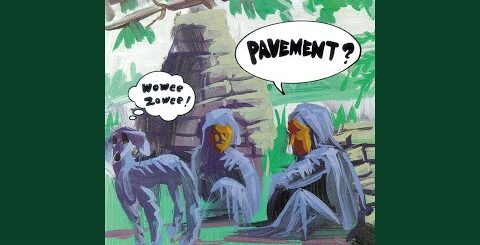
In the annals of alternative rock, Pavement carved out a space that was uniquely their own, a blend of slacker ethos and poetic enigma. ‘Rattled by the Rush,’ a track from their 1995 album ‘Wowee Zowee,’ encapsulates this spirit with lyrical complexity that veers into surrealism. The song captures a sense of disorientation, an almost frenetic unease, which seems to mirror the confusing rush of daily life.
At first glance, the lyrics appear to be a collage of disconnected images and ideas that challenge traditional interpretations. However, upon closer inspection, one can discern a narrative of personal struggle, a commentary on the frenzied pace of contemporary society, and an escape into the absurd. What follows is an exploration of these cryptic lyrics, seeking to untangle the threads of meaning and perhaps grasp the intention behind the band’s signature cryptic lyricism.
The Tongue-Twisting Opening: An Act of Rebellion?
The song opens with a yearning to be outwardly articulate (‘Could bend my tongue outwards’), yet it immediately confronts a physical reaction (‘Leave your lungs hurting’), suggesting communication is not just difficult, but it can also cause discomfort. The specificity of ‘tucking my shirt in’ juxtaposed with the notion of a cross and a smelly shirt indicates a routine stained by deceit (‘Worse than your lying’). This could be Pavement’s way of highlighting the personal discord that arises when we try to fit into societal norms.
The apparent confession of catching one’s father crying is a rare moment of vulnerability, melding the personal with the universal. These lines paint a picture of generational pain and the often-unacknowledged emotional lives of those who came before us. It’s an intimate snapshot that raises questions about the inherited traumas and suppressed emotions that define family legacies.
Navigating through the ‘Sleet City’: A Metaphor for Struggle
The image of a ‘Sleet city woman waiting to spar’ could represent life’s challenges personified as a battle-ready adversary. Here, there’s a sense of foreboding—the harsh weather of ‘sleet’ implies discomfort and difficulty. Coupled with the metaphor of golf (‘From the rough we get par’), Pavement seems to be using recreational language to speak to the common human experience of making do with a less-than-ideal situation, of prevailing despite the obstacles.
The repetition of ‘I’m drowning for your thirst’ is a peculiar inversion of expectation—instead of quenching thirst, there’s a sense of being overwhelmed for the sake of someone else’s desire or need. This oxymoron-like line pushes us to consider how we often suppress ourselves to meet external demands, sometimes to the point of feeling submerged by them.
Satirical Visuals and Social Commentary
‘Getting off, on the candelabra / We call her Barbara / Breeding like larva’—these absurd and over-the-top images might serve as a satirical take on society’s excesses and the bizarre rituals that surround social status and wealth. The ‘larva’ could symbolize how behaviours and lifestyles are replicated and spread without thought, much like an insect’s mindless proliferation.
The ‘dental surf combat’ might conjure images of aggressive smiles in a social setting, a literal ‘fight’ of appearances. Perhaps Pavement is critiquing the superficial engagements of social interaction—’no soap in the john’ could be interpreted as an allusion to a lack of real cleanliness or transparency in the interactions that take place in the most private of public spaces.
Dissecting the Heart of Repetition: What Does it Mean to Be ‘Rattled by the Rush’?
The persistent repetition of ‘Rattled by the rush’ is a potent refrain that resonates with the listener. It’s an expression of being shaken or thrown off balance by the hectic, often overwhelming pace of modern life. The rush could represent any number of things: the media onslaught, the race for success, or the relentless march of time.
This echoed sentiment becomes a mantra, a recognition of the universal feeling of disorientation in a fast-moving world. By repeating these words, Pavement conveys a sense of helplessness, an admission that all of us, at some point, are disconcerted by the noise that surrounds us.
The ‘No Soap in the John’ Enigma: A Symbol of Modern Hygiene, or a Deeper Deficit?
The mantra-like repetition of ‘No soap in the john’ at the song’s close might seem comical at first, yet it poses a profound question about societal norms and expectations. The absence of soap—a fundamental agent of cleanliness—suggests a situation devoid of the means to purify or maintain standards. Is this Pavement’s metaphorical nod to a society lacking the necessary tools to address its most intimate and foundational problems?
This line might also poke fun at the illusion of purity and the futility of trying to stay ‘clean’ amidst life’s chaos. In a world that’s always moving, always demanding more, there’s a certain absurdity in expecting order and hygiene to remain constant. It’s a wry observation of the inevitable disorder of human existence.