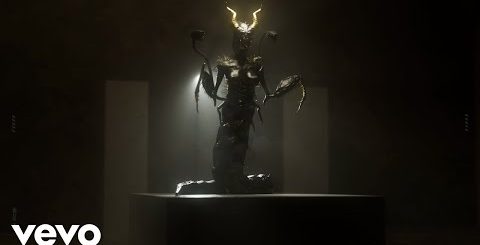
The Night Does Not Belong To God by Sleep Token Lyrics Meaning – Unveiling the Veil of Darkness
Lyrics
With angels at your side
In order now bestowed by
The light of the sunrise
And you remember everything
Only ’til the sun recedes once again
And the night comes down like heaven
The night comes down like heaven
The night comes down like heaven
The night comes down like heaven
The night comes down like heaven
The night comes down like heaven
The night comes down like heaven
The night comes down like heaven
The whites of your eyes
Turn black in the lowlight
In turning divine
We tangle endlessly
Like lovers entwined
I know for the last time
You will not be mine
So give me the night, the night, the night
The night comes down like heaven
The night comes down like heaven
The night comes down like heaven
The night comes down like heaven
The night comes down like heaven (The whites of your eyes)
The night comes down like heaven (Turn black in the lowlight)
The night comes down like heaven (In turning divine)
The night comes down like heaven (We tangle endlessly)
Sleep Token, an enigmatic collective shrouded in mystery and steeped in ritualistic imagery, has crafted an aural tapestry that explores the dichotomous relationship between darkness and divinity in ‘The Night Does Not Belong To God’. The song merges haunting melodies with compelling lyrics, creating a sonic journey that delves deep into the human psyche and the inherent dualities of existence.
Beneath the ethereal soundscape lies a labyrinth of hidden meanings and poignant reflections. ‘The Night Does Not Belong To God’ isn’t just a song; it’s an introspective voyage that challenges the listener to confront the night’s embrace and what it represents. As we examine the lyrics, several thought-provoking themes emerge, revealing the song’s layers and the profound message nested within its haunting refrain.
An Ode to Twilight: Embracing the Shadows
The recurring phrase ‘The night comes down like heaven’ suggests a reverence for the darkness, a time typically associated with uncertainty and fear. However, Sleep Token reimagines the night as a celestial experience, attributing qualities of the sacred to times of obscurity. This inversion of expectations compels listeners to reconsider their relationship with the night, seeing it as a haven rather than a place of exile from the divine.
In doing so, the band taps into the primal nature of humanity—our innate comfort in the rhythms of the day and the haunting allure of the night. This juxtaposition creates a striking contrast between the safety of daylight and angels against the beguiling and irresistible pull of the nocturnal hours, suggesting that there may be profound experiences and truths that belong exclusively to the domain of the night.
The Lovers’ Lament: A Symphony of Loss and Longing
Through lines like ‘In turning divine, We tangle endlessly, Like lovers entwined’, Sleep Token ventures into the realm of the intimate. The night becomes the backdrop for a desperate dance of connection and disconnection, a space where the finality of separation is both mourned and revered. The concept of lovers forever chasing a union that cannot last touches upon the transient nature of relationships and the perpetual yearning for the unattainable.
There is a raw vulnerability in the admission ‘You will not be mine’, which captures the essence of human longing. The plea ‘So give me the night, the night, the night’ serves as a resigned request to relish in the temporary and find solace in the ephemeral. Through this lens, the song’s narrative morphs into an elegy for love lost and the night’s role as a refuge for the heartbroken.
Divinity Dimmed: The Dichotomy of Light and Dark
‘The whites of your eyes turn black in the lowlight’ ushers a transformation that aligns with the theme of duality presented throughout the song. Sleep Token paints a portrait where divinity isn’t just limited to the glow of the day but also finds a dwelling in the darkness. The lowlight symbolizes a stripping away of mundane visibility, making way for a more profound sight—perhaps an inner vision that can only be accessed when one is veiled by the night.
Notably, the eyes turning black evoke a sense of completeness and inclusion, where divinity encompasses the full spectrum of human experience. It’s a subtle yet powerful statement about the holistic nature of spirituality—implying that the divine isn’t simply found in the light, but is also present in the depths of darkness, where the most intimate forms of understanding and transformation can occur.
The Night’s Choir: An Echo of the Ethereal Refrain
Sleep Token’s refrain ‘The night comes down like heaven’ serves as both an anchor and a mantra throughout the song, an atmospheric and vivid visualization that ingrains itself in the listener’s mind. With this line, the song transforms the concept of nightfall from mere darkness to an enveloping and transcendent experience. It becomes a reminder that the mysteries of the night hold their own form of sacred beauty, inviting a meditative and transformative contemplation.
The phrase, repeated like a chant, underscores the cyclical nature of day and night, as well as the inherent cycles we witness within our lives. As such, the song doesn’t simply capture a moment in time; it encapsulates the rhythm of existence itself, calling attention to the ever-revolving dance of light fading into darkness, and then to light once more.
Unveiling the Veil: The Profound Hidden Meaning
On the surface, ‘The Night Does Not Belong To God’ may seem to valorize the dark, but a closer examination reveals it as an acknowledgement of balance. The song illuminates the concept that divinity and sacred experiences are not confined to the traditionally revered and illuminated. There is a divine encounter waiting in the dark; an uncharted territory that invites the bold to explore the layers of their soul that daylight cannot reveal.
Sleep Token, through their cryptic lyrics and emotive soundscapes, encourage listeners to peer beyond the veil of immediate interpretation to understand that the night is a realm of equality, where the divine and human experience collides. It calls us to find the extraordinary within the ordinary, the sacred within the profane, and the light within the dark. The night, with all its perceived fears and unknowns, holds the potential for enlightenment and understanding, a concept ancient and new, as timeless as the band’s haunting melodies.