Stigmata Martyr by Bauhaus Lyrics Meaning – Unveiling the Tormented Psyche in Gothic Rock
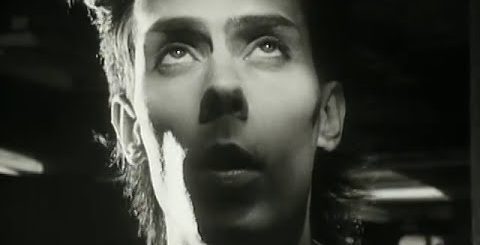
- Music Video
- Lyrics
-
Song Meaning
- From Skin to Soul: The Physical Embodiment of Suffering
- Peering Through the ‘Crimson Orifice’: A Voyage into Hidden Meanings
- A Liturgy Wrapped in Shadows: The Power of Ritualistic Repetition
- The Unforgettable Line: ‘Weep for me’ as a Cry from the Abyss
- Musical Scars: How ‘Stigmata Martyr’ Imprints on the Listener
Lyrics
Lying cross chequed in agony
Stigmata bleed continuously
Holes in head, hands, feet, and weep for me
Stigmata oh you sordid sight
Stigmata in your splintered plight
Look into your crimson orifice
In holy remembrance
In scarlet bliss
In nomine patri et filii et spiriti sanctum
In nomine patri et filii et spiriti sanctum
In nomine patri et filii et spiriti sanctum
In nomine patri et filii et spiriti sanctum
Father, son, and holy ghost
Stigmata martyr
Bauhaus, often hailed as the progenitors of gothic rock, cast shadows and mystique around their art form, concocting tunes that evoke the dark, the eerie, and the introspective. ‘Stigmata Martyr’, a track from their seminal work, dances on the razor’s edge of the sacred and the profane, leaving an indelible mark on the canvas of alternative music, with fervent fans and scholars alike still unraveling its intricacies to this day.
Cloaked in the language of religious ecstasy and suffering, ‘Stigmata Martyr’ is a siren song of the spiritually afflicted, a talisman for the tormented. Its lyrics are saturated with the imagery of martyrdom and sacrifice, but interpreting them requires a dive into the enigmatic depths of both personal and collective unconscious.
From Skin to Soul: The Physical Embodiment of Suffering
The visceral portrayal of physical affliction in ‘Stigmata Martyr’ is undeniable, with references to ‘holes in head, hands, feet’ invoking the crucifixion of Christ and the phenomena of stigmata—the bodily manifestation of Christ’s wounds. Bauhaus taps into these powerful symbols to puncture the veil between the corporeal and the sacred, suggesting a profound emotional suffering that seeks to transcend flesh and blood.
Such graphic descriptions are not only for shock value but serve as a metaphor for the anguish that cannot be tamed by mere physicality. The ‘agony’ and ‘bleeding’ may also represent the struggle and catharsis of creation, mirroring the band’s own artistic birth pangs as they etched a place for themselves in the post-punk pantheon.
Peering Through the ‘Crimson Orifice’: A Voyage into Hidden Meanings
The phrase ‘Look into your crimson orifice’ is a blatant call to gaze beyond the surface, to explore the concealed wounds and the dark chambers of the heart. It beckons a journey into the psyche, revealing the internal battleground where demons of doubt and salvation lock in an eternal tango. The lyric becomes a daring invitation to confront the depths of one’s own soul.
By framing self-examination as a ‘holy remembrance’, Bauhaus elevates personal reflection to a spiritual act, enjoining us to embrace our own tribulations as a pathway to transcendence. In invoking this ‘scarlet bliss’, the band welds the bliss of enlightenment with the scarlet of blood, pain, and passion—blurring the lines between ecstasy and agony.
A Liturgy Wrapped in Shadows: The Power of Ritualistic Repetition
Throughout ‘Stigmata Martyr’, the repetition of the Latin liturgical phrase ‘In nomine patri et filii et spiriti sanctum’, which translates to ‘In the name of the Father, the Son, and the Holy Spirit’, becomes a chant-like mantra, reinforcing the portrayal of martyrdom and sacrifice. This invocation calls forth the holy trinity, but here, it feels merged with an occult incantation.
This insistent repetition also creates an atmosphere of hypnotic devotion, a rhythmic compulsion that draws the listener into a trance of reflection and rumination. The line ‘Father, son, and holy ghost’ acts as an anchor, a familiar set of words that paradoxically merges with the song’s more divergent themes, suggesting a communion with both divine and existential suffering.
The Unforgettable Line: ‘Weep for me’ as a Cry from the Abyss
Short yet wrenching, the command ‘weep for me’ encapsulates an entire narrative of desolation and desperation. Here lies the crux of ‘Stigmata Martyr’: a raw plea for recognition of pain, a cry to bear witness to personal crucifixion. This plea, emerging from the haze, reaches out for empathy, demanding not just sympathy, but a shared experience of torment.
It is not just a call for sorrow, but also a challenge to the listener to embrace vulnerability and to find beauty and meaning in the breakdown. The rawness in this request opens a gateway for the audience to bond with the artist through the universal experience of suffering, establishing indelible ties between creator and receiver.
Musical Scars: How ‘Stigmata Martyr’ Imprints on the Listener
The overall impact of ‘Stigmata Martyr’ is that of a hauntingly persistent scar. Like true stigmata, the song leaves a permanent impression, etched not onto hands and feet but into the memory and consciousness of those who hear it. Its unsettling blend of punk energy, gothic atmosphere, and punk pathos cements it as a piece that defies time and genre.
Bauhaus’s prowess lies in their ability to evoke such intense imagery and emotion through minimalistic lyrics and dark, brooding soundscapes. ‘Stigmata Martyr’ is an emblem of their artistic identity, a legacy that continues to bleed through the fabric of alternative music, coloring future generations with its unabashed exploration of the shaded corridors within us all.