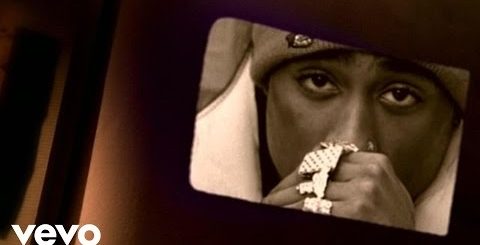
“Unconditional Love” by 2Pac
As far as a rapper being able to stick to a single topic throughout a full three-verse solo outing, few, if any, have been more effective at achieving that end than Tupac Shakur (1971-1996), who was basically a poet anyway.
“Unconditional Love”, besides speaking to the titular subject matter, also serves as sort of an indirect social commentary. It illustrates some of the common difficulties of surviving in the ghetto. So basically, what we are met with is the vocalist harping on the concept of unwavering affection against the backdrop of making it in the ‘hood, though in different relationship contexts respective to the song’s three verses.
UNCONDITIONAL LOVE OF A MOTHER
The first verse is in relation to Shakur’s youth and family life. And in traditional 2Pac fashion, as with the classic “Dear Mama” (1995), he references for instance growing up in an economically-challenged situation though the love his mother maintained for him throughout.
Indeed it is the rapper’s mother who in this instance is granting him what he deems to be “unconditional love”. She showers him with affection which is not affected by any of their less-than-ideal external circumstances. For example, even though her son is tempted to become a drug dealer and score some quick cash as opposed to following a safer route, she loves him all the same.
UNCONDITIONAL LOVE FOR THE HOMEYS
In the second verse, the rapper is ‘sending love out to his block’. The ‘block’ here is the ‘hood that 2Pac grew up in and the homeys he’s befriended along the way.
This passage is similar in sentiment to the second verse of “I Ain’t Mad at Cha” (1996). “I Ain’t Mad at Cha” also officially came out right after Tupac’s death. It is however, a song he had more of a hand in creating.
In both cases, he notes how life on the streets can sometimes cause besties to drift apart. But in terms of expressing his unconditional love for the homeys, Tupac is basically sympathizing with what they all have to go through. He sheds light on the endless struggle of surviving and thriving on the streets and how doing so can prove detrimental to relationships. Or put otherwise, Pac’s unconditional love for his friends means that he’s not going to allow such circumstances to permanently tear them apart.
UNCONDITIONAL LOVE OF A COMMITTED SHAWTY
The beginning of the third verse is more obscure in terms of who the intended addressee is. However, by the time the passage climaxes, it is made clear that the vocalist is speaking to is his significant other.
Perhaps, based on him apparently noting they “just had a baby with the same eyes”, this person can also be the mother of his child. And again, what 2Pac does is go about noting how such relationships, particularly those that are ‘hood-based, can be challenging.
More specifically, the vocalist comes off as someone who is dedicated to the paper chase, which itself can be very time-consuming and, as we know with people like Shakur especially, dangerous. But he assures his sweetheart that he is “a soldier”, i.e. someone who’s not going to lose nor give up in the game.
There is a reason he’s celebrating the “unconditional love” she bestows upon him. This is because no matter what type of unfavorable characteristics he has displayed in conforming to the above ideology, she never treated him bad nonetheless.

“UNCONDITIONAL LOVE”, A POSTHUMOUS TUPAC RELEASE
It can be said that the late Tupac remains the most-revered rapper in the industry’s history. He can also be considered the father of the movement in which it has become standardized for rappers, if not popular musicians in general, to have their works released posthumously.
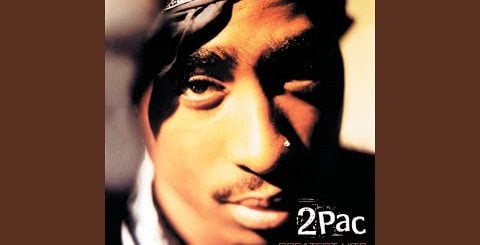
For instance, “Unconditional Love” came out on 26 January 1999. This was over two years after Pac’s passing. And it was originally featured on what was by that point already his third posthumous album, a compilation project titled “Greatest Hits” (1998).
Said LP was made public through these labels:
- Death Row Records
- Interscope Records
- Amaru Entertainment
Amaru Entertainment was the label that Tupac’s mother, Afeni Shakur (1947-2016) founded. She founded it in the wake of her son’s murder.
Despite being released as a promo single at a time when posthumous-Tupac mania was still pretty strong, “Unconditional Love” was not a major hit. It was only able to peak at number 73 on Billboard’s R&B/Hip-Hop Airplay list.
The aforementioned 2Pac greatest hits album also featured such hits as:
Credits
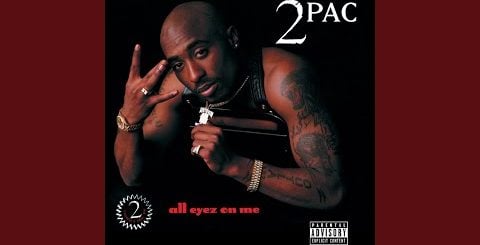
This song was produced and co-written by the late Johnny J (1969-2008). Johnny was a regular Tupac collaborator. For example, he was heavily involved in the creation of “All Eyez on Me” (1996), which can be considered Shakur’s signature album. Johnny was just 39 years old at the time of his death. He reportedly committed suicide after getting locked up on a DWI (driving while intoxicated) charge.
TUPAC SHAKUR & M.C. HAMMER
Interesting to note is that the family-friendly M.C. Hammer was for a brief time signed to Death Row Records. This was a label that is well known to have been, back during its heyday, run a lot like a street gang.
Tupac, being who he was, did have some choice words for the Hammerman back in the days. But in the years that followed, i.e. circa the era in which both of them were signed to Death Row, it is also known that the two became friends. Pac even reportedly conversed with Hammer a couple of hours before he was murdered. And in fact Shakur wrote “Unconditional Love” for M.C. Hammer, not for himself.
However, after Pac was shot dead, Hammer decided to expeditiously part ways with Death Row. But Shakur did record a demo of “Unconditional Love” beforehand. So it was that recording which ultimately ended up being utilized for the official release of the song.
CONCLUSION
As verified in the chorus, the theme of this track revolves around maintaining loving relationships even during times when a person may be wholly distracted by trying to make it in this world. As regularly confirmed via his artistry, Tupac grew up in the ghetto, an environment marked by the likes of single mothers trying to care for their children, and young men doing whatever they have to do to generate desirable income.
Against such a backdrop, it can be very difficult to continually display “unconditional love” for those that you care for. But in some cases, such as a mother for her children, a hustler for his homeys or a lady for her man, such can and sometimes does exist. And it is that type of commitment which Pac is celebrating on this track.