Category: The Rolling Stones
The term “under my thumb” most simply means that the person relaying it is in complete control of whoever or whatever he is referring to. And in this case, who is being referred to would...
On “Sympathy for the Devil”, Mick Jagger takes on the role of Lucifer, the devil. The tune was very controversial when it first came out, as some people interpreted it as proof that The Rolling Stones...
“Midnight Rambler” is about the Boston Strangler who killed 13 women in Boston between 1962 and 1964. Albert Henry DeSalvo, who confessed to be the man behind the murders, sexually assaulted his victims before taking...
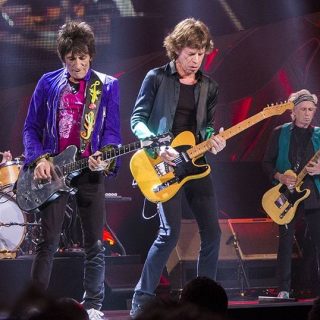
English rock band, The Rolling Stones, touted as the longest-serving rock band is famed for being at the forefront of the 1964 British Invasion and is easily identified with the defiant and youthful counterculture of the 1960s....
The Rolling Stones’ “As Tears Go By” is a relatively-simple tune lyric-wise, which is based on the singer’s depression. The setting is that he is sitting somewhere, watching children play. And the implication is that under...
Though recorded back in 1970, this song is very NSFW, even by today’s standards. The subject of the track is a “lonesome schoolboy” who apparently is a fresh visitor to London. And he has “heard so...
The Rolling Stone’s frontman Mick Jagger, who co-wrote and sings this song, has asserted that “it’s not really about a girl”. Instead he has insisted that it is rather based on “the feeling of longing”. But...
Despite being one of the classic songs in The Rolling Stones’ catalog, the precise lyrical origins of “Angie” is still very much an issue of debate. What is clear is that the song is based...
To begin with, Mick Jagger penned “Shine a Light” about Brian Jones (1942-1969), one of the legendary founders of The Rolling Stones who passed away prematurely at the age of 27. Jagger began penning...
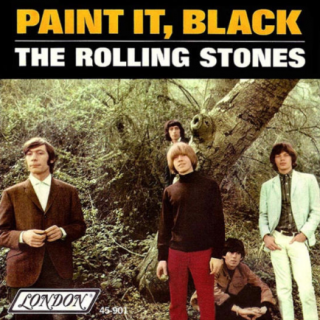
The general consensus is that the Rolling Stones’ “Paint It Black” is based on the narrator grieving over a deceased romantic partner. And there is definitely imagery presented in its singular verse to support this...


 Yankee Rose by David Lee Roth Lyrics Meaning – A Dive into America’s Rock Symbolism
 Best Friend by Conan Gray Lyrics Meaning – Unraveling the Complexities of Platonic Love
 Absolution by The Pretty Reckless Lyrics Meaning – A Deep Dive into Redemption and Time’s Eternal March
 Good Life by Inner City Lyrics Meaning – The Utopian Dance Anthem Decoded
 Coals by Modern Baseball Lyrics Meaning – Unpacking the Anthem of the Disillusioned Youth