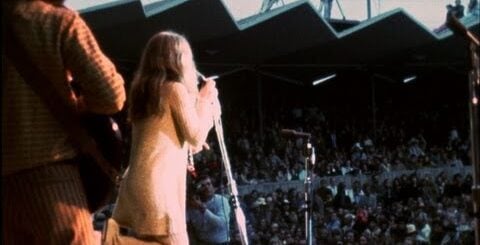
14 Mercedes Benz by Janis Joplin Lyrics Meaning – Unveiling Materialism in Melodic Satire
Lyrics
Of great social and political import
It goes like this
Oh Lord, won’t you buy me a Mercedes Benz?
My friends all drive Porsches, I must make amends
Worked hard all my lifetime, no help from my friends
So Lord, won’t you buy me a Mercedes Benz?
Oh Lord, won’t you buy me a color TV?
Dialing For Dollars is trying to find me
I wait for delivery each day until three
So oh Lord, won’t you buy me a color TV?
Oh Lord, won’t you buy me a night on the town?
I’m counting on you, Lord, please don’t let me down
Prove that you love me and buy the next round
Oh Lord, won’t you buy me a night on the town?
Everybody!
Oh Lord, won’t you buy me a Mercedes Benz?
My friends all drive Porsches, I must make amends
Worked hard all my lifetime, no help from my friends
So oh Lord, won’t you buy me a Mercedes Benz?
That’s it!
In the tumultuous sea of psychedelic rock and soulful blues of the late 1960s, Janis Joplin emerged as a beacon of raw, unfettered expression. One of her seemingly light-hearted tracks, ‘Mercedes Benz,’ off her posthumously released album ‘Pearl,’ serves as a masterful critique of materialism, thinly veiled by its upbeat tempo and Joplin’s distinctive, raspy vocal twang.
The song, short but packed with cultural jabs, is a sardonic prayer to the heavens, a lament satirizing the American Dream’s hollowness. It’s a timely reflection of desire, envy, and the never-ending pursuit of happiness through material means – themes still startlingly relevant in today’s social fabric.
The Gospel According to Joplin: A Satirical Sermon
From the opening line, Joplin’s invocation of the Lord sets a religious undertone, mirroring the structure of a gospel. However, as she implores for a Mercedes Benz, Joplin’s mockery of prayer becomes apparent. The juxtaposition of sacred supplication with a plea for worldly goods blurs the line between the spiritual and the profane, skewering a society where divine intervention is sought for capitalistic gain.
Reinforcing the satire, the congregational ‘Everybody!’ in the final stanza transforms the song into a communal chant, subtly critiquing the collective consumerist desire that grips societal norms.
‘My Friends all Drive Porsches’: Envy and Status Anxiety
‘My friends all drive Porsches, I must make amends,’ Joplin croons, articulating the pressure to keep up with the Joneses – a timeless tale of social comparison and conformity. These whimsical petitions for luxury vehicles underscore the quintessential human condition of envy and restlessness – resonating with anyone who’s ever longed for more in the race for status.
Moreover, the crave to ‘make amends’ suggests a deeper social guilt associated with not possessing the trappings of success, underscoring the relentless, often self-flagellating quest for social ascension.
A Color TV and a Night on the Town: The Facade of Fulfillment
Joplin’s petition extends beyond mere transportation to include other ephemeral joys of consumerism, like a color TV and ‘a night on the town.’ The items on Joplin’s wish list escalate from personal longing to a societal panorama, painting a picture of the era’s infatuation with television and nightlife as symbols of a fulfilled life.
Through her sardonic pleas, Joplin reflects on the superficiality of such ambitions, questioning the sincerity of happiness derived from material acquisitions and hedonistic escapades.
Unearth the Hidden Meaning: Divine Discontent
At its core, ‘Mercedes Benz’ is an anthem of divine discontent, where the divine is supplanted by consumerist deities, and the soul’s discontent is meshed with commercial cravings. Joplin invites listeners to peer beneath the catchy, humorous exterior and confront the sobering truth of spiritual emptiness in a commodified world.
This deeper layer of Joplin’s song remains hidden in plain sight, challenging the listener to discern between a quirky tune and a profound statement on society’s misplaced priorities.
Memorable Lines that Make You Think Twice
Worked hard all my lifetime, no help from my friends,’ Joplin sings, encapsulating the ethos of the self-made individual, yet the twist comes with the acknowledgment of receiving ‘no help from my friends.’ It is a line that echoes with irony, underpinning the solitude of personal striving in a culture that ostensibly champions community.
The mention of ‘Dialing For Dollars,’ a then-popular TV gameshow, in seeking divine favor for a color TV is a poignant illustration of the way mass media and consumer culture infiltrate the deepest layers of personal aspirations, turning even spiritual dialogue into a transaction.