Baby by Os Mutantes Lyrics Meaning – Unraveling the Psychedelic Whimsy of Brazil’s Tropicália Movement
Lyrics
Saber da piscina
Da margarina
Da Carolina
Da gasolina
Você precisa
Saber de mim
Baby, baby
Eu sei que é assim
Baby, baby
Eu sei que é assim
Você precisa
Tomar um sorvete
Na lanchonete
Andar com gente
Me ver de perto
Ouvir aquela canção do Roberto
Baby, baby
Há quanto tempo
Baby, baby
Há quanto tempo
Você precisa
Aprender inglês
Precisa aprender
O que eu sei
E o que eu não sei mas
E o que eu não sei mais
Não sei
Comigo vai tudo azul
Contigo vai tudo em paz
Vivemos na melhor cidade
Da América do Sul
Da América do Sul
Você precisa
Você precisa
Não sei
Leia na minha camisa
Baby, baby
I love you
Baby, baby
I love you
Baby, baby
I love you
Baby, baby
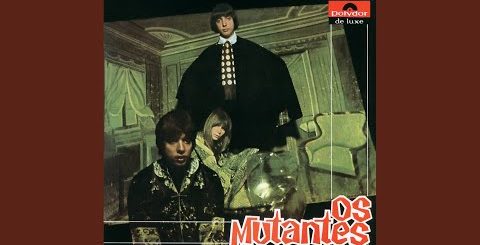
In a glorious fusion of seditious lyricism and psychedelic rock, Os Mutantes’ ‘Baby’ stands as a cryptic yet amusing love letter from Brazil’s Tropicália movement to the world. The song, a vivid fragment of the 1968 album ‘Os Mutantes’, speaks in a code of everyday banalities and ingeniously laces together the rebellious spirit of its time with the intimate human experience.
From prophetic speak-singing about various commodities to invoking an emotional connection with fresh yet inscrutable lyrics, the band crafts a mosaic that stays stunningly relevant. ‘Baby’ is not just a song; it’s a carousel ride that whirls listeners through a societal critique, a romance that is as intrinsic as it is far-reaching in its cultural impact.
Whispering Subversion through Whimsy
When one sifts through the seemingly nonsensical lyrics about swimming pools, margarine, and gasoline, they’re embracing the radical ethos of the Tropicália movement. This was a time when artists wore their discontent with consumerism and political stagnation as a badge of honor, and Os Mutantes was no different. ‘Baby’ mirrors this by embedding subversive thought amidst everyday items, suggesting a deeper discontent beneath the surface.
The repetition of ‘Você precisa’ (‘You need to’) in the lyrics resonates like a hypnotic chant, where the ‘needs’ are trivialized against the sprawling urban setting they are set in. It’s a masterful poke at the growing consumerist culture, serving as a stark reminder that amidst all the material ‘needs’, one essentially ‘needs’ to know about the simple human connection, expressed through the simple recurring line ‘Você precisa saber de mim’ (‘You need to know about me’).
The Poignant Pleading of ‘Baby, Baby’
The pleading, infantile cry of ‘Baby, baby’ throughout the song acts as a foundational mantra. The repetition is comforting yet laden with an urgent undertone that underscores a need for connection and affirmation. In these two words, repeated with the inflection of a question, a demand, and a longing, there lies an exploration of relationship dynamics in an ever-modernizing world.
This lines’ simplicity belies its depth. Os Mutantes captures the universal desire to be truly seen by one’s beloved in the phrase ‘baby, baby’—a raw plea for attention that reverberates throughout the fabric of the song, serving as its emotional anchor.
Casual Sedition in ‘Leia na minha camisa’
The phrase ‘Leia na minha camisa’ (‘Read on my shirt’) stands out as an emblematic feature of the song, subtly fusing casual attire with protest culture, further hinting at the political dissidence of the time. The shirt serves as a literal banner for one’s personal message, be it for love as ‘Baby, baby, I love you’ suggests, or perhaps something more – a hidden slogan, a political statement, a silent revolt.
The use of English ‘I love you’ is particularly interesting, signifying not just an embracing of universal pop culture but also highlighting the impact of American culture in Brazil, and perhaps serving as a subtle nod to the infiltration of North American values in a Brazilian reality.
A Cultural Homage in ‘Ouvir aquela canção do Roberto’
Os Mutantes pays homage to their cultural canvas by invoking Brazilian pop icon Roberto Carlos with ‘Ouvir aquela canção do Roberto’ (‘Listen to that song by Roberto’). It’s a nod to the King of Latin music and the nation’s soul that Carlos encapsulated. This line binds the song to its Brazilian roots—while the Tropicália movement was indeed global in aspiration, it thrived on its local colors and resonances.
By coupling a universal vocalization of desire with Brazilian-specific content, the song positions itself on the captivating crossroads of the local and the global, nestling comfortably into the hearts of those who hear it, regardless of nationality.
The Enigmatic Essence of ‘Baby’
Much of ‘Baby’ dwells in ambiguity and its eclectic pattern paints a broad stroke across multiple interpretations. The song flirts with the listener through its cryptic nature, raising more questions than answers, thus inviting them into a dialogue. Is it merely about consumerism? A love song, maybe? Or a more profound commentary on the nature of society?
‘Baby’ stands tall as an enigmatic gem that compels a deep dive into its meaning. The uncertainty of whether the song captures the playful skewering of the absurdities of life or the yearning for a real, untainted connection remains its ultimate hidden meaning. With its distinctive Brazilian psychedelic twist, Os Mutantes’s ‘Baby’ continues to spark debates and kindle interpretation, which is precisely the mark of a true artistic creation.