I Want To Be Well by Sufjan Stevens Lyrics Meaning – An Ode To The Struggle For Mental Reprieve
Lyrics
Isolated in the room where the bed rises
Photographic ordinary people are everywhere
Extraordinary histories, ordinary histories, ordinary histories
I’ll find sleep, I’ll find peace
Or in death you’ll sleep with me
To figure that it was my fault
Or so I’ve come to realize life is not about
Love with someone (ordinary people are everywhere)
Extraordinary people are, ordinary people are, ordinary people are
Everywhere you look, everywhere you turn
Illness is watching, waiting its turn
Did I go at it wrong?
Did I go intentionally to destroy me?
I’m suffering in noise I’m suffering in (touching ordinary body)
The burning from within the burning from with (ordinary hysteria)
I could not be at rest, I could not be at peace (extraordinary hysteria)
So do yourself a good, or do yourself a death from ordinary causes
Or do yourself a favor, or do yourself a death from ordinary causes
Illness likes to prey upon the lonely, prey upon the lonely
Wave goodbye, oh, I would rather be, but I would rather be fine
I want to be well, I want to be well
I want to be well, I want to be well
And I forgive you even
As you choke me that way
With the pill or demon
And the shrouded shalom
Under conversation
In tremendous weight of
A crowd of ages outside
Dressed for murder
I’m not fucking around
I’m not, I’m not, I’m not fucking around
And shall I kiss you even as you take me that way?
With the pill or demon as my body changes
Apparitions gone awry
They surround me, all sides
But from within I see an unholy changes
I’m not fucking around
I’m not, I’m not, I’m not fucking around
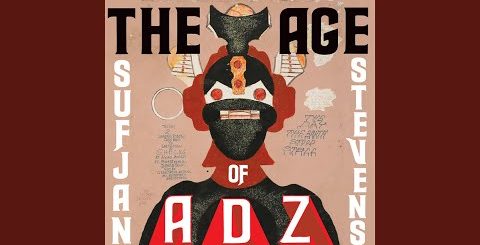
In the labyrinth of modern music, it’s a rarity to stumble upon a song that encapsulates the raw struggle for mental health as poignantly as Sufjan Stevens’s ‘I Want To Be Well’. The track, which comes off the critically-acclaimed album ‘The Age of Adz’, does more than skirt the surface of its eponymous desire; it delves into the trenches of what it means to fight for tranquility amidst psychological chaos.
The interplay of Stevens’s tender vocals with the cacophony of electronic instrumentation gives a sonic life to the inner turmoil he narrates—an elegy of the struggle that resonates on multiple frequencies. Let us unpack the woven layers of ‘I Want To Be Well,’ discovering its concealed meanings, its therapeutic value, and its place in the hearts of those it echoes.
The Healing Power of Acknowledgment
Stevens’s repetition of the mantra, ‘I want to be well’, is a powerful act of self-acknowledgment, delivering an affirming punch in the gut to the stigma surrounding mental health issues. Amidst the landscape of 21st-century ailments, admitting the need for wellness is a defiant first step towards recovery.
By laying bare this desire, Stevens creates an anthem for the universal battle against the internal demons we all face. It is a call to arms—an invitation to admit that we may not be OK, that the journey ahead is steep, but that the quest for well-being is indeed a worthy crusade.
Dancing with the Demon—The Personification of Illness
Singularly haunting in Stevens’s song is how illness is portrayed as almost sentient—’Illness is watching, waiting its turn.’ This vivid personification rattles the listener, compelling one to face the often-overlooked reality that health is not a given; it is a delicate dance with an everpatient partner.
Moreover, the framing of illness as a predator preying upon the isolated and lonely illustrates the cruel paradox of mental disorders: the deep propensity for solitude in the times when support is most critical.
Striking the Chord of Ordinary Extraordinariness
The lyrical refrain ‘ordinary people are everywhere’ underscores a poignant truth about the human condition. The song destigmatizes mental struggle by reinforcing that it is an ordinary aspect of the human experience, paving the way for a more compassionate understanding of oneself and others.
But Stevens doesn’t stop there. The collision of ‘extraordinary’ with ‘ordinary’ within the same context suggests a duality—that within the often undistinguished mass of humanity, there is a spectacular narrative of resilience waiting to be recognized.
The Dissonant Lullaby—Music’s Role in Articulating Pain
Sufjan Stevens’s use of discordant sound seeks not to soothe but to provoke. Melodic dissonance intertwines with emotionally charged lyrics to create a soundscape that veritably throbs with tension. It’s as if the song’s form embodies the very frustration and unease of the struggle for mental equilibrium.
This musical turmoil is a physical manifestation of an internal reality, offering listeners a raw, almost tactile encounter with mental anguish that words alone could never fully articulate.
The Hidden Meaning Behind ‘The Pill or Demon’
One of the most resonant lines in Stevens’s work is the repeated reference to ‘the pill or demon’. This phrase captures the essence of the pursuit for wellness that often involves pharmaceutical intervention—a battle that for many, bears its own set of struggles between benefit and side-effect, solace and dependency.
But the dual nature of ‘pill or demon’ extends the meaning to a broader existential wrestling. It prompts listeners to contemplate the duality of healing where the cure and poison can sometimes share the same guise. Where the very act of reaching for health is rife with potential contradiction and complication.