In The Devils Territory by Sufjan Stevens Lyrics Meaning – Exploring the Spiritual Labyrinth
Lyrics
The Beast will arrive in time.
We stayed a long, long time.
We stayed a long, long time.
To see you, to beat you,
To see you at last.
I saw the dragons drying.
I saw the witches whine.
We stayed a long, long time.
But I’m not afraid to die.
To see you, to meet you,
To see you last.
I stole my father’s shoes.
I pulled His pockets too.
We stayed a long, long time.
We stayed a long, long time.
To see you, to beat you,
To see you, to meet you.
To see you at last.
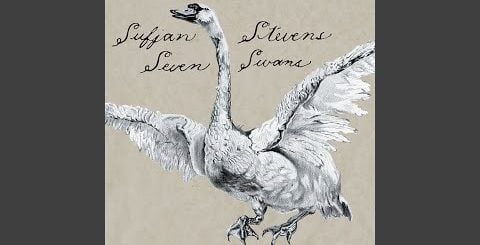
Sufjan Stevens, an artist known for weaving intricate tapestries of sound and poetry, often invites his listeners into deep contemplation. His song ‘In The Devil’s Territory’ from the album ‘Seven Swans’ is no exception. The song’s title itself hints at a journey through a realm of challenge, temptation, and spiritual confrontation.
However, as one dives into the song, it becomes apparent that Stevens is articulating a narrative that is at once deeply personal and universally resonant. Through a mesmerizing combination of soft-spoken verses and a hauntingly beautiful melody, the song delves into underlying themes that speak of human frailty, divine encounter, and the enduring struggle between good and evil.
Interpreting the Celestial Prologue
The song’s opening line, ‘Be still and know your sign,’ could be interpreted as a call for introspection, a prompting to understand one’s place and purpose within the cosmic design. The idea that ‘The Beast will arrive in time’ suggests an inevitable encounter with darker forces, whether they be personal demons or obstacles in life. The repetition of ‘We stayed a long, long time’ evokes not just endurance, but a vigil, awaiting a moment of revelation or climax.
Stevens deftly uses biblical and mythological imagery to create a sense of impending trial. The song’s listener embarks on a journey, a spiritual quest that demands both patience and courage, suggesting a process of metamorphosis and growth that spans beyond the tangible.
A Dance with Dragons: Confronting Inner Demons
The mention of ‘dragons drying’ and ‘witches whine’ plunges us deeper into the mythos that Stevens is crafting. Dragons often symbolize power and chaos, and the drying of the dragons could signal the waning of once-formidable challenges. Similarly, the witches’ whine might be construed as the laments of voices that tempt or mislead the traveler.
Stevens’ imagery is by no means happenstance. Instead, it carries the weight of allegory, with each creature and each action paralleling the inner turmoil and external adversities that one must face. Their diminishing presence speaks to the courage of facing fears head on and the solace found in outlasting those forces.
The Hidden Meaning in Familial Bonds
One cannot overlook the intensely personal image of ‘I stole my father’s shoes. I pulled His pockets too.’ Here, Stevens might be alluding to the generational passage of traits, burdens, or roles. Stepping into one’s father’s shoes is a metaphor for assuming responsibility or continuing a legacy.
This line serves as a turning point, suggesting a transition from passive observance to active participation. The capitalization of ‘His’ potentially indicates a divine reference, thereby intertwining the human experience with the sacred. The repeated commitment to ‘stay a long, long time’ can be seen as a testament to both the resilience and the inherited persistence found in the artist’s personal pilgrimage.
Fleeting Mortality and Eternal Yearning
‘But I’m not afraid to die.’ In the context of the song, this line is a stark declaration amid softer inquiries and reflections. It’s a bold confrontation of mortality that underscores the spiritual odyssey’s often gritty reality.
Within this brave admittance, Stevens encourages a confrontation with the most profound fear humans face—our own end—and he juxtaposes this fear with the perennial desire ‘to see you, to meet you,’ a yearning perhaps for divine connection, for answers, or an important personal relationship that continues to elude resolution.
Echoes of Immortal Longing in Memorable Lines
As the song folds back upon itself, the refrain ‘To see you, to beat you, to see you at last’ is repeated like a mantra. This is not just a desire to overcome, but to understand, to reconcile, to find peace. Each iteration imbues the song with a meditative quality, beckoning listeners to reflect upon their own devils, dragons, and defining moments.
By the song’s end, the listener is left with a palpable sense of journey’s significance—one that encompasses victory, comprehension, and perhaps most importantly, the promise of a meeting, an arrival that has been awaited through time itself. In this way, ‘In The Devil’s Territory’ by Sufjan Stevens transcends its melodies and verses, evolving into an enduring echo of the human experience.