Somewhere Between Waking and Sleeping by Air Lyrics Meaning – A Dive into the Dreamy Psyche
Lyrics
You’d see further if you’d only close your eyes
In unconsciousness I can find peace
Inside prison walls I can find release
There is a place that I have seen
Somewhere between waking and sleeping
Down at the water’s edge
Somebody waits for me
Is it too late for me
It’s never too late, he says
Without blindness, there is no sight
You’d see further if you’d close your eyes
Unblock the failure
There is a place that I have seen
Somewhere between waking and sleeping
Leaning over the side
Trailing my fingertips
Feeling the water slip
Into the quiet night
Viewed from the wrong end of a telescope
I see myself, so far below
Still and silent, rest in peace
The thread unravels
Merciful release
There is a place that I have seen
Somewhere between waking and sleeping
Now I can almost see
Figures upon the shore
He’s gathering in the oars
Where are you taking me
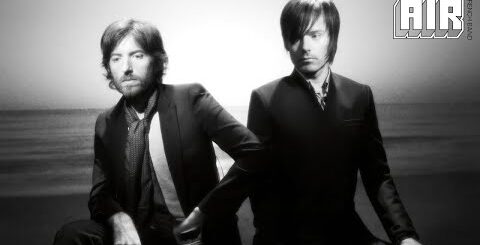
Air, the iconic French band known for their ethereal, dream-pop soundscapes, crafts music that often defies immediate interpretation. Their track ‘Somewhere Between Waking and Sleeping’ is no exception, blooming within the liminal space it describes—where reality softly blurs into the realm of dreams. This song, off their album ‘Pocket Symphony,’ speaks to the heart with a hauntingly beautiful language, embedded with profound paradoxes and an introspective journey.
The song invites listeners to a serene place of contemplation where boundaries dissolve and sight is not dependent on the eyes. It’s a musical tapestry that weaves together emotion and philosophy, leaving us to ponder the depths of consciousness and the peace that comes from surrender. But what exactly are the band members, Nicolas Godin and Jean-Benoît Dunckel, communicating to their audience? Journey with us as we decipher and reflect upon the meaning behind the lyrics of ‘Somewhere Between Waking and Sleeping.’
Reflecting Inwards: The Soul’s Pursuit of Peace
The opening lines of the song immediately set the tone for the sensory inversion that’s to come. To ‘see further if you’d only close your eyes’ is a paradox that invites meditation. It suggests that true insight and clarity often come from within—beyond the literal and into the spiritual or psychological realm. It’s a compelling contradiction: the idea that you must willingly embrace blindness to truly see.
This theme of inversed perception persists as the song progresses, painting a picture of a soul in search of tranquility and release. The reference to ‘prison walls’ is metaphorical for the constraints we face in life, and it’s within these self-imposed cells that the protagonist seeks peace—a peace that comes when the mind shuts out the external world and delves into the quieter, inner space where tranquility resides.
Between Two Worlds: The Liminal Spaces We Inhabit
The recurring chorus ‘Somewhere between waking and sleeping’ is a reference to the in-between state of consciousness: not fully awake and engaged with the physical world, yet not completely lost in slumber. The song gives life to the concept of twilight moments – those fleeting, transitionary periods where reality is malleable – and exalts the idea of liminality as a space ripe with potential and insight.
Air’s mastery in capturing the essence of this transient space is seen as they depict the water’s edge, a traditional symbol of change and fluidity. The gentle touch of fingertips on the water’s surface symbolizes small disruptions in the stillness of life, creating ripples that can lead to larger revelations. This melancholic scene evokes a sense of longing and introspection, manifesting a world where answers lie just beneath the surface of our awareness.
Unraveling the Thread: An Inevitable Release
Midway through the track, the music and lyrics converge on the theme of surrender and the beauty of letting go. As ‘The thread unravels,’ it signifies the end of resistance, the release of tension, and the emergence of a certain peace that comes only after succumbing to life’s natural entropy. This idea of finding solace in existential surrender is cathartic and reflects a journey towards self-acceptance.
The mention of ‘Merciful release’ underlines the relief of finally giving in to forces larger than oneself. The protagonist ceases their struggle, allowing themselves to be silent and still. This surrender is not one of defeat, but rather an embrace of the inevitable cycles of life, acknowledging the relief that can come from the end of an era or even the endowment of serenity in death.
Unlocking the Hidden Meaning: A Voyage to the Unknown
‘Viewed from the wrong end of a telescope / I see myself, so far below.’ This powerful imagery speaks to a shift in perspective, the essence of introspection. The song presents a detachment from the self that can be interpreted either as self-alienation or, more upliftingly, a monumental shift in personal growth. As we look at ourselves from a distance, we gain perspective on the scale of our existence—the individual journey becomes a small, albeit significant, speck in the vastness of life.
The song takes us on a mental voyage, shedding the weights that anchor us to physicality. Enigmatic lines such as ‘Now I can almost see / Figures upon the shore’ express a bridge to the cusp of understanding, an almost-there sensation—a mystery close to being solved, akin to the hazy moments of either remembering a dream or slipping well into one. In this dreamlike state, we hover at the edge of epiphany.
Memorable Lines: The Poetry That Echoes in Silence
The music of Air serves as a vessel for these enigmatic words, creating an atmosphere that resonates in the spaces between verses. Lines like ‘Without blindness, there is no sight / You’d see further if you’d close your eyes’ reverberate with the power of the paradox. It challenges the listener to reassess their perception of reality and the paths through which truth is revealed.
The final verses summon a tranquil, yet potent conclusion. The imagery of being rowed away by an unseen force towards an unknown destination captures the sublime surrender of the human spirit to the tides of fate. This motif leaves us pondering where ‘Somewhere Between Waking and Sleeping’ ultimately leads, embracing the ambiguity and ethereal nature ingrained not only within this song, but within the acts of waking, dreaming, and living.