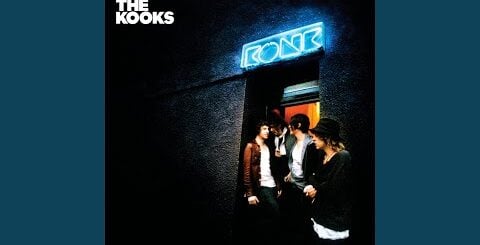
Always Where I Nee by The Kooks Lyrics Meaning – Unraveling the Layers of Love and Destiny
Lyrics
I can take her anywhere,
Do whatever comes naturally to you,
You know she just don’t care
You know she just don’t care
‘Cause I’m always where I need to be
Yeah, and I always thought I would end up
With you, eventually
Do dodo do do do do
Do dodo do do do do
Do dodo do do
Now I see her again,
I ask to be her hummingbird,
Whisper words in her ear,
Oh now you know I just don’t care,
‘Cause I’m always where I,
Where I need to be
And I always thought
I would end up with you eventually
Do dodo do do do do
Do dodo do do do do
Do dodo do do
I’m a man, I’m a man I’m a man on the scene,
I’m a man, and I can be so obscene
Because I always think that I know how to be,
But I always thought that I would end up with you, eventually,
Do dodo do do do do
Do dodo do do do do
Do dodo do do
I’m a man, I’m a man I’m a man on the scene,
I’m a man, and I can be so obscene.
The Kooks, known for their melodious hooks and indie-rock charm, have given us ‘Always Where I Need to Be’, a song that glides through the complex corridors of love, self-awareness, and serendipity. This track, enthralling fans since its release, spins a yarn of personal exploration and the magnetic pull of what seems like fate.
Below the catchy rhythms and lively beats, the lyrics of ‘Always Where I Need to Be’ convey a contemplative tale teasing at the notions of predestination and the carefree ethos of relationships. Let’s dive into the layers of meaning that The Kooks have woven into this memorable hit.
A Hummingbird’s Whisper: The Navigating Heart
At the core of ‘Always Where I Need to Be’ lies the analogy of the hummingbird, a symbol of versatility and resilience. The protagonist in the song sees himself as such, floating from one moment to the next, with a heart racing as swiftly as life’s changing scenes. Yet amidst this flight, there’s a faint whisper, a yearning for a connection that goes beyond the surface.
The hummingbird’s flight is unpredictable, but it is drawn by nature to where it needs to be – not just where it wants. This reflects the song’s central character, a seeker of depth in a world content with shallowness, finding themselves inadvertently aligned with destiny’s compass.
The Irresistible Dance of Destiny – Unveiling the Song’s Heartbeat
The repetition of the phrase ‘And I always thought I would end up with you, eventually’ is not just a catchy hook but a chant to the unyielding power of destiny. It speaks to an inextricable link between two people, albeit one that unfolds on a timeline beyond their control.
In this mantra, there’s an acknowledgment of the universe’s greater plan. Though relationships may seem haphazard or destined to fade, there’s an undenying belief in the gravitational pull that brings two souls together, as if by cosmic design.
The Indifference of Love – A Carefree Echo
The Kooks paint a picture of a love that is nonchalant through the lines ‘You know she just don’t care.’ This refrain embodies the modern love affair – sometimes devoid of the intensity and passion traditionally glorified in music and literature.
Yet, is there a deeper comfort in this indifference? The song suggests there is beauty in the laissez-faire approach to romance. Here the meaning morphs – it’s not about the other’s lack of care, but a self-realization that love should not be a cage but a space where one can be their truest self.
Eclectic Imagery: Poetry in the Ordinary
Moving beyond the lyrics, ‘Always Where I Need to Be’ encapsulates life’s poetry via quotidian scenes. The ‘Do dodo do do do do’ mimics the mundane yet rhythmic pattern of daily existence, reflecting how the ordinary can often be the carrier of the most profound truths of human experience.
These simplistic lines are a reminder that life’s essence is often cloaked in simplicity, and our paths, while seemingly orchestrated by randomness, are potentially laden with purpose and poetic sync.
‘I’m a Man on the Scene’: Proclaiming Presence Amidst Chaos
The lines ‘I’m a man, I’m a man I’m a man on the scene,’ drive home the duality of being and acting. There’s a bravado here, a bold declaration of existence, and perhaps an admission of one’s role in shaping destiny just as much as being shaped by it.
What initially could be mistaken for braggadocio is, with a closer listen, a declaration of taking responsibility for one’s actions and their impact on how life’s journey unfolds, especially in the context of affecting others and their trajectories.