America by Simon and Garfunkel Lyrics Meaning – An Odyssey Through the Land of Dreams and Reality
- Music Video
- Lyrics
-
Song Meaning
- Setting Out with Hopeful Naivety: The Quest Initiation
- A Carousel of Characters: Unmasking the Everyday Espionage
- Losing Themselves Among the Wheat Fields and Magazines
- The Confession in the Quiet: Unraveling the Song’s Hidden Meaning
- Counting Cars and Chasing Dreams: The Lines That Define a Generation
Lyrics
I’ve got some real estate here in my bag
So we bought a pack of cigarettes and Mrs. Wagner’s pies
And we walked off to look for America
Cathy, I said as we boarded a Greyhound in Pittsburgh
Michigan seems like a dream to me now
It took me four days to hitchhike from Saginaw
I’ve gone to look for America
Laughing on the bus, playing games with the faces
She said the man in the gabardine suit was a spy
I said, be careful, his bowtie is really a camera
Toss me a cigarette, I think there’s one in my raincoat
We smoked the last one an hour ago
So I looked at the scenery
She read her magazine
And the moon rose over an open field
Cathy, I’m lost, I said though I knew she was sleeping
And I’m empty and aching and I don’t know why
Counting the cars on the New Jersey Turnpike
They’ve all come to look for America
All come to look for America
All come to look for America
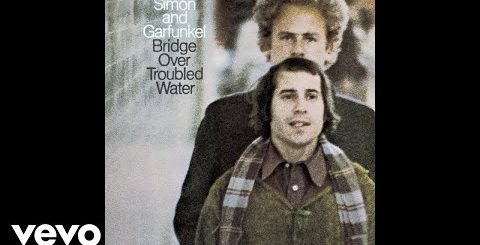
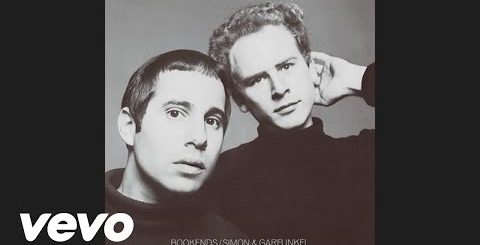
Beyond the harmonious blend of Paul Simon’s poetic prowess and Art Garfunkel’s ethereal vocals lies a track that encapsulates the zeitgeist of a nation in transit. ‘America,’ a song that debuted on the duo’s 1968 album ‘Bookends,’ is more than a road trip confessional; it is a tapestry interwoven with threads of innocence, disillusionment, and the unyielding quest for identity within the sprawling landscapes of the United States.
Examining the cultural and personal nuances within ‘America’s’ lyrics reveals a complex portrait of youthful ambition set against the shifting backdrop of societal expectations. The tune’s folksy melody belies the depth of its narrative, one that invites listeners on a journey through the unspoken dialogues that fuel the American Dream.
Setting Out with Hopeful Naivety: The Quest Initiation
As the opening lines christen the voyage, our protagonists fuse their lot, optimistic in the shared pursuit of prosperity—or perhaps simply belonging. With real estate no larger than a carry-on and sustenance as ephemeral as nicotine and pastry, Simon masterfully illustrates the transient nature of their resources, juxtaposed against the immensity of the land they seek to claim.
Their embarkation is laced with youthful romanticism, an elopement with the American spirit. Casting off from Pittsburgh aboard a Greyhound signifies a common American foray, accessible to the masses and so embedded in the nation’s veins as highways themselves.
A Carousel of Characters: Unmasking the Everyday Espionage
Breezing past the facade of mundanity, ‘America’ transforms a simple bus ride into an allegory of constant surveillance and pretense. The man in the gabardine suit—a regular, perhaps a traveler or a business commuter—becomes a symbol for the unseen forces that watch and shape the public’s conscience. The notion that his bowtie might harbor ulterior secrets injects a layer of paranoia befitting the era’s political climate.
Yet, there’s whimsy in this paranoia, a playfulness that dances over the sobering truth that the ‘Land of the Free’ could be anything but. Laughter becomes both a shield and a critique, a way to contend with the unspoken rules of engagement in a society under the microscope.
Losing Themselves Among the Wheat Fields and Magazines
As the miles stretch onward, Simon etches a separation between the travelers. While the narrator gazes outward, steeped in contemplation, Cathy retreats inward, to print and distraction. This division is emblematic of the myriad ways individuals navigate the American landscape—external admiration versus internal reflection. As the moonrise—an often romantic notion—bathes an ‘open field,’ it may signify both opportunity and the daunting uncertainty of the unknown.
The pastoral imagery serves as a canvas for the burgeoning sense of disconnection. Distance grows, not just in geographical terms, but in the emotional expanse between those who share the same physical space yet are worlds apart in their introspection.
The Confession in the Quiet: Unraveling the Song’s Hidden Meaning
In a moment of profound vulnerability, the narrator whispers to his sleeping companion, laying bare the paradox of a journey outward that has inevitably led inward. The revelation ‘I’m lost’ hints at a broader disillusionment, a realization that perhaps what they sought was not out there on the open road but within the recesses of themselves.
It is this acknowledgment, couched amidst the anonymity of a nation in motion, that catalyzes the song’s deeper exploration. The declarative ‘I’ve gone to look for America’ becomes less about the territory and more about the search for personal and collective identity in an expansive, disparate country.
Counting Cars and Chasing Dreams: The Lines That Define a Generation
The song’s closing crescendo, a litany of cars against the New Jersey backdrop—one of the U.S.A.’s most iconic yet mundane highways—becomes a metaphor for the continuous stream of seekers. Each vehicle, a capsule of individual yearnings, collective struggles, and the shared pursuit of something greater that may never fully materialize.
Such memorable lines do not merely paint a picture; they invoke a feeling, a resonance with the listener’s own quest. Simon and Garfunkel manage to encapsulate a multitude of experiences in a few short verses—making ‘America’ a timeless anthem for the wanderer, the dreamer, and the ever-hoping heart.