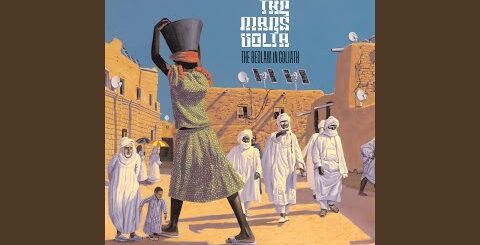
Asilos Magdalena by The Mars Volta Lyrics Meaning – Unveiling The Shadowy Labyrinth of Desire and Deceit
Lyrics
Y para componerme ando de vago
No me des tu obedencia
Porque te enseño mi cuerpo de lobo
De donde la piel estuvo débil
Con una hambre que no me deje cantar
En mi vida
El oscuro me mantiene
Cuando yo te vi
En la lluvia me prometistes tu sangre
Yo no me quedo, en mi vida
El oscuro me mantiene
Cuando yo te vi
En la lluvia me prometistes tu sangre
Yo no me quedo
Y ya que caíste de este mundo
Cargo una navaja, Dios mío, para ti
¿Cuantas veces me mordiste?
¿Y cuantas veces yo me fui?
Ya no me estoy enamorado
Con tus mentiras
El infierno me duermo
Porqué el infierno es la unica verdad
En mi vida
El oscuro me mantiene
Cuando yo te vi
En la lluvia me prometistes tu sangre
Yo no me quedo, en mi vida
El oscuro me mantiene
Cuando yo te vi
En la lluvia me prometistes tu sangre
Yo no me quedo
Estrella de la mañana
Samael, te persigo a ti
Y si me quedo sin alas
Además me muero por ti
Estrella de la mañana
Samael, te persigo a ti
Y si me quedo sin alas
Además me muero por ti
Estrella de la mañana
Samael, te persigo a ti
Y si me quedo sin alas
Además me muero por ti
Estrella de la mañana
Samael, te persigo a ti
Y si me quedo sin alas
Además me muero por ti
Estrella de la mañana
Samael, te persigo a ti
Y si me quedo sin alas
Además me muero por ti
The Mars Volta has long been a band shrouded in a veil of mystery, weaving complex narratives through their cryptic lyrics and frenetic soundscapes. ‘Asilos Magdalena’ is no exception, offering a rich tapestry for interpretation as it dives into the depths of inner turmoil and the quest for redemption.
Haunting and evocative, the lyrics of ‘Asilos Magdalena’ paint a surreal portrait of a soul in search of solace, flirting dangerously with the darker sides of existence. While the raw musical expressionism of The Mars Volta acts as an explosive catalyst for the narrative, the poetry hidden within the verses ignites a firestorm of analysis and contemplation.
A Tryst with Inner Wolves: Navigating the Interiors
‘Enfermo llegue y para componerme ando de vago,’ begins the lyrical odyssey of ‘Asilos Magdalena,’ setting the stage for a protagonist ravaged by some unspoken ailment. The mention of a ‘wolf’s body’ paints a duality—a beastly strength interlaced with vulnerability. It’s this interplay between power and frailty that The Mars Volta often explores, mapping the battlefields of the human psyche.
The song’s evocation of weakness juxtaposed with a hunger that prevents singing is symbolic of the struggle to express oneself in the midst of suffering. It taps into universal themes of personal battles, shapeshifting seamlessly between the metaphysical and the terrifyingly tangible.
Through Rain and Promise: The Allure of Betrayal
‘En la lluvia me prometiste tu sangre,’ the lines resound, suggesting a covenant made amidst a storm—both literal and figurative. This rain-soaked promise, presumably of blood, hints at betrayal, sacrifice, or a love so intense it borders on violent. With such vivid imagery, the song captures the listener’s imagination, a testament to the band’s ability to create aural intrigue.
Betrayal cuts through the heart of ‘Asilos Magdalena,’ a theme that has often been explored in literature and art. The Mars Volta, with their theatrical flair, extrapolates this to the stage of our inner demons, where every lie told and every secret kept is a sin against the self, leaving echoes in the ‘hell’ that one sleeps in.
Deciphering Samael: The Hidden Meanings Unmasked
At the core of ‘Asilos Magdalena,’ we find recurring references to Samael, a figure with a rich tapestry of interpretations—from an angel of death to an accuser, seducer, and destroyer. Chasing this ‘Morning Star,’ the protagonist seems to be in pursuit of a destructive kind of enlightenment or a love that is inextricably linked with ruin.
The preoccupation with Samael reveals layers beyond the biblical or mythological. Thematically, it suggests an obsession with the taboo and the forbidden, a romance with the darkest parts of ourselves that we are both afraid to confront and mesmerized by. The repetition of these lines evokes a ritualistic devotion, hinting at the cyclical trap of pursuing that which harms us.
A Lament of Wings Lost: Metaphors that Compel and Haunt
Perhaps one of the most gripping metaphors in ‘Asilos Magdalena’ is found in the lines, ‘Y si me quedo sin alas, además me muero por ti.’ The imagery of being wingless and the subsequent death by desire encapsulates the extent of surrender and sacrifice inherent in passion. It’s a potent illustration of the risks we undertake in the name of love.
This metaphor stirs the soul, resonating with anyone who has felt the pull of an overpowering attraction or the weight of a devotion that demands everything. It is a surrender not just to another being but to the feeling itself, a testament to the transformative and sometimes self-destructive power of love.
The Eternal Embrace of Lies and Hellfire: Memorable Lines Explored
‘Ya no me estoy enamorado con tus mentiras, El infierno me duermo porque el infierno es la única verdad.’ These haunting words linger in the mind long after the song ends. Here the narrator acknowledges the disillusionment with deception, choosing instead the certainty of hell over the fever dream of falsehoods.
In their exploration of this dark romanticism, The Mars Volta distills a profound truth about the human experience. That often, our most poignant realities are found not in the light, but in the shadows we’re reluctant to face. And within those shadows, we find a deeper authenticity, be it grim as hellfire.