Digital Sea by Thrice Lyrics Meaning – Navigating the Depths of Modern Disconnection
Lyrics
Adrift in an open sea
Caught up in regrets
And tangled in nets
Instead of your arms wrapped around me
And I wept, but my tears are anathema here
Just more water to fill my lungs
I hear someone scream
“God what is it we have done?”
I am drowning in a digital sea
I am slipping beneath the sound
Here my voice goes to ones and zeros
I’m slipping beneath the sound
A song from somewhere below
Deadly and slow begins
Both sickly and sweet
Now picking up speed
Ushering in the world’s end
And the ghost of Descartes screams again in the dark
“Oh how could I have been so wrong?”
But above the screams the sirens sing their song
I am drowning in a digital sea
I am slipping beneath the sound
Here my voices goes to ones and zeros
I’m slipping beneath the sound
Here my voice goes to ones and zeros
[Repeat till the end]
Amidst the crashing waves of the Internet Age, Thrice’s ‘Digital Sea’ emerges as an evocative anthem for the soul adrift in the vast expanse of digital disconnection. The poignant lyrics, penned by frontman Dustin Kensrue, plunge into the heart of our contemporary dilemma—how we are often isolated in a sea of connectivity, sinking in the very networks that promise to bind us closer together.
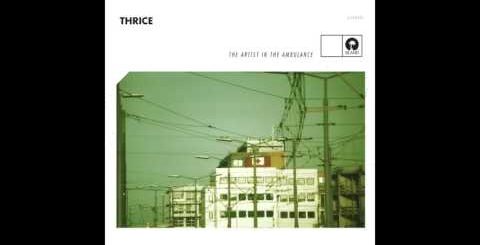
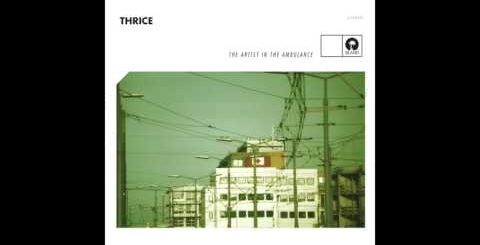
Crafted with the introspective depth that marks Thrice’s musical journey, ‘Digital Sea’ from their 2007 album ‘The Alchemy Index Vols. I & II’ resonates with an audience grappling with the paradox of modern life. This reflection traverses the existential undertones of Kensrue’s poetry, interpreting the layers beneath the digital waves where humanity struggles to find its voice amidst the binary chorus.
Adrift in a Sea of Screens: The Crisis of Connection
The opening lines set a stage of barren isolation, where one awakens not in the comfort of human embrace, but entangled in the nets of regret. These metaphorical nets serve as an allegory for the ever-entangling web of online interactions that often leave individuals feeling stranded, highlighting how digital immersion can exacerbate loneliness rather than alleviate it.
Kensrue’s use of maritime imagery draws a parallel between the relentless nature of the sea and the unfathomable depth of the internet, suggesting that for all its opportunities for engagement, the digital world can be indifferent, vast, and isolating. The ‘open sea’ is no longer just a natural force but reflects our turbulent navigation through the artificial tides of the information era.
A Cry in the Void: The Struggle to Stay Afloat
‘I am drowning in a digital sea / I am slipping beneath the sound’ underscores the visceral feeling of being overwhelmed by the cacophony of digital life. When heartfelt sentiments are condensed to ‘ones and zeros,’ the rich spectrum of human emotion is lost, leaving individuals gasping for air as their authentic voices become part of the uniform noise.
This chorus reverberates the hopelessness that accompanies our ineffectual struggles against the current of digital saturation. With the dehumanization of our discourse—emotions rendered as mere data—Kensrue captures a crisis of expression, where the cry for help or connection is just another blip in the endless stream of digital information.
A Siren’s Call to the End: The Chilling Warning
‘A song from somewhere below / Deadly and slow begins / Both sickly and sweet / Now picking up speed / Ushering in the world’s end’—this section of the lyrics evokes an ominous tone, warning of seductive technologies that lull us into complacency even as they hasten societal decline. The siren’s call is a clever twist on the Greek myth, symbolizing how digital platforms can captivate us, drawing us into the depths unaware.
The reference to the ‘world’s end’ is not to be taken literally but suggests a demise of something more intrinsic—the death of genuine human interaction and the gradual erasure of individual thought. As the digital groundswell gains momentum, the very fabric of our lived experiences is at stake.
The Ghost of Descartes and the Crisis of Existence
The unexpected invocation of philosopher René Descartes, with the ghost screaming in the dark, ‘Oh how could I have been so wrong?’, introduces a profound philosophical inquiry into the nature of existence. Descartes’ foundational statement, ‘I think, therefore I am,’ faces a formidable challenge in the digital realm, where thinking can be simulated, replicated, or even manipulated.
Kensrue might be positing that the digital age casts doubt upon the certainty of our own existence and experience. As we integrate more deeply with technology, the distinction between the authentic self and the digital echo becomes increasingly blurred, leading to an existential disquiet mirrored in Descartes’ spectral lament.
The Memorable Mantra: When Humanity Becomes Binary
The persistent repetition of ‘Here my voice goes to ones and zeros’ acts as a haunting mantra throughout the song, reflecting the dehumanization that results from our digitized communications. It speaks to the reduction of our vast and varied voices to a binary code, a simplification that strips away the nuances that make human interaction rich and meaningful.
As the line repeats, ad infinitum, it conjures a sense of inescapable fate—a digital echo chamber where our unique identities and experiences are condensed into indistinguishable digital signals. This line thus serves as both a resignation to our current state and a somber call to recognize and rescue our humanity from the depths of the digital sea.