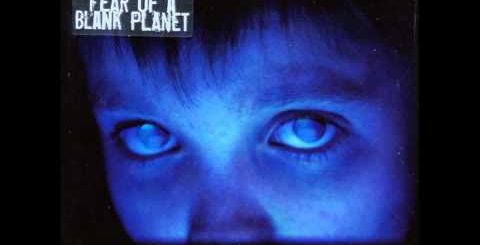
Don’t Hate Me by Porcupine Tree Lyrics Meaning – Unraveling the Layers of Solitude and Desperation
Lyrics
All sign of the living has gone
The last train pulls into the station
And no one gets off and no one gets on
Don’t hate me
I’m not special like you
I’m tired and I’m so alone
One light burns in a window
It guides all the shadows below
Inside the ghost of a parting
And no one is left, just the cigarette smoke
Don’t hate me
I’m not special like you
I’m tired and I’m so alone
Don’t fight me
I know you’ll never care
Can I call you on the telephone now and then?
Don’t hate me
I’m not special like you
I’m tired and I’m so alone
Don’t fight me
I know you’ll never care
Can I call you on the telephone now and then?
In the vast cosmos of rock music, there exist songs that transcend mere melodies and lyrics, becoming poignant reflections of the human condition. Porcupine Tree’s ‘Don’t Hate Me’ is a haunting evocation of solitude and an outcry for understanding within the chaos of emotional desolation.
The track, laden with heavy atmospheric instrumentation and introspective lyricism, reaches into the listener’s soul and tugs at the very strings that bind us to our isolated experiences. Let’s delve into the profound narrative and sonic landscape painted by this understated yet powerful piece.
The Melancholic Elegance of Urban Desolation
‘A light snow is falling on London…’ The opening line of ‘Don’t Hate Me’ immediately sets the scene with an almost Dickensian bleakness. It’s a landscape desolate not only because of the climate but also due to a profound human absence. The setting is intrinsic to the song’s mood – a reflection of the inner desolation experienced by the protagonist.
The stark imagery of an empty train pulling into a station symbolizes a journey without purpose or companionship, a motif that resonates with anyone who has felt the cold touch of solitude amidst the urban sprawl.
A Haunting Plea for Compassion in a Sea of Indifference
As the lyric ‘Don’t hate me’ recurs, it begins to feel less like a request and more like a quiet plea for empathy. The song’s character isn’t seeking admiration or even acceptance, merely the absence of animosity. This simple need to avoid hatred highlights the vulnerability that lurks within the human psyche, craving at the very least, indifference over contempt.
In this context, the refrain ‘I’m not special like you’ can be seen as an admission of ordinariness, a stark self-awareness that does not aspire to grandeur, but instead acknowledges a shared humanity.
Illuminating The Shadows: The Metaphor of Isolation
Symbolism reigns supreme as ‘one light burns in a window,’ casting clarity not on the narrator, but on ‘the shadows below.’ It’s as if to say, even when glimpses of hope or connection appear, they serve only to outline the depth of one’s isolation more clearly.
The ‘ghost of a parting’ haunting these rooms highlights the lasting impact of separation and loss, leaving the impression that previous connections have forever scarred the canvas of the present.
A Cry Into the Void: ‘Can I Call You on the Telephone Now and Then?’
The interlude of communication in ‘Don’t Hate Me’ underscores the yearning for a bridge over the chasm of estrangement. Seeking permission to ‘call you on the telephone now and then’ is a tender echo of the human need for contact, consistent yet feeble in face of emotional desolation.
This repeated line is a memorable manifestation of the song’s core message: the pursuit of a connection that has little hope of response, a signal sent out not with the expectation of an answer, but out of an intrinsic need to express one’s existence.
Decoding the Heartbeat of ‘Don’t Hate Me’: The Song’s Hidden Meaning
Beyond its literal interpretation, ‘Don’t Hate Me’ is a mosaic of emotional expression, hinting at the broader human experience. It might represent the fear of being misunderstood or marginalized, the dread of oblivion that accompanies the awareness of one’s own mediocrity in a world that celebrates the exceptional.
The repetition of ‘Don’t hate me’ feels almost like a mantra, a defense mechanism against the innate fear of rejection that each of us carries. Porcupine Tree thus transforms a deeply personal rumination into a universal contemplation that resonates with the loneliness inherent in the human condition.