El Paso by Marty Robbins Lyrics Meaning – The Ballad of Wild West Romance and Tragic Destiny
Lyrics
I fell in love with a Mexican girl
Nighttime would find me in Rosa’s Cantina
Music would play and Feleena would whirl
Blacker than night were the eyes of Feleena
Wicked and evil while casting a spell
My love was deep for this Mexican maiden
I was in love, but in vain, I could tell
One night, a wild young cowboy came in
Wild as the West Texas wind
Dashing and daring, a drink he was sharing
With wicked Feleena, the girl that I loved
So in anger, I challenged his right for the love of this maiden
Down went his hand for the gun that he wore
My challenge was answered in less than a heartbeat
The handsome young stranger lay dead on the floor
Just for a moment I stood there In silence
Shocked by the foul evil deed I had done
Many thoughts raced through my mind as I stood there
I had but one chance and that was to run
Out through the back door of Rosa’s I ran
Out where the horses were tied
I caught a good one, it looked like it could run
Up on its back, and away I did ride
Just as fast as I could from the West Texas town of El Paso
Out to the badlands of New Mexico
Back in El Paso, my life would be worthless
Everything’s gone in life, nothing is left
It’s been so long since I’ve seen the young maiden
My love is stronger than my fear of death
I saddled up and away I did go
Riding alone in the dark
Maybe tomorrow, a bullet may find me
Tonight, nothing’s worse than this pain in my heart
And at last here I am on the hill overlooking El Paso
I can see Rosa’s Cantina below
My love is strong and it pushes me onward
Down off the hill to Feleena I go
Off to my right, I see five mounted cowboys
Off to my left ride a dozen or more
Shouting and shooting, I can’t let them catch me
I have to make it to Rosa’s back door
Something is dreadfully wrong, for I feel
A deep burning pain in my side
Though I am trying to stay in the saddle
I’m getting weary, unable to ride
But my love for Feleena is strong and I rise where I’ve fallen
Though I am weary, I can’t stop to rest
I see the white puff of smoke from the rifle
I feel the bullet go deep in my chest
From out of nowhere, Feleena has found me
Kissing my cheek as she kneels by my side
Cradled by two loving arms that I’ll die for
One little kiss and Feleena, goodbye
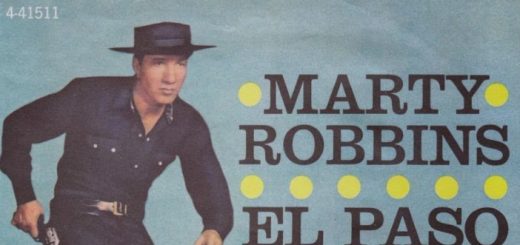
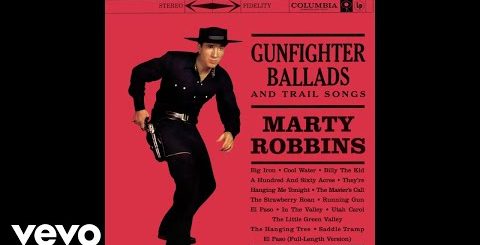
Marty Robbins’ ‘El Paso’ is not just a song — it’s a narrative etched in the dusty trails of the Wild West, an intricate tapestry of love, jealousy, and fateful consequences. Released in 1959 as part of Robbins’ ‘Gunfighter Ballads and Trail Songs’ album, ‘El Paso’ emerges as a timeless piece of music artistry and storytelling.
Sweeping through the rugged landscape of passion and desperation, Robbins crafts a quintessential folk ballad that has gripped the hearts of generations. How has this ostensibly simple tale maintained its allure, and what deeper meanings does it convey beneath the surface of a tragic cowboy love story?
A Tale of Wild West Passion: More Than Just a Cowboy Song
‘El Paso’ paints a vivid picture of the relentless nature of a cowboy’s love. Marty Robbins uses the narrative to delve deeply into the psychology of unbridled passion and how it can eclipse all reason. He captures the listener’s imagination with the romance of the Wild West, while touching on universal themes of unrequited love and obsession.
The song’s protagonist falls for the enchanting Feleena, a character whose mere presence breathes life into the dim lit corners of Rosa’s Cantina. Robbins masterfully articulates the intoxication of love, juxtaposed against a backdrop of inevitable doom, turning a personal tale into a universal story of love’s agony and ecstasy.
The Spell of Feleena: Decoding the Femme Fatale
Feleena is not just a love interest; she’s a paradox. Robbins imbues her with qualities of beauty and darkness, making her the quintessential femme fatale. She’s the focal point of the song’s drama, an emblem of forbidden desire. Her influence over the protagonist and the cowboy challenger speaks volumes about her power and mystique.
The lyrics portray Feleena as both captivating and dangerous, a symbol of the allure that can lead a man to his end. Yet Robbins also conveys a sense of her innocence, caught in a situation that spirals out of control, which adds layers to her character and the overall narrative.
A Gunshot Echoing Through Time: The Echoes of Violent Love
The violence in ‘El Paso’ is swift and stark, mirroring the harsh realities of the frontier life. Robbins doesn’t glorify the action; instead, he uses it as a crucial turning point. The consequence of the protagonist’s decision to challenge his rival cements his fate, striking the core of the listeners with the suddenness of its occurrence.
The deadly encounter is a manifestation of the protagonist’s emotions — a tangible outcome of the untamed anger and jealousy he harbors. The narrative sings a cautionary tale about the destructiveness of raw emotion, reflecting on the cowboy’s impulsive nature and the forever-altered course of his destiny.
Return to the Scene — Love’s Magnetic Pull
Despite the foreboding knowledge of certain doom, the protagonist is inexorably drawn back to El Paso, to the very place that sealed his fate. Robbins explores the profound power of love, demonstrating its ability to overpower even the strongest survival instincts.
This return is the ultimate act of devotion, reflecting an authentic and desperate need to confront the past. It’s this magnetic pull back to Feleena, Rosa’s Cantina, and the scene of his crime that poses the eternal question: Can love justify the cost?
The Final Reckoning: An Undying Love Amidst Despair
Robbins crafts a conclusion of poetic justice in ‘El Paso.’ The protagonist, riddled with bullets, yet propelled by love, staggers towards his end. The scene of his demise is as dramatic as the rest of his tale, with Feleena arriving just in time for a final, bittersweet farewell.
In these last moments, the song delivers its most potent and humanizing messages about the imperfections of love and the inevitability of death. Marty Robbins leaves listeners pondering the value of a moment of love’s embrace in the face of eternal silence, underscoring the conviction that, sometimes, the heart’s call rivals the finality of death itself.