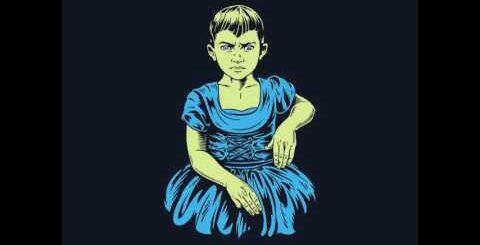
Ghostmother by Moderat Lyrics Meaning – Unraveling the Ethereal Whispers in Electronic Beats
Lyrics
What I do see, yeah
Oh, blank-eyed angel
Staring through me
The room filled with stars
On an astrology card [?]
Postured figures
Of what used to be
The ghosts that haunt
Are in there with me
I walk to the edge
And all of them left me
Yeah
I went to the grass
Searching to hide
Oh
The song’s clear and
Dazed from my past
The ghosts that haunt
Were in there with me
I walked to the edge
And all the fear left me
The ghosts that haunt
Were in there with me
I walked to the edge
And all fear left me, yeah
Oh I saw it
Standing in a sigh
Went through the grass
There on the edge
All that you left me, yeah
Oh, I saw it
Standing in a sigh
Went through the grass
There on the edge
All the fear left me, yeah
I ran through the grass
There on the edge
All the fear left me, yeah
I went through the grass
Jumped through the latch
All the fear left me, yeah
Moderat’s ‘Ghostmother’ is not merely a song; it’s a haunting traversal through the ether of electronic music, woven with lyrics that ebb and flow like a ghostly apparition caught between realms. To listen is to be transported to an introspective journey, guided by the subtle intensity of this track.
The song, a meld of intricate soundscapes and layered vocals, invites listeners to delve into the intricacies of its lyrics. It stands as a spectral figure in the discography of Moderat, the collaboration of Modeselektor and Apparat, demanding a closer inspection of its cryptic narrative and the emotions it stirs.
The Haunting Duality: In the Limbo of Ghostmother
The song opens with a poignant confession, ‘I walk in-between / What I do see, yeah,’ encapsulating a theme of existing in a state of duality. The lyrics hint at a protagonist caught in a liminal space, seeing beyond the ordinary but still tethered to the perceivable world. Such duality captures a universal human experience: our struggle with the unseen forces of our emotions, memory, and the aftereffects of our choices.
This liminality is further emphasized by the mention of a ‘blank-eyed angel,’ a spectral guardian who observes without judgment yet sees all. The angel is symbolic of unspoken truths and the internal gaze we cast upon the haunted corridors of our psyche. It serves as an emblem of internal reflection and the silent witnesses within us all.
Celestial Imagery and Astrological Mystique
Moderat employs celestial imagery melding ‘The room filled with stars / On an astrology card,’ to evoke a sense of cosmic insignificance and mystical influence. By comparing the room to an astrology card, the song suggests that life’s events might be predestined, as foretold by the alignment of stars. It hints at the complexity of existence, human relationships, and the belief in a greater design at play.
In these lines, ‘Postured figures / Of what used to be,’ the ghosts of the past are given form, representing the remnants of bygone eras and relationships. They are the stoic memories that stand as the architects of our current selves, silently commanding from the depths of our subconscious.
A Journey through Memory: Exorcising the Past
At its core, ‘Ghostmother’ is a pilgrimage through memory, where the ‘ghosts that haunt’ are emblematic of past experiences and regrets that inhabit the singer’s mind. The refrain of moving to the edge and being left or losing fear speaks to the cathartic act of confronting one’s personal demons and the transformative power of such confrontations.
When the lyrics depict a stride ‘to the edge,’ there’s a palpable sense of courting danger, or perhaps facing life’s precipices – moments of decision where one can either succumb to the past or let go of its haunting grip. It’s a poignant reflection on how our interactions with the shadows of our history shape the people we become.
Deciphering the Hidden Meaning: Stepping into the Light
Beneath the undulating waves of its synth and bass, ‘Ghostmother’ hides a deeper message of transformation. The artist seems to emerge from spiritual metamorphosis, ‘Dazed from my past,’ into a state of clarity and acceptance. The relentless pursuit through the grass symbolizes a search for sanctuary, desperate to escape the intangible, yet suffocating, presence of one’s own history.
As the song builds towards its conclusion, the repetition of taming fear with proximity to the edge reinforces this theme of existential brinkmanship. With each proclamation that ‘all the fear left me,’ it becomes clear that this is a psalm of empowerment, a declaration of freedom found in facing one’s ghostly tormentors head-on and moving beyond them.
Memorable Lines: Standing in a Sigh
One of the song’s most captivating moments comes with the simple, yet evocative line, ‘Oh I saw it / Standing in a sigh.’ The juxtaposition of sight and exhalation renders a powerful image of realization – that moment when an understanding dawns, and with it comes a release of breath, a relinquishing of tension or fear that has long been held.
It’s within this ‘sigh’ that the essence of the song culminates; an emotive exhale where ‘All that you left me, yeah’ becomes a mantra of acknowledgment and moving forward. In the context of facing one’s ghosts, this line rings out like a bell in the silent night – crisp, clear, and full of resonant meaning.