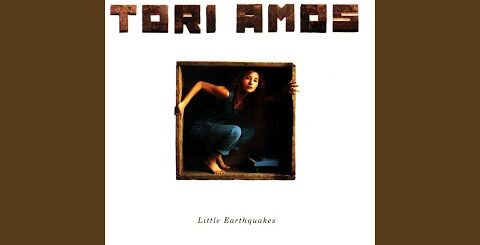
God by Tori Amos Lyrics Meaning – Unraveling the Divine Dilemma in Song
Lyrics
God sometimes you just don’t come through
Do you need a woman to look after you
God sometimes you just don’t come through
You make pretty daisies pretty daisies love
I gotta find what you’re doing about things here
A few witches burning gets a little toasty here
I gotta find why you always go when the wind blows
Tell me you’re crazy maybe then I’ll understand
You got your nine iron in the back seat just in case
Heard you’ve gone south well babe you love your new four wheel
I gotta find why you always go when the wind blows
(Give not thy strength unto women nor thy ways to that which destroyeth kings)
Will you even tell her if you decide to make the sky fall
Will you even tell her if you decide to make the sky
God sometimes you just don’t come through
God sometimes you just don’t come through
Do you need a woman to look after you
God sometimes you just don’t come through
In the canon of ’90s alternative rock, Tori Amos emerged as a voice that wouldn’t just whisper but penetrate through the noise with poetic prowess and searing honesty. Her 1994 anthem ‘God’ is one such work that continues to resonate with audiences, laced with a complexity that speaks to the very human struggle to comprehend the divine and its place in the modern world.
Diving into ‘God,’ we peel away the layers of Amos’s evocative lyrics, which challenge, question, and seek understanding in a world where spiritual narratives often collide with lived experiences. Her unconventional approach to discussing faith, gender roles, and power dynamics offers a compelling reinterpretation of established narratives and beckons a closer inspection.
A Divine Confrontation on Gender and Power
At the surface, ‘God’ appears as a bold indictment—a challenge to the patriarchal figurehead of Christianity. Amos’s repeated lines, ‘God sometimes you just don’t come through,’ suggest a frustration with the inefficacy or absence of divine intervention in times of need. It’s a potent expression of disappointment that echoes the sentiments of many who look upward for answers they do not receive.
However, the crux of the song may lie in the seemingly sardonic inquiry, ‘Do you need a woman to look after you?’ Here, Amos complicates the conversation by suggesting that the omnipotent may also be vulnerable—requiring care in a way that blurs the lines between the protector and the protected, the nurturer and the nurtured.
The Provocative Juxtaposition of the Sacred and Secular
Amos masterfully integrates the mystical with the mundane, weaving in references that range from the biblical (‘burning witches’) to the banal (‘nine iron in the back seat’). Such imagery not only embellishes the world where divinity and humanity coexist but also questions the reliability and relevance of a distant God in a reality laden with real and metaphorical trials.
By conjuring vivid scenes that commingle with religious symbolism—golf clubs to represent leisure or neglect, vehicles for escape or indifference—Amos illustrates the chasm between the silent heavens and the chaotic Earth, undercutting traditional expectations of what, and how, a God should operate in human affairs.
Uncovering the Song’s Hidden Meaning
Passages from ‘God’ harbor subtler inscriptions of its message. The excerpt from Proverbs woven into the bridge, ‘Give not thy strength unto women nor thy ways to that which destroyeth kings,’ acts as a stark juxtaposition to the rest of the song, perhaps highlighting the way religion has been historically weaponized to maintain gender hierarchies. The ‘strength’ given to women—or withheld—becomes a metaphor for power dynamics sanctioned by divine decree.
This critical examination of scripture puts forth a motif prevalent throughout Amos’s work: the critique of institutionalized power and the marginalization that has been perpetuated in its name. The hidden meaning here is an invitation to reexamine and reinterpret traditional governance—both celestial and terrestrial—and to challenge the power structures they uphold.
The Enigma of Memorable Lines
‘Will you even tell her if you decide to make the sky fall?’ is one of the most memorable lines in ‘God,’ filled with implicit emotion and rhetorical grit. Through it, Amos prompts the listener to ponder whether there is a personalized narrative to the apocalyptic, or if destruction comes without warning or explanation—a divine decision that seems arbitrary or cruel from the mortal perspective.
The motif of communication further enforces this concept; the questioning of whether there is any reliable form of divine dialogue with humanity or if we are left to decipher the signs and silence alone. This form of engagement with the lyrics creates a space for reflection and analysis, enticing listeners to grapple with sacramental themes woven into their secular lives.
Reflecting on Faith in a Modern Soundscape
Musically, ‘God’ is a profound convergence of Amos’s piano-driven melodies with electronic distortion and percussive elements that give the track an edge as sharp as its lyrics. The melding of these sounds reflects the merging of the ancient with the contemporary, mirroring the song’s thematic interrogation of how age-old beliefs fit into today’s rapidly evolving world.
In this soundscape, Amos doesn’t seek to offer clear-cut answers but rather to compel the listener to engage with the complexities of their beliefs and the institutions they trust or challenge. ‘God’ is not just a song, it’s an audacious form of spiritual discourse set to music, prompting a deep examination of how we grapple with the divine in an era that often feels as though it has left the gods behind.