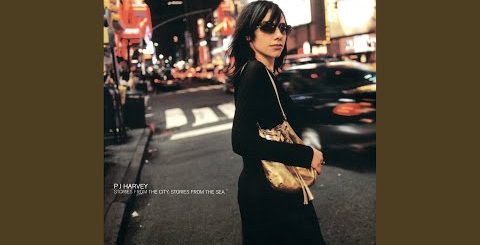
Good Fortune by P.J. Harvey Lyrics Meaning – Unraveling the Exhilaration of Freedom
- Music Video
- Lyrics
-
Song Meaning
- A Leap From Despair: The Catharsis of ‘Good Fortune’
- Ethereal Reflections: Mirroring the Intangible in ‘Good Fortune’
- The Mystique of a Modern-Day Gypsy: Nomadic Love as Liberation
- Unearthing the Hidden Meaning: Time Travel and Innocence
- Memorable Lines That Echo in the Soul: ‘Everybody’s got something good to say’
Lyrics
Off the top of
A tall building
I’d rather have done it with you
Your boy’s smile
Five in the morning
Looked into your eyes
And I was really in love
In Chinatown
Hung over
You showed me
Just what I could do
Talking about
Time travel
And the meaning
Just what it was worth
And I feel like
Some bird of paradise
My bad fortune slipping away
And I feel the innocence of a child
Everybody’s got something good to say
Things I once thought
Unbelievable
In my life
Have all taken place
When we walked through
Little Italy
I saw my reflection
Come right off your face
I paint pictures
To remember
You’re too beautiful
To put into words
Like a gypsy
You dance in circles
All around me
And all over the world
And I feel like
Some bird of paradise
My bad fortune slipping away
And I feel the innocence of a child
Everybody’s got something good to say
And I feel like
Some bird of paradise
My bad fortune slipping away
And I feel the innocence of a child
Everybody’s got something good to say
So I take my
Good fortune
And I fantasize
Of our leaving
Like some modern day
Gypsy landslide
Like some modern day
Bonnie and Clyde
On the run again (On the run again)
On the run again (On the run again)
On the run again (On the run again)
On the run again (On the run again)
P.J. Harvey’s ‘Good Fortune’ is a sonic portrait of liberation, an ode to the escaping spirit that defines human resilience and optimism. From the album ‘Stories from the City, Stories from the Sea’, this track captures the quintessence of Harvey’s songwriting prowess – complex in emotional layers yet straightforward in its deliverance of deep-seated truths.
In the following analysis, we dive beyond the surface of the song’s joyful exterior to uncover the intricate interplay of motifs and metaphors that Harvey crafts so masterfully. ‘Good Fortune’ isn’t just another rock track; it’s an aural narrative rich with philosophical insights and the celebration of life’s transient beauty.
A Leap From Despair: The Catharsis of ‘Good Fortune’
The opening lines of ‘Good Fortune’ aren’t a call to reckless abandon but rather a profound metaphor for the rejection of misfortune. By ‘throwing bad fortune off the top of a tall building,’ Harvey symbolizes a deliberate act of emancipation from the chains of the past. It speaks to the transformative moments when one decides to no longer be defined by miseries and instead, constructs a trajectory towards hope.
The vivid imagery of taking a fall with a companion, possibly a lover, emphasizes human connection as an integral part of this transformation. It’s not solely about the individual’s journey; it’s about shared experiences that magnify our joys and make our tribulations bearable.
Ethereal Reflections: Mirroring the Intangible in ‘Good Fortune’
In the confession of seeing oneself in another person’s reflection, Harvey conveys intense intimacy. This level of closeness in ‘Good Fortune’ creates a mirror-effect where identities merge, and individual experiences become indistinguishable from one another. The mention of ‘Little Italy’ is not arbitrary; it’s a vibrant setting, conducive to the mingling of culture, energy, and history – much like the intermingling of souls.
Harvey paints a picture of love and life that surpasses mere physical beauty – it demands to be captured in art, yet resists encapsulation. It hangs in the balance between reality and memory, pushing listeners to consider whether true beauty can ever be accurately translated into any form other than the moments we experience.
The Mystique of a Modern-Day Gypsy: Nomadic Love as Liberation
Harvey’s use of a ‘modern-day Gypsy’ speaks to an untethered existence, one that values freedom and the pursuit of adventure above all else. She celebrates this lifestyle through a narrative of escapism and companionship, possibly an allusion to fabled outlaws like Bonnie and Clyde. The choice of such figures embodies a romanticized rebellion and the desire to flee from societal constraints.
This song is a collage of movement and color, from the circular dance to the diverse global backdrop. Harvey invites listeners on a journey across various landscapes, both mental and physical, encouraging a sense of unbound exploration and the allure of what lies on the open road.
Unearthing the Hidden Meaning: Time Travel and Innocence
As Harvey intertwines themes of ‘time travel’ and the ‘innocence of a child,’ she delves into the human obsession with chronological constraints and a yearning for simpler times. These lyrics suggest a metaphysical questioning of our linear existence and the burdens it bestows upon us.
In ‘Good Fortune,’ the past isn’t just a place of remorse or nostalgia; it is an alterable dimension. Through this perspective, every moment glows with potential, as if one could revisit and infuse them with newfound innocence, thus subverting the inevitability of fate and misfortune.
Memorable Lines That Echo in the Soul: ‘Everybody’s got something good to say’
In the chorus, the notion that ‘everybody’s got something good to say’ radiates positivity and carries an undertone of universal acceptance. Harvey invokes the potential for goodness and positive affirmation that exists in each individual – a reminder of our core humanity.
It’s more than just a feel-good mantra; it’s a recognition of the collective resilience that humanity possesses. Harvey suggests that even in the face of overwhelming negativity, there exists an unwavering thread of humanistic optimism, urging listeners to embrace and share it.